

If you’ve held Ethereum for any length of time, you’ve likely heard that you can “stake” your ETH to earn passive income. But what does that actually mean? And with over 36 million ETH (roughly 30% of circulating supply) already staked, is it still worth it?
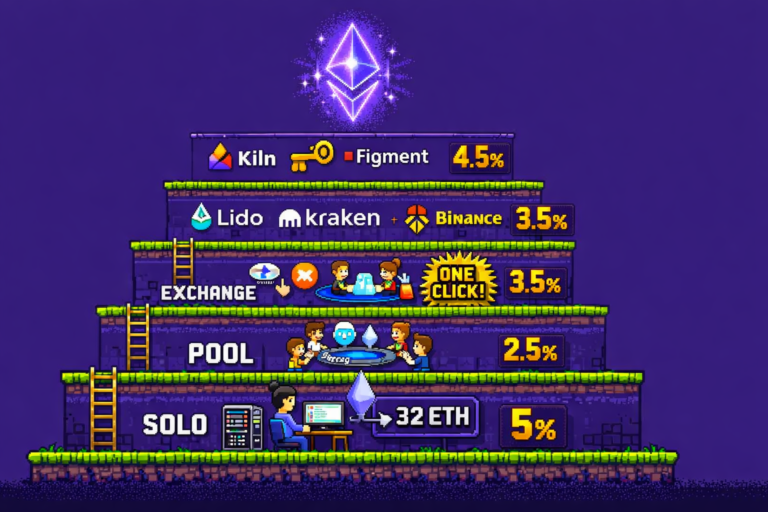
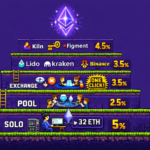
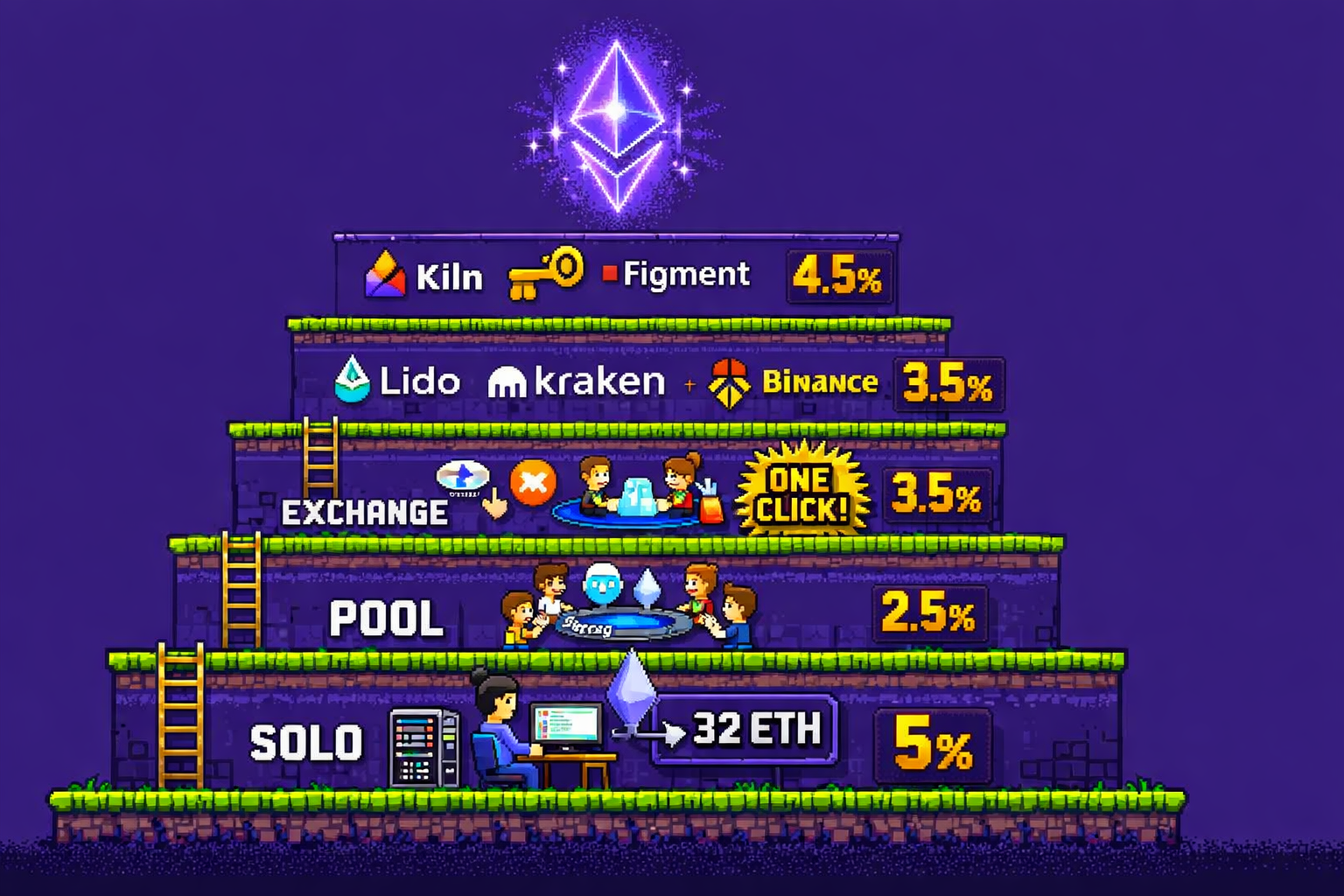
The answer is yes. But the way you stake matters enormously. At one end of the spectrum is solo staking: you deposit 32 ETH, run your own validator, and earn the full 4‑5% APY with no middleman fees. At the other end is exchange staking: you click a button on Coinbase, and they handle everything, but you pay 10‑25% of your rewards in fees. In between lies a growing universe of liquid staking protocols, staking pools, and restaking services.
In this Ethereum staking guide, we’ll walk through every method of staking ETH in 2026: the technical requirements, the yields, the risks, the tax implications, and, most importantly, which approach fits your specific situation.

Why Stake ETH? The Fundamentals
What Is Staking?
Staking is the process of locking up your ETH to help secure Ethereum’s Proof‑of‑Stake (PoS) network. In return for your contribution, you earn rewards, paid in newly issued ETH plus transaction fees and MEV (Maximal Extractable Value) opportunities.
The Scale of Staking in 2026
Ethereum staking has grown into a massive ecosystem. As of early 2026:
- 36+ million ETH staked (roughly 30% of circulating supply)
- ~$120 billion in value locked
- Top 5 liquid staking providers control nearly 18 million ETH – 48% of the staked market
Why Stake Instead of Hold?
| Reason | Explanation |
|---|---|
| Passive income | Earn 3‑5% APY on your ETH holdings |
| Network participation | Contribute to Ethereum’s security and decentralization |
| Compounding potential | Rewards can be restaked to grow your position |
| Tax‑efficient | In many jurisdictions, staking yields are treated as income, not capital gains |
How Ethereum Staking Works: Validators and Attestations
The Proof‑of‑Stake Mechanism
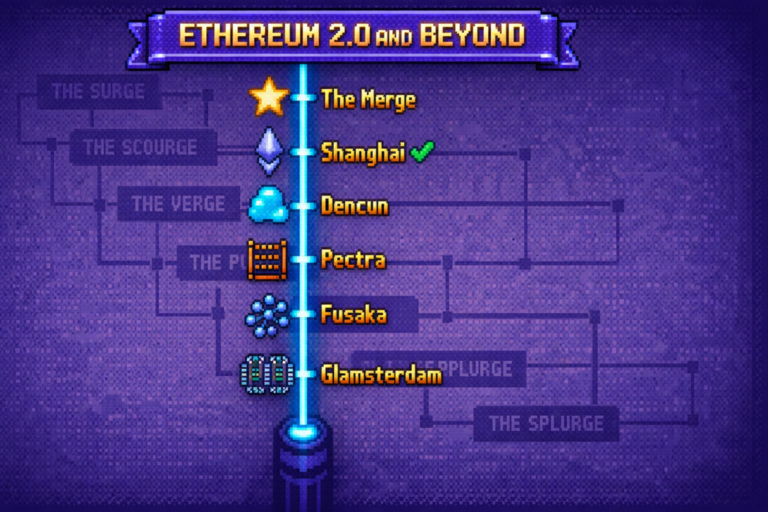
Since Ethereum’s transition from Proof‑of‑Work in 2022 (The Merge), the network has been secured by validators (entities that lock up 32 ETH as collateral to participate in consensus). These validators are responsible for two main tasks:
- Attestations: Validators vote on the validity of new blocks, essentially saying “this block looks correct.”
- Block proposals: Periodically, validators are selected to propose and build new blocks, earning additional rewards.
Validator Economics
Rewards come from three sources:
| Source | Contribution |
|---|---|
| Block rewards | Base issuance for participating in consensus |
| Transaction fees | Priority fees from users |
| MEV | Additional value from transaction ordering (via MEV‑Boost) |
Validators who use MEV‑Boost (software that connects them to a marketplace of block builders) can earn significantly higher yields, sometimes pushing solo staking APY to 5‑6%.
The Slashing Mechanism
To keep validators honest, Ethereum has a slashing mechanism. If a validator misbehaves (e.g., double‑signing or extended downtime), a portion of their staked ETH is burned. This economic penalty ensures that the cost of attacking the network exceeds any potential gain.
Staking Method 1: Solo Staking (The Gold Standard)
What Is Solo Staking?
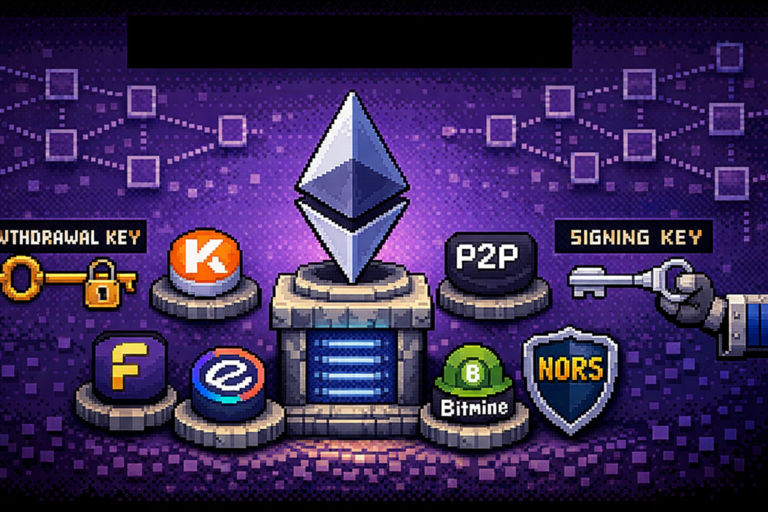
Solo staking is the most direct way to participate in Ethereum’s consensus. You deposit exactly 32 ETH into the Beacon Chain deposit contract, run your own validator node, and earn rewards directly from the protocol (no middlemen taking a cut).
Requirements
| Requirement | Specification |
|---|---|
| Minimum ETH | 32 ETH per validator |
| Hardware | Multi‑core CPU, 16‑32GB RAM, 2TB NVMe SSD |
| Internet | Stable, unmetered connection |
| Technical skill | Comfortable with command line, client software, monitoring |
While you can run multiple validators from a single machine, each requires an additional 32 ETH deposit.
Why Solo Stake?
| Advantage | Benefit |
|---|---|
| Maximum yield | No fees – keep 100% of rewards (4‑5% APY with MEV) |
| Full control | You choose your clients and hardware |
| Network impact | Most decentralized way to stake |
| No counterparty risk | No reliance on third parties |
The Trade‑offs
| Disadvantage | Challenge |
|---|---|
| 32 ETH barrier | Significant capital requirement |
| Technical complexity | Setup, maintenance, monitoring |
| Slashing risk | Mistakes or downtime can cost you ETH |
| Lock‑up period | Withdrawals take time |
The Reality Check
Most people shouldn’t solo stake unless they’re comfortable running infrastructure, have the required technical skills, and can afford to lose the 32 ETH if something goes wrong. Platforms like Dappnode make the process more accessible, but it’s still not for beginners.
Staking Method 2: Staking Pools and Delegated Staking

What Are Staking Pools?
Staking pools aggregate ETH from multiple users to reach the 32 ETH needed to activate a validator. When the validator earns rewards, they’re distributed proportionally to all pool participants minus a small fee.
How Pooled Staking Works
- Users deposit ETH into the pool (any amount, often as little as 0.1 ETH)
- The pool operator runs the validator infrastructure
- Rewards are distributed proportionally minus fees (typically 5‑15%)
- Users can withdraw (subject to pool rules)
Popular Staking Pools
| Pool | Minimum | Fee | Unique Feature |
|---|---|---|---|
| Rocket Pool | 0.01 ETH | 14% node commission | Decentralized operator set |
| StakeWise | Vault‑defined | Vault‑defined | Flexible, permissionless vaults |
| Ankr | None | 10% service fee | Multi‑chain access |
Why Use a Staking Pool?
| Advantage | Benefit |
|---|---|
| No 32 ETH requirement | Stake any amount |
| No technical expertise | Pool handles validator operations |
| Shared slashing risk | Losses distributed across participants |
The Trade‑offs
| Disadvantage | Consideration |
|---|---|
| Pool fees | Reduce net yield (often 5‑15%) |
| Counterparty risk | Trust in pool operator |
| Limited liquidity | No liquid token for DeFi |
Staking Method 3: Liquid Staking (Lido, Rocket Pool)

What Is Liquid Staking?
Liquid staking protocols have become the dominant way to stake ETH for most users. When you deposit ETH, you receive a liquid staking token (LST) like stETH or rETH that represents your staked position. These tokens accrue staking rewards while remaining tradable and usable in DeFi.
The Liquid Staking Market in 2026
The liquid staking market has exploded to $66.86 billion in total value locked across protocols, with a combined market cap of $86.4 billion for liquid staking tokens. Lido Finance alone controls 24.2% of all staked ETH with 8.72 million ETH staked.
Major Liquid Staking Protocols
| Protocol | Token | Fee | TVL | Best For |
|---|---|---|---|---|
| Lido | stETH/wstETH | 10% | ~$26.4B | Liquidity depth, DeFi integrations |
| Rocket Pool | rETH | 14% | ~$1.76B | Decentralization |
| StakeWise | osETH | Vault‑defined | ~$1.08B | Flexible, permissionless vaults |
| Ankr | ankETH | 10% | ~$42.5M | Multi‑chain access |
Why Liquid Staking?
| Advantage | Benefit |
|---|---|
| No lock‑up | Trade or sell your LST anytime |
| DeFi composability | Use stETH as collateral on Aave, provide liquidity on Curve |
| Low minimum | Any amount—no 32 ETH barrier |
| Simpler than solo | Protocol handles validator operations |
The Trade‑offs
| Disadvantage | Consideration |
|---|---|
| Protocol fees | Lido takes 10%; Rocket Pool takes 14% |
| Smart contract risk | Additional code layer |
| De‑pegging risk | LST can trade below ETH value |
| Centralization concerns | Lido’s dominance raises systemic risk |
The Centralization Debate
Critics argue that Lido’s control of 24.2% of staked ETH represents a dangerous centralization risk for Ethereum. Vitalik Buterin has proposed native Distributed Validator Technology (DVT) as a long‑term solution to lower staking barriers and reduce reliance on large liquid staking providers.
Staking Method 4: Exchange Staking (Coinbase, Kraken, Binance)

What Is Exchange Staking?
Major centralized exchanges like Coinbase, Kraken, and Binance offer one‑click ETH staking. You deposit ETH into your exchange account, click a button, and the exchange handles all validator operations. It’s the simplest method, but also the most fee‑heavy.
Exchange Staking Comparison (2026)
| Exchange | APY Range | Fees (approx) | Unique Feature |
|---|---|---|---|
| Coinbase | 1.9‑2.9% | 10‑15% of rewards | Public company, FDIC on USD |
| Kraken | 2.0‑2.8% | ~10‑15% of rewards | Flexible & locked options |
| Binance | 3.0‑4.2% | Up to 39.95% | Asset variety, SAFU fund |
| Bitget | 3.0‑4.2% | Low | $300M Protection Fund |
Why Exchange Staking?
| Advantage | Benefit |
|---|---|
| Simplest method | One click, no technical knowledge |
| No lock‑up (often) | Flexible staking options available |
| Regulatory oversight | Public companies subject to audits |
| Insurance funds | Binance SAFU ($1B+), Bitget ($300M+) |
The Trade‑offs
| Disadvantage | Consideration |
|---|---|
| Highest fees | Up to 40% of rewards taken |
| Custodial risk | Exchange holds your keys |
| Lower yields | Net returns significantly reduced |
Staking Method 5: Staking as a Service (Kiln, Figment, StakeWise)
What Is Staking as a Service?
Staking‑as‑a‑service providers run validator infrastructure on your behalf while you retain custody of your ETH (unlike exchanges). You deposit 32 ETH, they handle the technical operations, and you pay a fee for their service.
Popular Providers
| Provider | Fee | Target Audience |
|---|---|---|
| Kiln | Enterprise‑grade | Institutions, high‑net‑worth |
| Figment | 10‑15% | Institutional clients |
| Attestant | Varies | Institutional |
| StakeWise | Vault‑defined | All users |
Why Staking as a Service?
| Advantage | Benefit |
|---|---|
| Non‑custodial | You retain key control |
| No hardware | Provider runs infrastructure |
| Professional‑grade | High uptime, slashing protection |
The Trade‑offs
| Disadvantage | Consideration |
|---|---|
| Still requires 32 ETH | Not for small holders |
| Service fees | Reduce net yield |
| Trust in provider | Operational reliability matters |
The Pectra Upgrade: What Changed in 2025‑2026
A Major Milestone
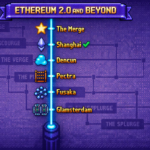
The Pectra upgrade, implemented in May 2025, represents one of the most significant changes to Ethereum’s staking architecture since The Merge. It introduced several staking‑focused improvements that fundamentally changed how validators operate.
Key Changes
1. Expanded Validator Balance Limits
While the minimum stake remains 32 ETH, validators can now support balances up to 2,048 ETH at the protocol level. For institutional clients, this enables consolidation of stake across fewer validators, significantly reducing operational overhead.
| Before Pectra | After Pectra |
|---|---|
| Each validator capped at 32 ETH | Validators can hold up to 2,048 ETH |
| Many validators for large stakes | Consolidated stake across fewer validators |
| High operational complexity | Streamlined management |
2. Auto‑compounding Rewards
Staking rewards are now automatically added into the validator’s balance, increasing the effective stake over time and resulting in slightly higher effective rewards.
3. Partial Withdrawals
Validators can now withdraw excess rewards without exiting the validator entirely. When balances exceed the effective limit, excess rewards are swept directly to the withdrawal wallet, bypassing the long exit queue.
4. Execution‑Layer Triggered Exits (EIP‑7002)
Full validator exits are now processed via execution layer triggerable exits instead of the traditional oracle‑based method, dramatically speeding up withdrawal times from 13 hours to roughly 13 minutes.
Impact on Staking
The Pectra upgrade has reduced operational costs for stakers by up to 60%, enabling 1.2 million ETH to be staked by January 2026 with inflows consistently surpassing outflows.
Ethereum Staking Yields in 2026: What to Expect
Current Yield Ranges (March 2026)
| Method | APY Range | Notes |
|---|---|---|
| Solo staking (with MEV) | 4‑5% | Gold standard, no fees |
| Solo staking (no MEV) | 2.5‑3.5% | Base network issuance only |
| Liquid staking (Lido) | 2.25‑3.15% after fees | 10% protocol fee |
| Liquid staking (Rocket Pool) | 2.3‑2.6% after fees | 14% node commission |
| Exchange staking | 1.9‑4.2% | Varies by platform, fees 10‑40% |
Why Yields Have Compressed
Staking yields across major PoS chains have been compressing for years. As more ETH is staked (now over 30% of circulating supply), the base issuance per validator decreases. However, MEV extraction and transaction fees can boost yields significantly for those who capture them.
The Net Return Reality
Headline APY means nothing if the underlying token price drops. A 3% staking yield with a 20% price decline means a net loss of 17%. Net returns (rewards minus price depreciation) separate profitable stakers from bagholders.
Yield Comparison (2026)
| Asset | Approx APR |
|---|---|
| Cosmos (ATOM) | 21%+ |
| Polkadot (DOT) | ~12% |
| Solana (SOL) | ~6.8% |
| Ethereum (ETH) | 2.9‑5% |
| Cardano (ADA) | 3‑5% |
Risks You Must Understand: Slashing, Lock‑ups, and Centralization
CRITICAL SECTION. DO NOT SKIP
Risk 1: Slashing
Slashing is the penalty for validator misbehavior. If your validator goes offline for extended periods, you lose a portion of your staked ETH. If your validator double‑signs or acts maliciously, the penalty can be severe.
Risk 2: Lock‑up and Unstaking Delays
Even after the Pectra upgrade, unstaking ETH is not instant. While partial withdrawals for rewards are faster, full validator exits still require processing through exit queues. In times of high demand, these queues can stretch.
Risk 3: Centralization Risk
The top five liquid staking providers control nearly 18 million ETH (48% of the staked market). This level of centralization contradicts Ethereum’s decentralization ethos and exposes the network to single‑point failures and censorship risks.
Risk 4: Smart Contract Risk (Liquid Staking)
Liquid staking protocols add an extra layer of smart contract risk beyond the core Ethereum protocol. While Lido and Rocket Pool have been extensively audited, bugs can and do exist.
Risk 5: De‑pegging Risk (Liquid Staking)
During market stress, LSTs can trade at a discount to ETH. In June 2022, stETH traded at a 5% discount. While de‑pegs typically recover, they can cause losses for forced sellers.
Risk 6: Platform Risk (Exchange Staking)
Exchange staking introduces counterparty risk. If the exchange fails (like FTX) or freezes withdrawals, your staked ETH could be trapped.
Risk 7: Price Volatility
Even with perfect staking execution, ETH’s price can drop. A 30% price decline wipes out years of 3% staking rewards.
How to Choose the Right Staking Method for You
Decision Framework
| If you are… | Recommended Method | Why |
|---|---|---|
| Technical, have 32+ ETH, want max yield | Solo staking | No fees, full control, highest returns |
| Have 32+ ETH, don’t want technical burden | Staking as a service (Kiln, Figment) | Non‑custodial, professional ops |
| Have less than 32 ETH, want DeFi access | Liquid staking (Lido, Rocket Pool) | No minimum, composable LSTs |
| Absolute beginner, want simplicity | Exchange staking (Coinbase, Kraken) | One‑click, no technical knowledge |
| Value decentralization | Rocket Pool or solo staking | Distributed operator set |
| Want maximum liquidity | Liquid staking | Trade LSTs anytime |
The “Portfolio Approach” to Staking
Many experienced stakers use multiple methods:
- Solo staking: Core conviction ETH (full yield, full control)
- Liquid staking: Deploy stETH in DeFi for compound yield
- Exchange staking: Small amounts for convenience
The Minimal Viable Setup for Beginners
If you’re new to staking, start simple: deposit ETH on a trusted exchange like Kraken or Coinbase, enable staking, and let it run. Once you understand the mechanics, explore liquid staking or solo staking.
Our Verdict: Which Staking Method Wins?
Summary Assessment
There’s no single “best” way to stake ETH. The right method depends entirely on your technical ability, capital, and priorities. Solo staking offers the highest yields and fullest decentralization but requires 32 ETH and technical competence. Liquid staking (Lido, Rocket Pool) is the best balance for most users: any amount, DeFi composability, no lock‑up. Exchange staking is the simplest but carries the highest fees.
The Winners by Category
| Category | Winner | Why |
|---|---|---|
| Maximum yield | Solo staking | No fees, 4‑5% APY with MEV |
| Best for most users | Liquid staking (Lido) | Deep liquidity, DeFi access |
| Decentralization | Rocket Pool | Permissionless operator set |
| Easiest for beginners | Exchange staking | One‑click, no technical knowledge |
| Non‑custodial with <32 ETH | Staking as a service | Professional ops, you keep keys |
The Bottom Line
Start with exchange staking if you’re new. Graduate to liquid staking once comfortable. Consider solo staking if you have 32+ ETH and technical expertise. The best strategy is often a combination. Stake most of your ETH via liquid protocols for DeFi access, and run a solo validator for the highest yield and decentralization contribution.
Disclaimer: This guide is for educational purposes only and does not constitute financial advice. Staking involves significant risks, including slashing, lock‑up periods, and potential loss of principal. Always do your own research and never invest more than you can afford to lose.
This guide was last updated for the 2026 edition. Ethereum staking parameters, yields, and upgrade schedules change frequently. Always verify current information on official Ethereum and protocol documentation.
Frequently Asked Questions
How much can I earn staking ETH?
In 2026, solo stakers earn 4‑5% APY with MEV optimization. Liquid staking protocols offer 2.25‑3.15% after fees. Exchange staking yields 1.9‑4.2% depending on platform.
Is staking ETH safe?
Staking carries risks: slashing (penalties for misbehavior), lock‑up periods, smart contract risk (for liquid staking), and price volatility. Solo staking requires technical competence; exchange staking introduces counterparty risk.
What is the difference between Lido and Rocket Pool?
Lido is the largest liquid staking protocol, offering deep liquidity and extensive DeFi integrations. Rocket Pool is more decentralized, with a permissionless node operator set. Lido charges 10% fees; Rocket Pool charges 14% node commission.
How long does it take to unstake ETH?
Under the Pectra upgrade, partial withdrawals (excess rewards) are faster. Full validator exits still require processing through exit queues. Times vary with network activity.
What is slashing in Ethereum staking?
Slashing is a penalty mechanism where validators lose a portion of their staked ETH for misbehavior - double‑signing, downtime, or other protocol violations.
Can I stake less than 32 ETH?
Yes. Liquid staking protocols (Lido, Rocket Pool) and exchange staking allow any amount, from 0.01 ETH upward.
What is stETH?
stETH is Lido’s liquid staking token. It represents your staked ETH plus accrued rewards. stETH can be traded, used as collateral in DeFi, or held to earn staking yield.
Is staking ETH worth it in 2026?
For long‑term ETH holders, staking adds a 3‑5% yield to potential price appreciation. However, yields have compressed as more ETH is staked. Consider net returns (yield minus price change).
What is the Pectra upgrade?
Pectra (implemented May 2025) expanded validator balance limits (up to 2,048 ETH), introduced auto‑compounding rewards and partial withdrawals, and accelerated exit processing.
How do I stake ETH on Coinbase?
Buy or deposit ETH into your Coinbase account, navigate to “Earn” or “Staking,” select Ethereum, and click “Stake.” Coinbase handles all validator operations, charging ~10‑15% of rewards.
What is the risk of Lido’s market dominance?
Lido controls 24.2% of all staked ETH, raising centralization concerns. If Lido were compromised or forced to comply with censorship, it could impact Ethereum’s security.
Are staking rewards taxable?
In most jurisdictions, yes. Staking rewards are generally treated as income when received. Congress is actively discussing staking tax reform, including potential elective deferral for income recognition.
What is MEV and how does it affect staking?
MEV (Maximal Extractable Value) is additional value from transaction ordering. Validators using MEV‑Boost can earn significantly higher yields (5‑6% APY) compared to base issuance only (2.5‑3.5%).
Which staking method is best for beginners?
Exchange staking (Coinbase or Kraken) is simplest - one click, no technical knowledge required. Once comfortable, consider liquid staking for better yields and DeFi access.
About the Author