
Ethereum in 2026 is a study in successful evolution, and existential questioning.
Layer 2 networks now process over 1.7 million daily transactions, 67 times more than the mainnet. Rollups have delivered on their promise of affordable, fast transactions, with Proto-Danksharding slashing costs by over 90%. By any measure, Ethereum is scaling.
And yet, Ethereum’s co-founder Vitalik Buterin recently declared that the original “rollup-centric roadmap”, which positioned L2s as Ethereum’s primary scaling engine – “no longer makes sense.”
Why? Because Ethereum itself is scaling faster than expected, while many L2s have slowed decentralization and evolved into independent platforms with their own economies and agendas. The February 2026 split between Base and Optimism, which triggered a 20% drop in OP token price, crystallized these tensions.
I’ve been tracking Ethereum’s scaling journey since the first L2s launched. I’ve watched gas fees drop from hundreds of dollars to pennies, celebrated Proto-Danksharding’s arrival, and now find myself questioning whether the original vision still holds. The ecosystem is maturing, but maturity brings complexity.
In this comprehensive guide, we’ll explore the complete picture of how layer 2 scaling Ethereum in 2026: how rollups actually work, the technical breakthroughs enabling near-zero fees, the heated debate between openness and sustainability (exemplified by Base’s split from Optimism), Ethereum’s own L1 scaling progress, and, most importantly, where the ecosystem is heading.
The Scaling Problem: Why Ethereum Needs L2s
The Limitations of Layer 1
Ethereum’s mainnet (Layer 1) prioritizes security and decentralization above all else. Thousands of validators worldwide verify every transaction, making the network incredibly robust, but also inherently limited in throughput.
Before scaling solutions, Ethereum could process only 15-20 transactions per second, leading to congestion and gas fees spiking above $50 during peak demand. This made Ethereum unusable for everyday transactions and priced out many users.
The Vision: A Layer of Layers
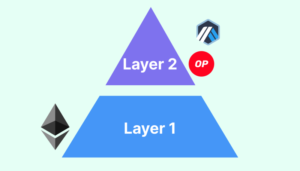
The solution wasn’t to compromise Ethereum’s security by making L1 faster. Instead, the community embraced a layered approach:
- L1 remains the bedrock of security and consensus
- Layer 2 networks handle the heavy lifting of execution
Think of L1 as a supreme court․ Իt doesn’t handle every dispute, but its rulings are final and binding. L2s are the lower courts, processing the vast majority of cases efficiently while remaining subject to L1’s ultimate authority.
Why This Matters
| Metric | Ethereum L1 | Layer 2s (Combined) |
|---|---|---|
| Daily transactions | ~26,000 | ~1.72 million |
| Scaling factor | 1x | 67x |
| Typical transaction cost | $1-5 | $0.01-0.10 |
How Rollups Work: The Two Flavors
The Core Concept
Rollups are the dominant form of Layer 2 scaling. They “roll up” hundreds of transactions off-chain, compress them into a single batch, and submit that batch to Ethereum L1 along with a cryptographic proof. This dramatically reduces the data L1 must process while inheriting Ethereum’s security.
Optimistic Rollups
Optimistic rollups (like Arbitrum and Optimism) assume transactions are valid by default, they’re “optimistic.” A challenge period (typically 7 days) allows anyone to dispute fraudulent transactions by submitting a fraud proof. If fraud is proven, the perpetrator is penalized.
| Pros | Cons |
|---|---|
| EVM-compatible (easy for developers) | 7-day withdrawal delays |
| Mature ecosystem, proven technology | Requires watchers to monitor for fraud |
| Lower computational overhead | Security depends on honest challengers |
ZK-Rollups
ZK-rollups (like zkSync, Starknet, and Polygon zkEVM) use zero-knowledge proofs to mathematically verify that all transactions are valid. When a batch is submitted, a validity proof is attached․ L1 instantly knows the batch is correct without re-executing anything.
| Pros | Cons |
|---|---|
| No withdrawal delay | EVM compatibility is still evolving |
| Stronger cryptographic guarantees | Higher computational cost to generate proofs |
| Better privacy potential | Less mature ecosystem |
The 2026 Reality
Both approaches coexist and serve different needs. According to L2BEAT data, optimistic rollups dominate in transaction volume, with Arbitrum and Base leading, while ZK-rollups are gaining ground with specialized applications requiring instant finality.
Major L2 Ecosystems: Arbitrum, Optimism, and Base
Arbitrum: The Volume Leader
Arbitrum, developed by Offchain Labs, consistently leads in transaction volume and TVL among L2s. Its Nitro stack delivers high performance, and the upcoming Stylus upgrade will allow developers to write smart contracts in Rust and C++, massively expanding the developer ecosystem.
Arbitrum’s “community source” model requires chains built on its Orbit stack that settle outside the Arbitrum ecosystem to contribute 10% of protocol revenue to the Arbitrum DAO. The DAO has accumulated approximately 20,000 ETH in revenue.
Optimism and the Superchain
Optimism pioneered the OP Stack – a modular, open-source framework for building L2s. Its vision of the “Superchain” envisions a network of interoperable L2s sharing security and communication.
Major projects like Coinbase’s Base, Sony’s Soneium, and Worldcoin’s World Chain launched on the OP Stack, validating this approach. However, the model’s weakness became apparent when Base announced its departure.
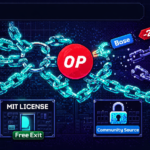
Optimism fully open-sourced the OP Stack under the MIT license, anyone can use it freely. Revenue sharing only applies when chains join the official Superchain ecosystem, contributing either 2.5% of revenue or 15% of net on-chain income.
| Strength | Weakness |
|---|---|
| Rapid adoption (Base, Sony, Worldcoin) | Low barriers to exit |
| Modular architecture attracts customization | High-value chains may leave |
| Permissionless innovation | Free-rider problem |
Base: The Coinbase-Backed Powerhouse
Base launched in 2023 as an OP Stack-based L2 incubated by Coinbase. It quickly became one of the most active L2s, leveraging Coinbase’s massive user base and brand trust.
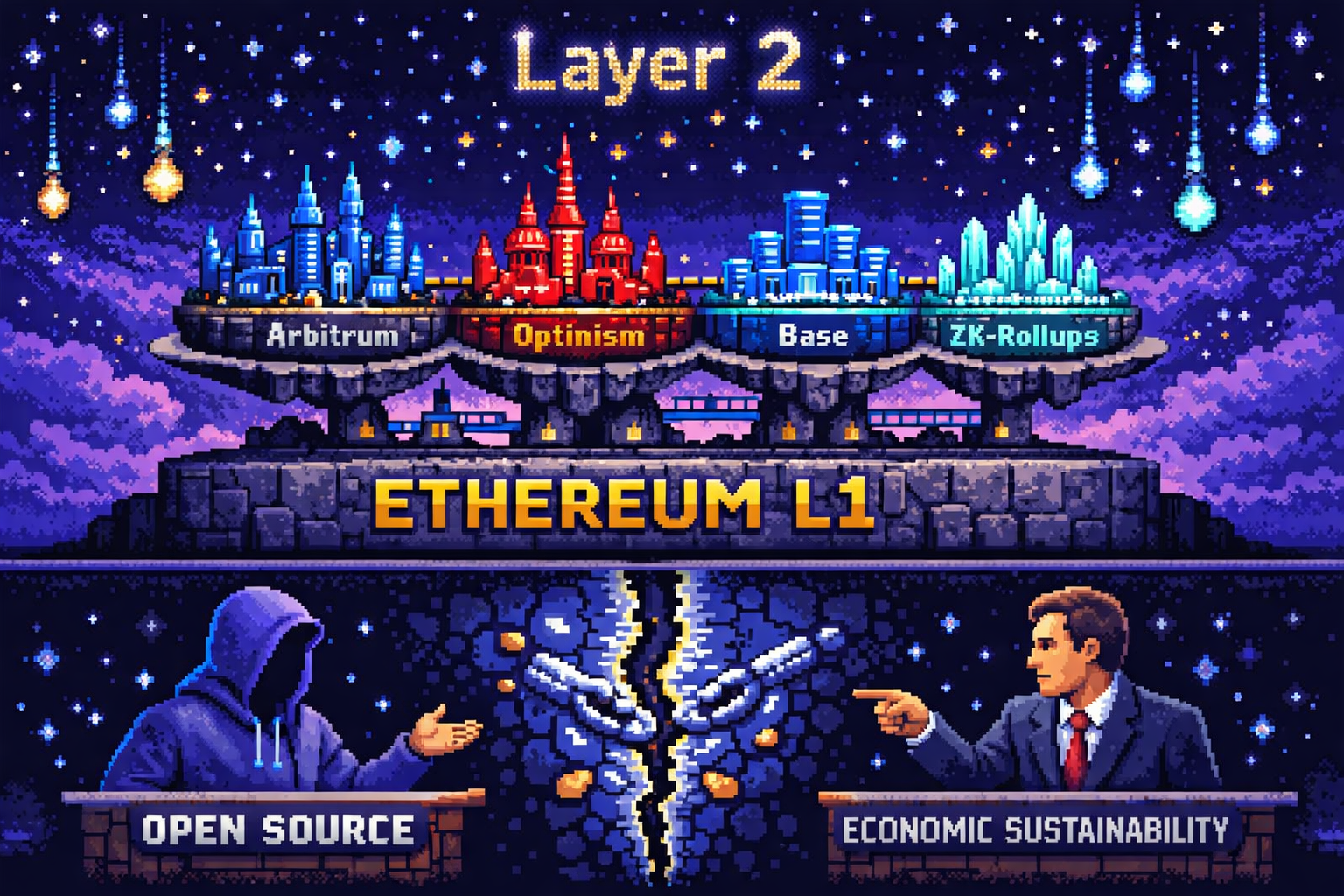
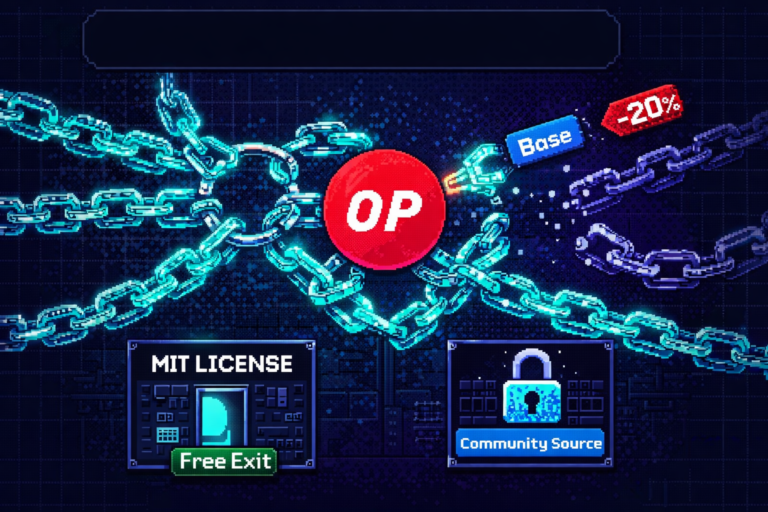
On February 18, 2026, Base announced it would transition from the OP Stack to a proprietary unified architecture, triggering a 20% drop in OP token price and raising fundamental questions about L2 economic alignment.
The stated rationale: increasing upgrade frequency and reducing external dependencies. The market’s reaction reflected concerns about the Superchain model’s sustainability.
Comparison Table (March 2026)
| L2 | Type | Key Feature | Recent News |
|---|---|---|---|
| Arbitrum | Optimistic | Largest TVL, Stylus upgrade | Robinhood building on Orbit |
| Optimism | Optimistic | Superchain vision, OP Stack | Base departure, OP Enterprise launch |
| Base | Optimistic | Coinbase-backed | Split from OP Stack to proprietary |
| zkSync | ZK-rollup | Native account abstraction | Growing DeFi ecosystem |
| Starknet | ZK-rollup | Cairo language, app-chain focus | Quantum leap in TPS |
The Great Debate: Open Source vs Sustainable Economics
The Base-OP Split: A Watershed Moment
On February 18, 2026, Coinbase’s Base announced it would sever its reliance on the Optimism OP Stack and transition to a proprietary unified codebase. The stated rationale: increasing upgrade frequency and reducing external dependencies. The market reaction was swift. OP dropped over 20% within 24 hours.
This event crystallized a fundamental debate in blockchain infrastructure: how do you build economically sustainable ecosystems on open-source code?
Two Competing Models
Optimism’s Model: Openness and Network Effects
Optimism fully open-sourced the OP Stack under the MIT license – anyone can use it freely, modify it, and build their own L2. Revenue sharing only applies when chains join the official Superchain ecosystem.
The logic: maximize adoption through openness, and the value of the OP token will rise through network effects.
Arbitrum’s Model: Enforced Alignment
Arbitrum’s “community source” approach is more complex. Code is public, but any chain built on Arbitrum Orbit that settles outside the Arbitrum ecosystem must contribute 10% of protocol revenue to the Arbitrum DAO. Chains staying within the ecosystem enjoy freedom; those leaving pay.
| Strength | Weakness |
|---|---|
| Sustainable revenue stream (20k ETH accumulated) | May slow initial adoption |
| Economic alignment with ecosystem | More complex licensing |
| Institutional appeal (Robinhood) | Permissioned early stage |
The Historical Parallel
This debate echoes decades of open-source history:
- Linux succeeded with Red Hat selling services, not code
- MySQL used dual licensing
- WordPress powers 40% of the web but still struggles with “free-rider” dynamics
The crypto twist: tokens add both new coordination mechanisms and new tensions.
Technical Breakthroughs: Proto-Danksharding and Blobs
The Cost Problem Before 2024
Historically, over 90% of the transaction cost users paid on rollups was due to data storage on Ethereum, permanently storing transaction data as calldata was expensive. This limited how cheap L2s could become.
Proto-Danksharding (EIP-4844)
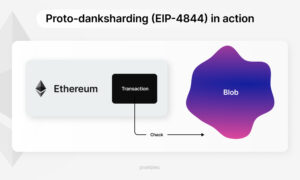
Implemented in the Cancun-Deneb (“Dencun”) upgrade in March 2024, Proto-Danksharding introduced a new transaction type carrying “blobs” of data. Unlike calldata, blobs are temporary, they’re deleted from Ethereum once no longer needed. This makes them dramatically cheaper.
| Before Proto-Danksharding | After Proto-Danksharding |
|---|---|
| L2 costs: $0.10-0.50 | L2 costs: $0.01-0.05 |
| Data stored permanently | Data stored temporarily in blobs |
| Limited by L1 calldata space | Blob space expands capacity |
The Impact
Since implementation, rollups have begun utilizing blob storage, resulting in reduced transaction costs for users and millions of transactions processed in blobs. Current rollups are 5-20x cheaper than Ethereum L1, with ZK-rollups soon expected to reduce fees by 40-100x.
Danksharding: The Next Step
Full Danksharding is the second stage of blob expansion. It requires new methods for checking data availability through data availability sampling (DAS) and separating block building from block proposal (Proposer-Builder Separation or PBS). This will enable another 100-1000x scale-up, potentially bringing transaction costs below $0.001.
The 2026 Roadmap: Glamsterdam and Heze-Bogota
Two Major Upgrades in 2026
Ethereum’s 2026 upgrade roadmap features a two-phase rollout targeting scalability, decentralization, and censorship resistance.
Glamsterdam (Mid-2026)
| Feature | Impact |
|---|---|
| Parallel transaction processing | Increases L1 throughput to ~10,000 TPS |
| Increased gas limits | More space per block |
| ZK proof verification | Native support for ZK-rollup verification |
| Block-Level Access Lists (BALs) | Reduces gas costs for complex transactions |
| Enshrined Proposer-Builder Separation (ePBS) | Mitigates centralization risks |
Heze-Bogota (Late 2026)
| Feature | Impact |
|---|---|
| Fork-Choice Inclusion Lists (FOCIL) | Validator groups enforce transaction inclusion |
| Verkle Trees | Compresses node storage, reduces operational costs |
| Privacy enhancements | Shielded transfers for select applications |
| 72 blobs per block | Accelerates L2 scalability |
The Institutional Angle
These upgrades directly address institutional pain points – high fees, regulatory ambiguity, and centralization risks. Analysts project Ethereum’s upgrades could catalyze $28.6 billion in ETF assets offering staking yields and $180 billion in tokenized real-world assets by 2027.
Beyond Rollups: Validiums and Alternative Approaches
What Are Validiums?
Validium is a scaling solution that uses validity proofs (like ZK-rollups) but stores transaction data off-chain rather than on Ethereum. This enables even greater scalability – up to 9,000+ transactions per second, but introduces trade-offs.
How Validiums Work
| Component | Function |
|---|---|
| Off-chain execution | Transactions processed away from L1 |
| Validity proofs | ZK-SNARKs/STARKs verify correctness |
| Data availability committee | Stores off-chain data (centralization risk) |
| On-chain settlement | Final verification on Ethereum |
The Trade-Off
| Advantage | Risk |
|---|---|
| 9,000+ TPS throughput | If data availability fails, funds can freeze |
| Ultra-low fees | Users must trust data committees |
| Ideal for high-frequency apps | Withdrawal delays if data withheld |
Use Cases
Validiums excel for applications where high throughput matters more than absolute decentralization – gaming, social media, and certain enterprise use cases. Projects like Immutable X use Validium for NFT scaling.
The Strategic Pivot: Why Vitalik Is Rethinking Everything
The Statement That Shook Ethereum
In February 2026, Vitalik Buterin issued a blunt reality check: the original “rollup-centric roadmap” no longer makes sense. This wasn’t a casual remark. It signaled a fundamental reassessment of Ethereum’s scaling strategy.
Three Developments Driving the Rethink
1. Ethereum Itself Is Scaling
Ethereum’s own L1 performance has improved faster than expected. Higher gas limits, parallel processing, and upcoming upgrades mean L1 can handle more traffic directly.
As Buterin noted, scaling Ethereum now means creating “large quantities of block space backed by the full faith and credit of Ethereum.”
2. L2 Decentralization Has Stalled
Many L2s have not progressed toward decentralization as promised. Progress toward “stage 2” decentralization has been slower and more difficult than expected.
Some L2s may never fully decentralize, including for regulatory reasons. Projects argue that “their customers’ regulatory needs require them to have ultimate control.”
3. L2s Have Become Independent Platforms
L2s are no longer just “branded shards” of Ethereum. They’ve evolved into distinct platforms with their own economies, governance, and roadmaps. Base’s split from Optimism epitomizes this trend.
As Karl Floersch noted, “Optimism was built to scale Ethereum… but has grown into an independent platform.”
The New Framework
Buterin now suggests viewing L2s as a spectrum of networks with different levels of connection to Ethereum.
“If you create a 10000 TPS EVM where its connection to L1 is mediated by a multisig bridge, then you are not scaling Ethereum.”
L2s should focus on providing value beyond basic scaling – privacy, application-specific design, ultra-fast confirmation and be transparent about what guarantees they offer.
What This Means
This isn’t an abandonment of L2s. It’s a maturation of the relationship. L1 remains the bedrock of security; L2s become specialized execution environments. The winners will be those that deliver genuine product-market fit, not just throughput.
What This Means for Users and Developers
For Users
| Consideration | Implication |
|---|---|
| Choose L2s based on your needs | Arbitrum for deep liquidity, Base for Coinbase integration, ZK-rollups for fast exits |
| Understand security models | Not all L2s offer the same guarantees; check decentralization stages |
| Compare total costs | L2 fees vary; use tools like L2BEAT to compare |
| Watch for ecosystem shifts | L2 alliances and splits affect token values and interoperability |
For Developers
| Opportunity | Challenge |
|---|---|
| Multiple L2 targets | Deploy across Arbitrum, Optimism, Base, zkSync |
| Superchain interoperability | Build for cross-L2 communication |
| L2-specific features | Leverage Stylus (Rust on Arbitrum), account abstraction on zkSync |
| New business models | L2 tokens, revenue sharing, app-chains |
The L1-L2 Relationship Redefined
L1 is no longer just a slow settlement layer, it’s becoming more capable. Developers building high-security applications (DeFi, RWAs) may increasingly choose L1 directly as fees fall. L2s become execution specialists, not just scaling band-aids.
The Future: 2-Second Finality and Quantum Resistance
The Next Decade Roadmap
In February 2026, the Ethereum Foundation unveiled “Strawmap” – a long-term technology roadmap looking ahead to 2029 and beyond. The goals are ambitious:
| Goal | Target |
|---|---|
| L1 transaction finality | Reduce from 16 minutes to 2 seconds |
| L1 throughput | ~10,000 TPS |
| L2 throughput | 10 million TPS |
| Quantum resistance | Hash-based signatures within 4 years |
| Privacy | Shielded transfers for select applications |
The Ship of Theseus Approach
Rather than rebuilding Ethereum all at once, the roadmap takes a “Ship of Theseus” approach, replacing components incrementally. Slot times will reduce step by step: from 12 seconds to 8, 6, 4, and ultimately 2 seconds.
Quantum Preparedness
Four elements of Ethereum are quantum-vulnerable:
- BLS signatures (consensus layer)
- KZG commitments (data availability)
- ECDSA signatures (EOAs)
- ZK proofs
Each will be upgraded to quantum-resistant alternatives over the coming years.
Next Steps: From Learning to Participating
You now understand Ethereum’s scaling landscape. Here’s where to go next:
The Explorer’s Path
| Step | Action | Resource |
|---|---|---|
| 1. Get an L2-compatible wallet | MetaMask, Rabby, OKX Wallet | Wallet Guide |
| 2. Bridge funds to an L2 | Use official bridges or aggregators | Arbitrum Guide / Optimism Guide |
| 3. Start with small amounts | Test transactions, compare fees | L2 Transaction Comparison |
| 4. Explore L2-native apps | Try Aave on Arbitrum, Uniswap on Optimism | DeFi Guide |
| 5. Follow ecosystem news | Track L2BEAT, governance forums | Newsletter Signup |
Essential Next Reads
- 📚 What is Arbitrum? A Complete Guide
- 📚 Optimism and the Superchain Explained
- 📚 ZK-Rollups vs Optimistic Rollups
- 📚 Ethereum 2.0 and Beyond
Join the Community
The L2 landscape evolves rapidly – new upgrades, protocol splits, and economic models emerge constantly. Join our Discord, follow us on Twitter, and subscribe to our newsletter for weekly updates on Ethereum scaling.
Final Thought
When I first started following Ethereum scaling, the vision was simple: L1 for security, L2s for scaling. Today, that vision has splintered into competing models, economic debates, and strategic pivots.
But that’s not failure, it’s maturity. The fact that we’re debating open-source economics, decentralization stages, and quantum resistance means Ethereum has survived its infancy and entered adolescence.
The next few years will determine whether L2s become true extensions of Ethereum or independent platforms with their own destinies. Either way, users win: more choice, lower fees, and increasingly specialized execution environments.
Stay curious, stay skeptical, and keep exploring.
Disclaimer: This guide is for educational purposes only and does not constitute financial advice. Layer 2 protocols involve technical and economic risks. Always do your own research before using any protocol or investing in related tokens.
This guide was last updated for the 2026 edition. The L2 landscape evolves rapidly – new protocols launch, alliances shift, and economic models adapt. Always verify current information before using any protocol.
Frequently Asked Questions
How do rollups work?
Rollups batch hundreds of transactions off-chain, compress them, and submit a single batch to Ethereum with a cryptographic proof. Optimistic rollups assume validity and use fraud proofs; ZK-rollups use mathematical validity proofs for instant finality.
What happened between Base and Optimism?
On February 18, 2026, Coinbase's Base announced it would transition from the Optimism OP Stack to a proprietary codebase, triggering a 20% drop in OP token price. This highlighted tensions between open-source infrastructure and economic sustainability.
Why is Vitalik Buterin rethinking Ethereum's rollup strategy?
Because:
- Ethereum itself is scaling faster than expected
- Many L2s have slowed decentralization
- L2s have evolved into independent platforms with their own priorities
The original vision of L2s as "branded shards" of Ethereum no longer reflects reality.
What is Proto-Danksharding?
Proto-Danksharding (EIP-4844), implemented in March 2024, introduced temporary "blob" storage for L2 data, reducing transaction costs by over 90%. It's the first step toward full Danksharding, which will enable 100-1000x more scaling.
Which Layer 2 is best?
It depends on your needs:
- Arbitrum leads in TVL and transaction volume
- Optimism offers the Superchain vision
- Base provides Coinbase integration
- zkSync and Starknet offer ZK-rollup advantages
Compare real-time data on L2BEAT.
Are Layer 2s decentralized?
Decentralization varies widely. Some L2s have progressed toward "stage 2" (full decentralization), while others remain at stage 0 ("training wheels"). Regulatory pressures have slowed progress for many projects.
What's the difference between Optimistic and ZK-rollups?
Optimistic rollups assume validity with a 7-day challenge window; ZK-rollups use cryptographic proofs for instant verification. Optimistic rollups are more EVM-compatible; ZK-rollups offer stronger guarantees and faster exits.
What are blobs in Ethereum?
Blobs are temporary data structures introduced in Proto-Danksharding that store L2 transaction data much more cheaply than permanent calldata. They're deleted after a few weeks.
When will Danksharding be fully implemented?
Work on full Danksharding continues, with progress on prerequisites like PBS (Proposer-Builder Separation) and DAS (Data Availability Sampling). Implementation is expected in phases over 2026-2027.
Can I use the same wallet across different L2s?
Yes. Most wallets (MetaMask, Rabby, OKX Wallet) support multiple L2s. You'll need native tokens on each L2 for gas.
What is the Superchain?
The Superchain is Optimism's vision of a network of interoperable L2s built on the OP Stack, sharing security and communication. Chains in the Superchain contribute revenue to the Optimism Collective.
Why did OP token price drop 20%?
The drop followed Base's announcement that it would leave the OP Stack for a proprietary codebase, raising concerns about the Superchain model's sustainability.
Are L2s profitable for their operators?
Some are. Arbitrum's DAO has accumulated approximately 20,000 ETH in revenue. However, many L2s operate at a loss, subsidized by venture capital or token sales.
What's the future of Ethereum scaling?
The future includes 2-second block times, quantum-resistant cryptography, shielded transfers for privacy, and L2s focusing on specialized use cases rather than just scaling.
About the Author

1 thought on “Layer 2 Scaling: Ethereum’s Future (2026 Complete Guide)”