
If you’re using DeFi in 2026, chances are you’ve transacted on Arbitrum.
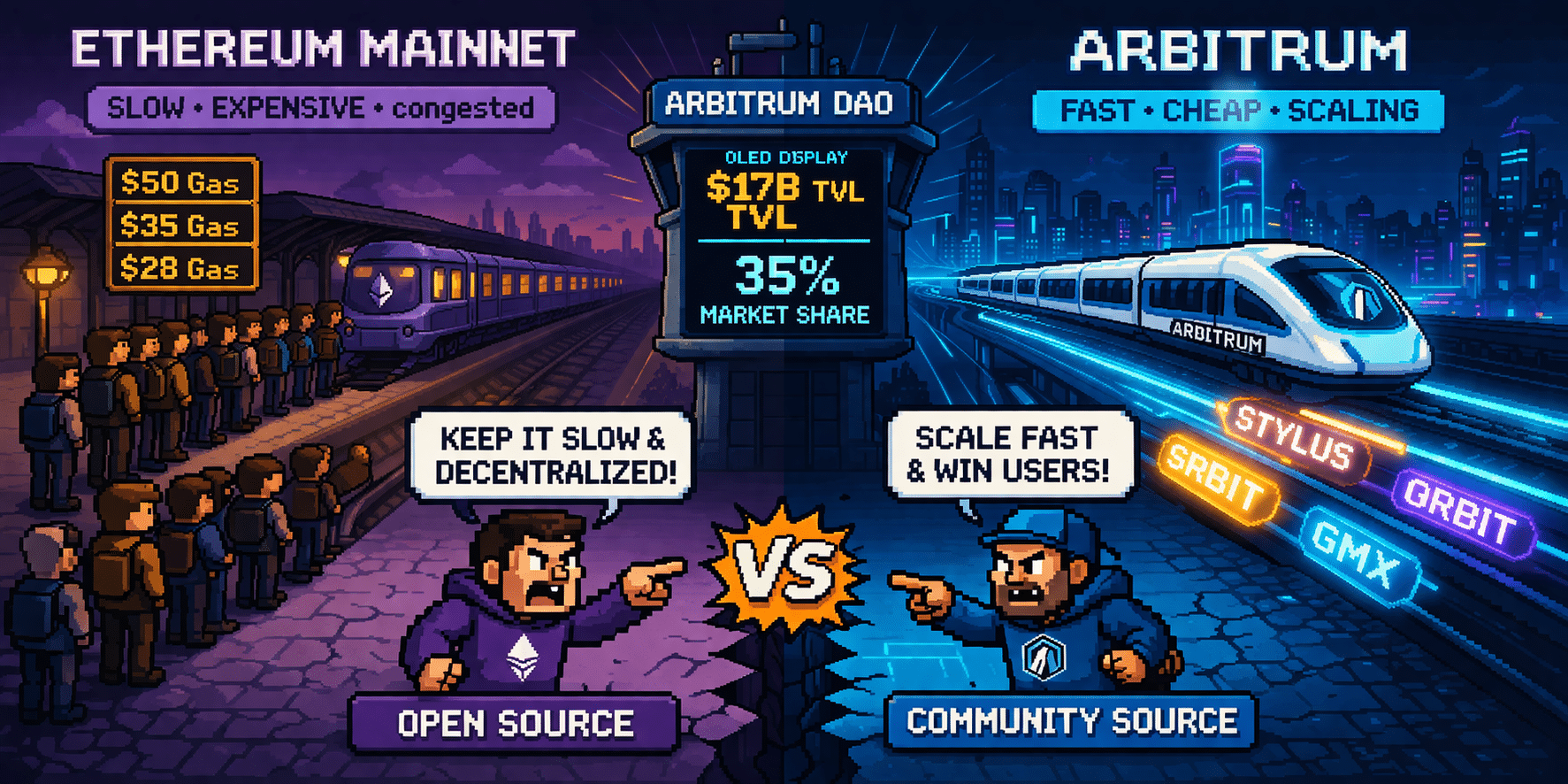
With $2 billion in total value locked Arbitrum has become the default home for complex DeFi protocols like GMX, Camelot, and Aave. Its market share of the L2 ecosystem stands at 35.3%, and its daily transaction volume now dwarfs Ethereum mainnet by a factor of over 60.
But behind the numbers lies a more interesting story: a deliberate, sometimes controversial, economic model that prioritizes long-term sustainability over rapid adoption.
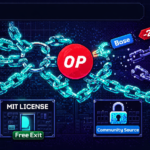
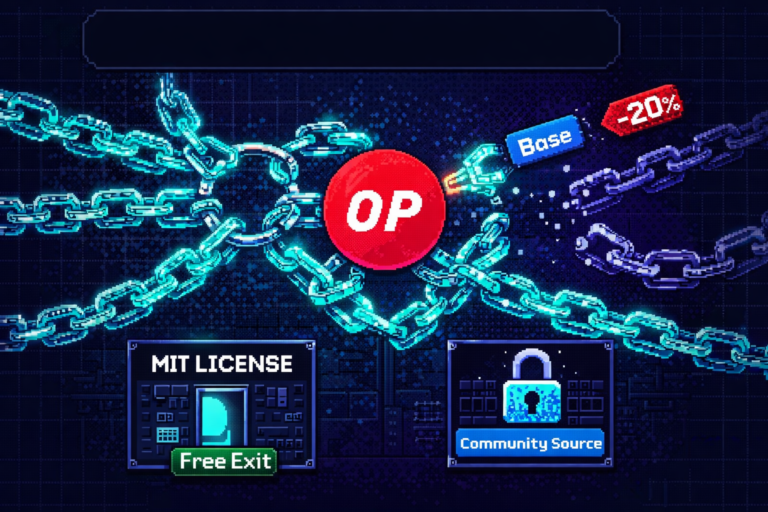
While competitors like Optimism pursued a fully open-source, MIT-licensed strategy that attracted major projects like Base and Worldcoin, Arbitrum chose a different path. Its “community source” model requires chains built on its Orbit stack that settle outside the Arbitrum ecosystem to contribute 10% of protocol revenue – a decision that some saw as restrictive until Base’s departure from OP Stack sent OP prices tumbling 20%, vindicating Arbitrum’s caution.
In this comprehensive guide, we’ll explore what is Arbitrum, it’s technical architecture (including the game-changing Stylus upgrade), its economic model, the DeFi ecosystem it powers, and—most importantly—how it compares to competitors in the evolving L2 landscape.
Arbitrum in One Sentence
Arbitrum is a Layer 2 scaling solution for Ethereum that processes transactions off-chain using Optimistic Rollup technology, then settles them on Ethereum with fraud proofs, offering near-instant transactions at a fraction of mainnet cost while inheriting Ethereum’s security.
Here are a few other ways to think about it:
- For developers: Arbitrum is an EVM-compatible Layer 2 that supports traditional Solidity development and, through Stylus, allows smart contracts written in Rust, C, and C++ to run alongside EVM contracts with lower gas costs for compute-intensive operations.
- For DeFi users: Arbitrum is where Ethereum’s most sophisticated DeFi protocols live – cheaper and faster than mainnet, with deep liquidity and a thriving ecosystem.
- For the curious: Think of Arbitrum as a high-speed express lane built alongside Ethereum’s local roads. It handles the heavy traffic, then settles the final results back on Ethereum’s secure foundation.
The Problem Arbitrum Solves
Ethereum’s Scalability Challenge
Ethereum’s mainnet is designed for security and decentralization, not speed. Before scaling solutions, it could process only 15-20 transactions per second, leading to congestion and gas fees spiking above $50 during peak demand. This made small transactions economically impossible and complex DeFi applications prohibitively expensive.
The Layer 2 Promise
Arbitrum’s solution is elegant: move the heavy computational work off-chain while anchoring security on Ethereum. Users can deploy and interact with smart contracts exactly as they would on mainnet, but with dramatically lower fees and faster confirmation times.
The 2026 Context
By 2026, Arbitrum has delivered on this promise. Daily transaction volume on Arbitrum exceeds 1.7 million, while Ethereum mainnet handles roughly 26,000, a 65x difference. Average fees on Arbitrum range from $0.05 to $0.30, versus $1-5 on mainnet.
How Arbitrum Works: Optimistic Rollups and Fraud Proofs
The Optimistic Rollup Model
Arbitrum is an Optimistic Rollup. The name reflects its core assumption: transactions are assumed valid by default – they’re treated “optimistically.” Instead of verifying every transaction on Ethereum, Arbitrum processes them off-chain and periodically posts batches to Ethereum with a claim that they’re correct.
The Fraud Proof Mechanism
If someone submits a fraudulent batch, anyone can challenge it within a challenge window (currently about 7 days). The challenger submits a fraud proof, a cryptographic proof that pinpoints the exact step where the execution deviated from the rules. The fraudulent batch is rejected, and the submitter is penalized.
This mechanism ensures that even if off-chain execution is compromised, invalid transactions can be caught and reverted on Ethereum.
The Sequencer
Arbitrum uses a centralized sequencer to order transactions, providing sub-second transaction confirmations and MEV protection. While this introduces trust assumptions (the sequencer could theoretically censor transactions), Arbitrum is working on decentralization through its “BOLD” protocol, a permissionless validation system expected in 2026.
Gas Costs
Transaction fees on Arbitrum range from $0.05 to $0.30, dramatically cheaper than Ethereum mainnet’s $1-5 average, though higher than Base’s sub-cent fees. This reflects Arbitrum’s focus on complex DeFi applications rather than consumer-grade payments.
Arbitrum Nitro: The Technical Foundation
What Is Nitro?
Arbitrum Nitro, launched in 2022, is the tech stack powering Arbitrum One, Arbitrum Nova, and all Arbitrum Orbit chains. It represents a fundamental redesign that makes Arbitrum more Ethereum-compatible and dramatically more efficient.
Key Nitro Innovations
| Innovation | Impact |
|---|---|
| Geth core | Nitro integrates Go Ethereum’s execution engine directly, ensuring near-perfect EVM compatibility |
| WASM-based fraud proofs | Instead of custom interpreters, Nitro uses WebAssembly for fraud proofs, simplifying verification |
| Sequencer efficiency | Improved transaction ordering reduces latency to sub-second confirmations |
| Calldata compression | Batches posted to Ethereum are highly compressed, minimizing L1 gas costs |
The State Transition Function
The State Transition Function (STF) is the heart of Arbitrum’s execution model. It takes the current blockchain state and an ordered list of transactions, then outputs the new state deterministically. This deterministic property ensures all network nodes reach the same result, maintaining consensus.
Arbitrum Nova: For Gaming and Social
In addition to Arbitrum One (for DeFi), Nitro powers Arbitrum Nova, a separate chain optimized for high-throughput, low-value applications like gaming and social media. Nova uses AnyTrust technology, trading a small amount of security for near-zero fees, making it ideal for applications where thousands of transactions occur per user.
Stylus: Writing Smart Contracts in Rust and C++
The Stylus Revolution
Stylus is Arbitrum’s most significant technical differentiator. It adds a second, coequal virtual machine to the EVM, allowing smart contracts written in Rust, C, and C++ to run alongside traditional Solidity contracts, with full interoperability between them.
How Stylus Works
| Stage | Process |
|---|---|
| Coding | Write contracts in Rust (or C/C++) using the Stylus SDK |
| Compilation | Code compiles to WebAssembly (WASM), a portable binary format |
| Activation | WASM is posted on-chain; contracts must be reactivated yearly or become uncallable |
| Execution | Contracts run in a WASM runtime, executing faster than EVM bytecode |
| Proving | Fraud-proof system works identically to EVM contracts |
Why Stylus Matters
| Advantage | Explanation |
|---|---|
| Gas efficiency | WASM programs execute more efficiently than EVM bytecode for memory and compute-intensive operations |
| Rust safety | Rust’s compile-time memory safety eliminates entire classes of vulnerabilities (reentrancy, buffer overflows) |
| Ecosystem access | Existing Rust/C++ libraries can be ported on-chain with minimal modifications |
| Interoperability | Solidity contracts can call Stylus contracts and vice versa—no developer friction |
Real-World Applications
- ZK-proof verification: Onchain verification of zero-knowledge proofs at dramatically reduced gas costs
- Custom AMM curves: Implement complex pricing logic for DeFi instruments
- Onchain games: Memory-intensive applications that were previously cost-prohibitive in Solidity
- Cryptographic applications: Advanced cryptography that would be impossible in Solidity
The Stylus Sprint
To encourage adoption, Arbitrum launched the Stylus Sprint program in 2026, offering 5 million ARB in grants for teams building contracts in Rust, C, or C++. This reflects Arbitrum’s bet that developer demand for Rust’s safety and performance will drive long-term ecosystem growth.
Important: Reactivation Requirement
Stylus contracts must be reactivated once per year (365 days) or after any Stylus upgrade. If a contract isn’t reactivated, it becomes uncallable – a unique mechanism that ensures contracts remain compatible with evolving infrastructure.
Arbitrum Orbit: Launching Your Own L2/L3
What Is Orbit?
Arbitrum Orbit is a framework that lets developers launch their own dedicated L2 or L3 chains using the Arbitrum Nitro stack. These chains can be customized for specific use cases (gaming, enterprise, DeFi) while inheriting security from Ethereum or settling on Arbitrum One.
Orbit Economics
Orbit chains that settle on Arbitrum One or Nova pay no fees to the Arbitrum DAO. However, chains built on Orbit that settle on other networks (including Ethereum mainnet) must contribute 10% of protocol revenue to Arbitrum.
| Settlement Destination | Revenue Share |
|---|---|
| Arbitrum One / Nova | 0% |
| Other L2s / Ethereum mainnet | 10% (8% to DAO, 2% to Developer Guild) |
Orbit Adoption
Notable projects building on Orbit include:
- Robinhood’s L2 chain: Testnet recorded 4 million transactions in its first week
- Sony’s Soneium: Built on OP Stack, but Arbitrum’s institutional traction is growing
- Various gaming chains: Leveraging Arbitrum’s performance for high-throughput applications
The Value Accumulation Argument
The Orbit model ensures that value created by chains built on Arbitrum technology flows back to the ecosystem. The Arbitrum DAO has reportedly accumulated approximately 20,000 ETH in revenue, a sustainable funding stream that competitors relying purely on open-source donations lack.
The ARB Token and DAO Governance
ARB Token Basics
ARB is the governance token of the Arbitrum DAO, launched in March 2023 with a historic airdrop to early users. With a circulating market capitalization exceeding $1.1 billion and trading on over 62 exchanges, ARB has established itself as a major L2 governance token.
Token Utility
| Function | Description |
|---|---|
| Governance voting | ARB holders vote on protocol upgrades, treasury allocations, and parameter changes |
| Treasury management | The DAO controls a substantial treasury, recently deploying weETH (liquid restaking tokens) for yield optimization |
| Grants programs | ARB funds initiatives like the Stylus Sprint (5M ARB) and ecosystem grants |
Recent Treasury Developments
In early 2026, the Arbitrum DAO added ether.fi’s weETH (wrapped eETH)** to its treasury management strategy, depositing 3,117 ETH – now the third-largest treasury allocation. This move underscores the DAO’s focus on capital efficiency and yield optimization.
Governance Structure
The DAO operates with a bicameral structure: the Security Council handles emergency upgrades, while the broader token-holder community votes on major proposals. This balances decentralization with the need for rapid response to critical issues.
The Economic Model: Community Source vs Open Source
The Base-OP Split: A Watershed Moment
On February 18, 2026, Coinbase’s Base announced it would transition from the Optimism OP Stack to a proprietary unified architecture. The market reacted swiftly: OP dropped over 20% within 24 hours. This event crystallized a fundamental debate about how to sustainably fund blockchain infrastructure.
Optimism’s MIT Model
| Feature | Details |
|---|---|
| License | MIT – fully open source, no restrictions |
| Revenue sharing | Only for Superchain members (2.5% of revenue or 15% of net income) |
| Philosophy | Maximize adoption through openness; value accrues via network effects |
Arbitrum’s Community Source Model
| Feature | Details |
|---|---|
| License | Code is public, but commercial use outside ecosystem requires contribution |
| Revenue sharing | 10% of protocol revenue from chains settling outside Arbitrum ecosystem |
| Philosophy | Enforce economic alignment; ensure sustainable funding for infrastructure |
The Trade-offs
| Dimension | Optimism’s Approach | Arbitrum’s Approach |
|---|---|---|
| Adoption speed | Faster—Base, Worldcoin, Sony all adopted OP Stack | Slower—enterprise adoption requires negotiation |
| Ecosystem cohesion | Lower—chains can leave (as Base did) | Higher—revenue sharing creates alignment |
| Sustainability | Relies on OP token value for funding | Direct revenue stream from Orbit chains |
| Developer freedom | Maximum—anyone can fork and modify | Moderate—commercial use requires contribution |
Historical Parallels
This debate mirrors decades of open-source history:
- Linux succeeded with Red Hat selling services, not code
- MySQL used dual licensing for commercial users
- WordPress powers 40% of the web but still struggles with “free-rider” dynamics
The crypto twist: tokens add both new coordination mechanisms and new tensions.
Arbitrum’s Argument
In 2026, Arbitrum co-founder Steven Goldfeder emphasized the importance of economic alignment: “If a stack allows taking value without contributing, eventually this will happen.” Base’s departure, he argued, validated Arbitrum’s cautious approach.
The Arbitrum DeFi Ecosystem
Market Position
Arbitrum holds $2 billion in total value locked (TVL) – the highest among all Layer 2s, and 35.3% of the L2 market share. This makes it the default home for complex DeFi applications that require deep liquidity and composability.
Key Protocols on Arbitrum
| Protocol | Category | Significance |
|---|---|---|
| GMX | Perpetuals | The largest perp DEX, pioneered GMX’s unique model on Arbitrum |
| Aave | Lending | Major deployment; deep liquidity for lending markets |
| Uniswap | DEX | Heavy volume; critical liquidity infrastructure |
| Camelot | DEX/LP | Native Arbitrum protocol with innovative launchpad features |
| Curve | Stablecoin DEX | Deep stablecoin pools |
| Pendle | Yield trading | Growing yield derivatives ecosystem |
DeFi Metrics
| Metric | Value |
|---|---|
| TVL | $17 billion |
| L2 market share | 35.3% |
| USDC transactions YoY growth | ~80% |
| Active grants | $85 million |
Why DeFi Chooses Arbitrum
- Deep liquidity: The largest protocol deployments attract liquidity, which attracts more protocols, a virtuous cycle
- Mature infrastructure: Fraud proof system is battle-tested; Stylus offers new developer opportunities
- Composability: EVM equivalence means existing Solidity tools work out of the box
- Security: Ethereum-level guarantees with lower costs
Arbitrum vs Optimism: The Great L2 Debate
Comparison Table
| Feature | Arbitrum | Optimism |
|---|---|---|
| Launch date | 2021 | 2021 |
| TVL | $17 billion | $4-5 billion (estimate) |
| L2 market share | 35.3% | ~15-20% |
| Technology | Optimistic Rollup | Optimistic Rollup |
| Unique feature | Stylus (Rust/C++ contracts) | Superchain interoperability |
| Economic model | Community source (revenue share) | MIT license (free) |
| Governance token | ARB ($1.1B cap) | OP |
| Major backers | Offchain Labs | Optimism Foundation |
| Notable chains | Arbitrum One, Nova, Orbit chains | OP Mainnet, Base (exited), World Chain |
Performance Comparison
| Metric | Arbitrum | Optimism |
|---|---|---|
| Block time | ~0.25 seconds (sequencer) | ~2 seconds |
| Gas fees (typical) | $0.05-0.30 | $0.05-0.20 |
| Fraud proof mechanism | Interactive multi-round | Single-round (less mature) |
| Developer ecosystem | DeFi-focused | Consumer-focused |
Vitalik’s 2026 Intervention
In February 2026, Ethereum co-founder Vitalik Buterin stated that the original L2 scaling path “no longer makes sense” and called for L2 networks to evolve toward specialized directions. Arbitrum’s Offchain Labs responded by emphasizing scaling’s continued importance while acknowledging the need for differentiation.
The Stylus Advantage
The most significant technical difference in 2026 is Stylus. No other major L2 offers Rust/C++ smart contract development with EVM interoperability. This positions Arbitrum to attract developers who prioritize safety and performance but don’t want to leave the EVM ecosystem.
Arbitrum vs Base: Different Strengths
The Consumer vs DeFi Divide
| Dimension | Arbitrum | Base |
|---|---|---|
| TVL | $17 billion | $4.63 billion |
| Market share | 35.3% | 46% of L2 DeFi TVL |
| Revenue share (2025) | – | 62% of total L2 fee revenue |
| Primary strength | DeFi depth, composability | Consumer distribution (Coinbase users) |
| Technical differentiator | Stylus | Coinbase integration |
| Centralization risk | Sequencer | Single sequencer; Coinbase control |
When to Choose Arbitrum
- You’re building complex DeFi protocols that need deep liquidity
- You want to leverage Stylus for Rust/C++ contracts
- Composability with established DeFi primitives matters most
When to Choose Base
- Your target users are Coinbase customers (9.3M monthly active traders)
- You’re building consumer applications (payments, social, gaming)
- Sub-cent fees are critical for your business model
The Relationship
Arbitrum and Base aren’t direct competitors – they serve different layers of the market. Arbitrum is the institutional-grade DeFi layer; Base is the consumer on-ramp. Many users bridge between them.
How to Get Started with Arbitrum
Step-by-Step Guide
Step 1: Get a Wallet
- MetaMask, Rabby, OKX Wallet, or Coinbase Wallet all support Arbitrum
- Add the Arbitrum network manually or use chainlist.org
Step 2: Fund Your Wallet
- Buy ETH on a centralized exchange (Coinbase, Kraken, Binance)
- Use official bridges to transfer ETH to Arbitrum:
- Arbitrum Bridge (arbitrum.io/bridge)
- Third-party bridges (Orbiter, Hop) may offer faster, cheaper transfers
Step 3: Explore Arbitrum DeFi
- Start with established protocols:
- Swap: Uniswap, Camelot
- Lend: Aave
- Trade perps: GMX
- Always start with small amounts to understand the interface
Step 4: Use Arbitrum Native Apps
- Track your portfolio: DeBank, Zapper, or the native Arbitrum block explorer
- Monitor gas fees: Blocknative or Etherscan Gas Tracker (Arbitrum section)
Step 5: Consider Stylus (For Developers)
- Follow the Stylus quickstart guide to deploy your first Rust contract
- Join the Stylus Developer Telegram group for community support
Resources
- Arbitrum Docs: docs.arbitrum.io
- Stylus GitHub: github.com/OffchainLabs/stylus-sdk
- Community: Arbitrum Discord
The Future of Arbitrum
2026 Roadmap
| Initiative | Timeline | Impact |
|---|---|---|
| BOLD protocol | 2026 | Permissionless validation; sequencer decentralization |
| Stylus adoption | Ongoing | Growing Rust/C++ developer ecosystem |
| Orbit expansion | 2026 | More institutional chains (Robinhood, etc.) |
| L1 scaling benefits | Post-Pectra | Lower costs from Ethereum’s blobs |
The Specialization Thesis
Vitalik Buterin’s 2026 call for L2 “dehomogenization” aligns with Arbitrum’s trajectory. Rather than being just “a cheaper Ethereum,” Arbitrum is building differentiation through Stylus, Orbit, and a focus on complex DeFi. The question isn’t whether Arbitrum will scale, it’s what specialized role it will play in the multi-L2 future.
Economic Sustainability
With 20,000 ETH in DAO revenue and a sustainable funding model, Arbitrum is positioned to maintain infrastructure development regardless of token price fluctuations, a significant advantage over competitors relying purely on token appreciation.
Next Steps: From Learning to Participating
You now understand Arbitrum. Here’s where to go next:
| Step | Action | Resource |
|---|---|---|
| 1. Bridge funds | Move ETH to Arbitrum | Official Arbitrum Bridge |
| 2. Try DeFi | Swap on Uniswap, lend on Aave | Protocol docs |
| 3. Track your positions | Use DeBank or Zapper | Portfolio trackers |
| 4. Explore Stylus (devs) | Deploy a Rust contract | Stylus quickstart |
| 5. Join governance | Acquire ARB, vote on proposals | Arbitrum DAO forum |
Essential Next Reads
- 📚 What is Layer 2 Scaling?
- 📚 Arbitrum vs Optimism: Full Comparison
- 📚 GMX Explained: The Arbitrum Perpetuals Leader
- 📚 How to Deploy on Arbitrum Stylus
Join the Community
Arbitrum’s governance, technical development, and ecosystem growth happen in public. Join the Arbitrum Discord, follow Offchain Labs on X, and subscribe to our newsletter for weekly Arbitrum updates.
Final Thought
Arbitrum isn’t just another L2, it’s a bet on a specific vision of how Ethereum should scale: sustainable, economically aligned, and technically differentiated.
The Base-OP split and Vitalik’s call for specialization have only strengthened Arbitrum’s value proposition. Whether you’re a user, developer, or investor, understanding that vision is the first step to participating in it.
Disclaimer: This guide is for educational purposes only and does not constitute financial advice. Layer 2 protocols involve technical and economic risks. Always do your own research before using any protocol or investing in related tokens.
This guide was last updated for the 2026 edition. Arbitrum evolves rapidly – new upgrades, protocol launches, and governance decisions happen constantly. Always verify current information before using the platform.
Frequently Asked Questions
How does Arbitrum differ from Optimism?
Both are Optimistic Rollups, but they differ in philosophy. Arbitrum has a deeper DeFi ecosystem ($2B TVL) and unique features like Stylus (Rust/C++ contracts). Optimism pursued a fully open-source MIT model, attracting major projects like Base, which later left, triggering a 20% OP drop and validating Arbitrum's "community source" approach to revenue sharing.
What is the Arbitrum Stylus upgrade?
Stylus adds a second virtual machine to Arbitrum that runs WebAssembly code, enabling smart contracts written in Rust, C, and C++ to run alongside Solidity contracts. This offers lower gas costs for compute-intensive operations and Rust's compile-time memory safety, eliminating entire classes of vulnerabilities like reentrancy.
How do I bridge to Arbitrum?
Use the official Arbitrum Bridge (arbitrum.io/bridge) or third-party bridges like Orbiter or Hop. Transfer ETH from your wallet, confirm the transaction on Ethereum mainnet (paying gas fees), and funds will arrive on Arbitrum after confirmation (typically 10-15 minutes).
Is Arbitrum decentralized?
Partially. Arbitrum uses a centralized sequencer to order transactions, which provides fast confirmations but introduces trust assumptions. The "BOLD" protocol aims to enable permissionless validation and sequencer decentralization, with rollout expected in 2026.
What is the ARB token used for?
ARB is a governance token that lets holders vote on Arbitrum DAO proposals, including protocol upgrades, treasury allocations, and grant programs. The DAO controls substantial funds (including weETH yield strategies) and has accumulated ~20,000 ETH in revenue from Orbit chains.
Which DeFi protocols are on Arbitrum?
Major protocols include GMX (perpetuals), Aave (lending), Uniswap and Camelot (DEXs), Curve (stablecoin DEX), and Pendle (yield trading). Arbitrum's $17B TVL makes it the deepest L2 DeFi ecosystem.
What is the difference between Arbitrum One and Arbitrum Nova?
Arbitrum One is the main DeFi-focused chain with Ethereum-level security. Arbitrum Nova uses AnyTrust technology for lower fees, optimized for gaming and social applications where thousands of transactions occur per user.
Can I write smart contracts in Rust on Arbitrum?
Yes, through Stylus. You can write contracts in Rust, C, or C++ that compile to WebAssembly and run alongside EVM contracts. Solidity and Stylus contracts can call each other seamlessly.
What is the Arbitrum Orbit revenue model?
Orbit chains that settle on Arbitrum One or Nova pay no fees. Chains built on Orbit that settle on other networks (including Ethereum) must contribute 10% of protocol revenue to the Arbitrum DAO. This ensures value flows back to the ecosystem.
How does Base's departure from OP Stack affect Arbitrum?
Base's departure validated Arbitrum's economic model. By requiring revenue sharing from external chains, Arbitrum ensures its infrastructure remains sustainably funded, while Optimism's MIT-licensed approach allowed a major chain to leave without contributing back.
What are Arbitrum's transaction fees?
Typical fees range from $0.05 to $0.30, higher than Base's sub-cent fees but lower than Ethereum mainnet's $1-5. This reflects Arbitrum's focus on complex DeFi applications rather than consumer payments.
How do I track Arbitrum activity?
Use L2BEAT for TVL and activity metrics, DeBank or Zapper for portfolio tracking, and the Arbitrum block explorer for transaction details.
What is the Arbitrum DAO treasury doing?
In 2026, the DAO added weETH (liquid restaking tokens) to its treasury strategy, depositing 3,117 ETH for yield optimization. The DAO also funds grants like the Stylus Sprint (5M ARB) and ecosystem development.
Is Arbitrum safe?
Arbitrum's fraud-proof mechanism ensures that even if off-chain execution is compromised, invalid transactions can be challenged and reverted on Ethereum. No major security incidents have compromised user funds, though the sequencer remains centralized.
About the Author

1 thought on “What is Arbitrum? A Complete Guide to Ethereum’s Leading L2”