Imagine if Bitcoin were a calculator – it does one thing (transactions) really well, and it does that one thing perfectly.
Ethereum is like a smartphone. It can run apps, execute programs, and do almost anything you can imagine. You can check your email, trade stocks, play games, or even run a business – all from the same device. That’s the fundamental difference.
Ethereum is a decentralized global computer where developers can build applications that run exactly as programmed without downtime, censorship, or fraud. Its native currency, Ether (ETH), fuels this computer.
I remember my first Ethereum transaction. I’d bought Bitcoin months earlier, but when I finally interacted with a dApp – swapping tokens on Uniswap, something clicked. This wasn’t just “digital gold.” This was a whole new way of building software. I paid a few dollars in gas fees, and within seconds, I’d traded one token for another without a bank, without a broker, without asking anyone’s permission. The code just… worked.
In this guide, we’ll break down what is Ethereum in plain English – what makes it different from Bitcoin, how smart contracts work, what gas fees are all about, and why thousands of applications are being built on it.
Ethereum in One Sentence
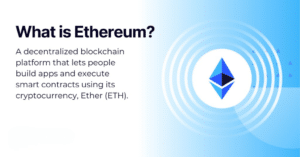
Ethereum is a decentralized global computer that runs exactly as programmed, where developers can build applications (dApps) and users can interact with them using Ether (ETH) as fuel.
Here are a few other ways to think about it:
- For Bitcoin users: If Bitcoin is digital gold, Ethereum is digital oil. It powers a whole ecosystem of decentralized applications.
- For tech people: Ethereum is an open-source, blockchain-based distributed computing platform featuring smart contract functionality.
- For the curious: Imagine a world where apps can’t be shut down, data can’t be censored, and value can be programmed. That’s Ethereum.
The Problem Ethereum Solves
Bitcoin’s Limitation
Bitcoin revolutionized money, but it’s intentionally limited. It does one thing, transfer value, and it does that one thing exceptionally well. But what if we wanted to create decentralized loans, digital art marketplaces, or automated organizations? Bitcoin can’t do that.
The Traditional App Problem
When you use apps today (Uber, Airbnb, Facebook, your bank), a company controls everything. They can:
- Change the rules arbitrarily (updated terms of service)
- Censor your content (if they disagree with you)
- Shut down your account (with no explanation or appeal)
- Take a cut of every transaction (sometimes 30%+)
- Sell your data to advertisers
You’re trusting these companies to act in your interest. And sometimes they don’t.
Ethereum’s Solution
Ethereum enables applications that run exactly as programmed with no central authority. Rules are written in code (smart contracts) and executed automatically. No one can change them, stop them, or take your assets without permission.
The World Computer Analogy
Think of Ethereum as a single shared computer that anyone can access, but no one owns. You pay a small fee (gas) to use its computing power, just like you pay for electricity when running a program on your laptop. Except this computer:
- Never goes down (no single point of failure)
- Never censors transactions (no central gatekeeper)
- Never changes the rules arbitrarily (code is law)
Key Insight: Bitcoin gave us digital money. Ethereum gave us digital law. Code that enforces agreements automatically, without lawyers or courts.
Who Created Ethereum?
The Visionary: Vitalik Buterin

In 2013, a 19-year-old programmer named Vitalik Buterin proposed Ethereum. He’d been involved in Bitcoin since 2011 and saw its potential, but also its limitations. He wanted to make Bitcoin programmable, to create a blockchain that could do more than just transactions.
He published a whitepaper describing a platform for “smart contracts” and decentralized applications. The response was immediate and enthusiastic.
The Founding Team
Vitalik didn’t do it alone. He co-founded Ethereum with:
- Gavin Wood: Created the Solidity programming language (used for writing smart contracts) and later founded Polkadot
- Charles Hoskinson: Early leader who later founded Cardano
- Joseph Lubin: Founded ConsenSys, a major Ethereum software company
- Anthony Di Iorio: Early investor and supporter
The Crowdfunding
In 2014, Ethereum held a crowdfunding sale, selling ETH for Bitcoin. They raised over $18 million, one of the most successful crowdfunding campaigns at the time, and proof that the world was ready for a more powerful blockchain.
The Launch
Ethereum went live on July 30, 2015, with the first version called “Frontier.” It was rough around the edges, but it worked. Developers could finally deploy smart contracts and build decentralized applications.
The DAO Incident and Fork
In 2016, a hack exploited a vulnerability in a popular smart contract called The DAO (a decentralized investment fund). About $60 million worth of ETH was drained.
This led to a controversial decision: Should Ethereum reverse the hack, effectively rewriting history to return the funds?
The community split:
- Those who believed “code is law” and opposed the reversal continued as Ethereum Classic (ETC)
- Those who believed the hack was unfair and voted to reverse formed what we now know as Ethereum (ETH)
Today
Vitalik remains a leading voice, but Ethereum is now run by thousands of developers worldwide. Decisions are made through community discussion, Ethereum Improvement Proposals (EIPs), and rough consensus. It’s truly decentralized.
How Does Ethereum Work? (Simple Version)
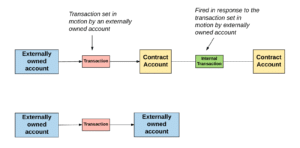
Ethereum has three main layers that work together:
1. The Blockchain (The Foundation)
Like Bitcoin, Ethereum has a blockchain – a shared ledger of all transactions and smart contract code. Thousands of computers (nodes) each keep a copy, ensuring no one can cheat or rewrite history.
2. The Ethereum Virtual Machine (The Brain)
This is Ethereum’s secret sauce. The EVM is a global computer that executes smart contract code. Every node runs the EVM, verifying that every computation follows the rules. It’s what makes Ethereum “Turing-complete”, capable of running any program, given enough time and resources.
3. Smart Contracts (The Programs)
Developers write code (smart contracts) and deploy them to Ethereum. Once deployed, they live on the blockchain forever and run exactly as written. No one can change them, censor them, or shut them down.
4. Ether (The Fuel)
Every operation on Ethereum costs a small fee in Ether, called gas. This prevents spam (every computation costs something) and compensates validators for their work.
How a Transaction Works
- You want to interact with a dApp (e.g., trade tokens on Uniswap)
- You create a transaction and pay gas fees in ETH
- Your transaction is broadcast to the network
- Validators (post-Merge) include it in a block
- The EVM executes the smart contract code
- The result is recorded permanently on the blockchain
- Your transaction is complete usually in 12 seconds to a few minutes
What Are Smart Contracts?
The Vending Machine Analogy
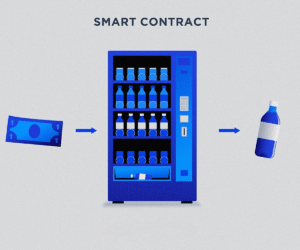
A smart contract is like a vending machine:
- You put in money (ETH)
- You select a product (press a button)
- The machine automatically gives you what you chose
- No human needed, no arguments, no refunds
The contract (the machine) holds the items, displays the prices, and executes the exchange automatically when conditions are met.
Formal Definition
Smart contracts are self-executing programs on the Ethereum blockchain that automatically enforce agreements when conditions are met.
Key Characteristics
| Feature | What It Means |
|---|---|
| Automatic | Runs exactly as coded, no human intervention |
| Transparent | Code is public on the blockchain for anyone to audit |
| Unstoppable | No one can shut it down – not governments, not hackers, not the creator |
| Immutable | Once deployed, code can’t be changed (usually some contracts have upgrade mechanisms) |
| Trustless | You don’t need to trust a counterparty; you trust the code |
Real-World Examples
| Traditional Contract | Smart Contract Equivalent |
|---|---|
| Escrow service | Multi-sig wallet that releases funds when both parties sign |
| Loan agreement | DeFi lending (collateralize ETH, borrow stablecoins) |
| Crowdfunding | If goal reached, funds released; else, refunds automatic |
| Insurance | Payout triggered automatically by oracle data |
| Royalty payments | Artists automatically paid percentage of secondary sales |
Code Example (Simplified)
solidity
if (user.send(1 ETH) == success) {
    item.transferOwnership(user);
}
This simple logic – send money, get item – runs automatically, no store clerk needed.
Why This Matters
Smart contracts enable entirely new kinds of applications. No company, no CEO, no servers to turn off. Just code, running exactly as written, accessible to anyone with an internet connection.
Mind-Blowing Fact: Smart contracts can’t be stopped – not by governments, not by hackers, not even by their creators. Once deployed, they’re autonomous.
What Is Ether (ETH)?
The Fuel of Ethereum
Ether (ETH) is the native cryptocurrency of Ethereum. It serves two main purposes:
- Fuel (Gas): You pay ETH to run transactions and execute smart contracts
- Value: Like Bitcoin, ETH can be held as an investment or used as money
Gas Explained Simply
Every computation on Ethereum costs a small amount of ETH called gas. Think of it like putting coins in a parking meter, you pay for the time/resources you use.
- Simple transactions (sending ETH to a friend): low gas usage
- Complex smart contract interactions (trading on Uniswap, minting an NFT): higher gas usage
Gas prevents spam (every action costs something) and pays network participants for their work.
ETH vs Bitcoin
| Aspect | Bitcoin (BTC) | Ether (ETH) |
|---|---|---|
| Primary Purpose | Digital gold, store of value | Fuel for computations, plus store of value |
| Supply | Fixed at 21 million | No fixed cap, but issuance controlled |
| Issuance | Halving every 4 years | Variable under Proof of Stake |
| Burn Mechanism | None | EIP-1559 burns part of gas fees |
| Block Time | ~10 minutes | ~12 seconds |
EIP-1559 (Simple Explanation)
In August 2021, Ethereum upgraded to burn (permanently destroy) a portion of every gas fee. This means:
- ETH can become deflationary during high network usage (more ETH burned than issued)
- Miners/validators still earn fees, but part of your payment is removed from supply forever
Think of it like: every time you use Ethereum, a small amount of ETH disappears, potentially making the remaining ETH more scarce.
Where to Buy ETH
ETH is available on every major exchange: Coinbase, Binance, Kraken, Gemini, and hundreds more. You can buy it just like Bitcoin.
Ethereum vs Bitcoin: Key Differences
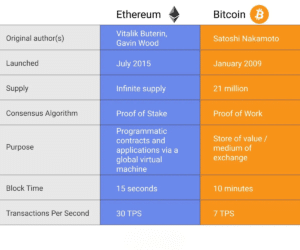
The Core Distinction
| Dimension | Bitcoin | Ethereum |
|---|---|---|
| Purpose | Peer-to-peer electronic cash | Decentralized world computer |
| Programming | Limited (Script) | Turing-complete (any program) |
| Transaction Speed | ~7 TPS | ~15-30 TPS (base), much higher with L2s |
| Consensus | Proof of Work (mining) | Proof of Stake (validators) |
| Block Time | ~10 minutes | ~12 seconds |
| Supply | Fixed 21 million | No fixed cap; net issuance variable |
| Primary Asset | BTC (store of value) | ETH (fuel + value) |
| Key Innovation | Decentralized money | Smart contracts, dApps |
The Philosophical Difference
Bitcoin prioritizes stability, security, and simplicity. It’s designed to be the most secure, immutable money ever created, change is slow and careful. This is why Bitcoin is often called “digital gold.”
Ethereum prioritizes flexibility and innovation. It’s a platform for building – change happens faster, sometimes with growing pains (like high gas fees). This is why Ethereum is often called the “world computer.”
Which One Is Better?
They’re different tools for different jobs. Think of:
- Bitcoin as a savings account (store value, check occasionally)
- Ethereum as a checking account plus app store (use regularly, interact with applications)
Most people in crypto benefit from owning both, using each for what it does best.
The Layer 2 Connection
Both networks are scaling:
- Bitcoin has the Lightning Network for fast, cheap payments
- Ethereum has Layer 2 solutions (Arbitrum, Optimism, Polygon, zkSync) for scaling applications
Key Takeaway: You don’t have to choose. Many crypto investors hold both BTC and ETH, using each for its strengths.
What Are dApps?
Decentralized Applications
dApps (decentralized applications) are apps built on Ethereum (or other blockchains) that run on smart contracts instead of centralized servers.
How dApps Differ from Regular Apps
| Regular App | dApp |
|---|---|
| Runs on company servers | Runs on blockchain (thousands of nodes) |
| Company controls data | You control your data |
| Company can shut it down | No one can shut it down |
| Rules can change arbitrarily | Rules are code (immutable) |
| You trust the company | You trust the code |
| Often free (you’re the product) | You pay gas fees (you’re the customer) |
Examples of Popular dApps
| Category | dApp | What It Does |
|---|---|---|
| DeFi | Uniswap | Swap tokens without a centralized exchange |
| DeFi | Aave | Lend and borrow crypto |
| DeFi | MakerDAO | Create the DAI stablecoin |
| NFTs | OpenSea | Buy and sell NFTs |
| NFTs | Blur | NFT marketplace for traders |
| Gaming | Axie Infinity | Play-to-earn game |
| Gaming | Decentraland | Virtual world |
| Social | Lens Protocol | Decentralized social media |
| Identity | ENS | Ethereum Name Service (like crypto domain names) |
How to Use a dApp
- Get a wallet (MetaMask, Trust Wallet, etc.)
- Buy some ETH (for gas fees)
- Go to the dApp’s website
- Connect your wallet
- Interact with the dApp (every action will ask you to confirm and pay gas)
That’s it. No account creation, no email signup, no KYC. Just connect and use.
What Is Ethereum 2.0? (The Merge and Beyond)
The Big Upgrade
In September 2022, Ethereum completed “The Merge” – transitioning from Proof of Work (mining) to Proof of Stake (validators). This was the most significant upgrade in Ethereum’s history, years in the making.
Proof of Work vs Proof of Stake
| Aspect | Proof of Work (Old) | Proof of Stake (New) |
|---|---|---|
| Who secures network | Miners with powerful computers | Validators who stake ETH |
| Energy use | Extremely high (like a country) | ~99.9% less |
| Entry barrier | Expensive hardware | Stake 32 ETH (or join a pool) |
| Rewards | New ETH + fees | New ETH + fees |
| Security | Proven but energy-intensive | Economic penalties for bad behavior (slashing) |
Why the Merge Mattered
- Environmental: Ethereum’s energy consumption dropped by ~99.9%. Overnight, it became one of the greenest major blockchains.
- Security: Staking aligns incentives – validators have “skin in the game” and can be penalized (slashed) for cheating.
- Economic: New ETH issuance dropped by ~90%, making ETH potentially deflationary during high usage.
- Foundation for scalability: The Merge set the stage for future upgrades (sharding) that will massively increase capacity.
What’s Next for Ethereum?
Ethereum’s development roadmap includes several future upgrades:
| Upgrade | Purpose | Expected |
|---|---|---|
| The Surge | Add sharding to scale transactions | 2024-2025 |
| The Scourge | Address MEV and network fairness | 2025+ |
| The Verge | Make running nodes easier (Verkle trees) | 2025+ |
| The Purge | Reduce historical data storage requirements | 2026+ |
| The Splash | Final improvements | 2026+ |
What This Means for Users
Nothing changes for everyday users – you still use Ethereum the same way. Transactions work identically, dApps work identically, your wallet works identically.
But the network becomes more scalable, sustainable, and secure over time. Future upgrades will bring lower fees and faster transactions to the base layer.
Staking ETH
Now anyone can help secure Ethereum by staking ETH:
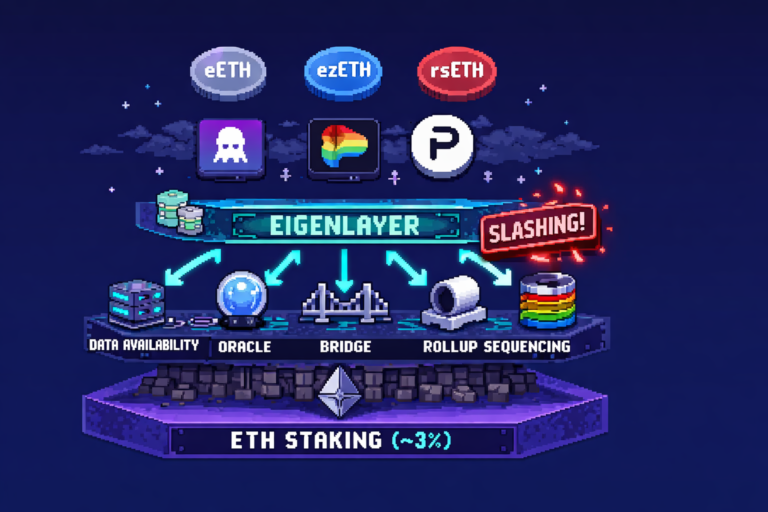
- Solo staking: Run a validator with 32 ETH (technical, requires 24/7 uptime)
- Staking pools: Join Lido, Rocket Pool, or Coinbase (no minimum, easy)
- Exchanges: Many exchanges offer staking with one click
Stakers earn rewards (currently 3-5% APY) for their service.
Key Fact: Ethereum is now a Proof of Stake network. This makes it more environmentally friendly and sets the stage for massive scaling.
Gas Fees Explained
What Are Gas Fees?
Gas fees are payments you make to use Ethereum. Every operation, sending ETH, swapping tokens, minting an NFT, interacting with a dApp, requires computation. Gas pays for that computation.
Why Gas Fees Exist
- Prevent spam: Without fees, bad actors could clog the network with useless transactions
- Compensate validators: Validators earn fees for securing the network and executing code
- Allocate resources: Higher fees during congestion prioritize urgent transactions
How Gas Fees Are Calculated
text
Gas fee = Gas units (complexity) x Gas price (priority)
| Transaction Type | Approx Gas Units |
|---|---|
| Simple ETH transfer | 21,000 |
| Swap on Uniswap | 150,000-300,000 |
| Mint an NFT | 200,000-500,000+ |
| Complex DeFi interaction | 300,000-1,000,000+ |
Why Gas Prices Fluctuate
Gas price is measured in gwei (1 gwei = 0.000000001 ETH). During busy periods, users bid higher gas prices to get their transactions processed faster.
Think of it like Uber surge pricing – when demand is high, prices rise.
Real-World Examples
| Scenario | Typical Gas Fee (Base Layer) |
|---|---|
| Quiet Sunday morning | $1-3 |
| Normal weekday | $3-10 |
| NFT drop or market volatility | $10-50+ |
| Extreme congestion | $50-200+ |
How to Save on Gas
- Use Layer 2 solutions: Arbitrum, Optimism, Polygon, zkSync – fees are pennies
- Time your transactions: Weekends and off-peak hours are cheaper
- Use gas trackers: Sites like Etherscan show current gas prices
- Consider alternative chains: Solana, Avalanche, etc. have lower fees (but different trade-offs)
Note: The Merge didn’t significantly reduce gas fees. That’s the job of future upgrades (sharding) and Layer 2 solutions.
How to Get Ethereum
Method 1: Buy on an Exchange (Easiest)
This is how most people get their first ETH.
Steps:
- Choose an exchange (Coinbase, Binance, Kraken, Gemini)
- Create account and verify identity (KYC)
- Deposit funds (bank transfer is cheapest, card is fastest)
- Buy ETH
- Withdraw to your own wallet (recommended for amounts over $1,000)
Fees: 0.1-3.5% depending on payment method
Method 2: Swap from Bitcoin (If You Already Have Crypto)
If you already own Bitcoin or other crypto:
- Use exchange trading pairs (BTC/ETH)
- Use swap services (Changelly, ShapeShift, or within wallets)
Method 3: Earn Ethereum
- Freelance: Many platforms pay in ETH (CryptoJobs, Braintrust)
- Staking: Earn rewards by staking ETH (requires 32 ETH for solo, or join a pool)
- Provide liquidity: On DeFi platforms (advanced, carries risk)
- Play-to-earn: Some games reward ETH or in-game tokens convertible to ETH
Method 4: Receive from Someone
Share your Ethereum address (starts with 0x...) and someone can send you ETH. Useful for testing with small amounts from a friend.
Which Wallet to Use?
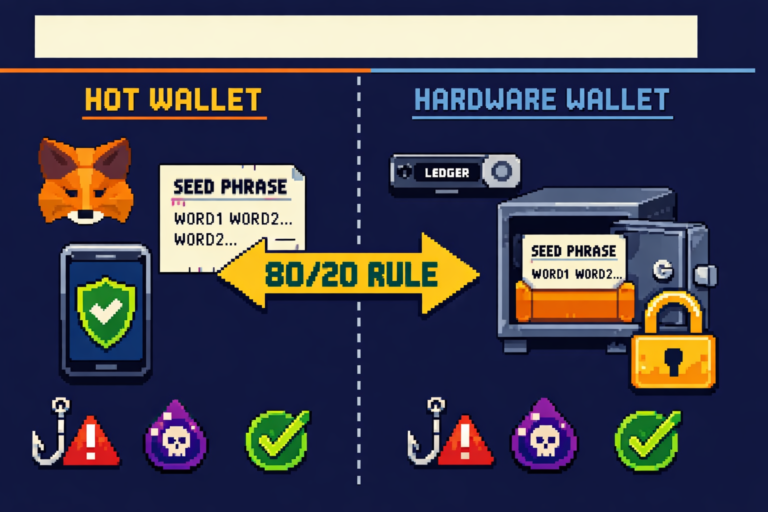
| Wallet Type | Examples | Best For |
|---|---|---|
| Software (hot) | MetaMask, Trust Wallet, Rainbow | Daily use, small amounts, dApps |
| Hardware (cold) | Ledger, Trezor | Large amounts, long-term storage |
| Mobile | Coinbase Wallet, Argent | On-the-go access |
Important Safety Reminder
After buying, move ETH to your own wallet – especially for larger amounts. Exchanges get hacked. With your own wallet (and private keys), you truly own your ETH.
“Not your keys, not your coins.”
What Can You Do with Ethereum?
More than just a cryptocurrency, Ethereum enables an entire new economy.
DeFi (Decentralized Finance)
Access financial services without banks:
- Lend your ETH and earn interest (Aave, Compound)
- Borrow stablecoins against your ETH (MakerDAO)
- Trade tokens without giving up custody (Uniswap, Curve)
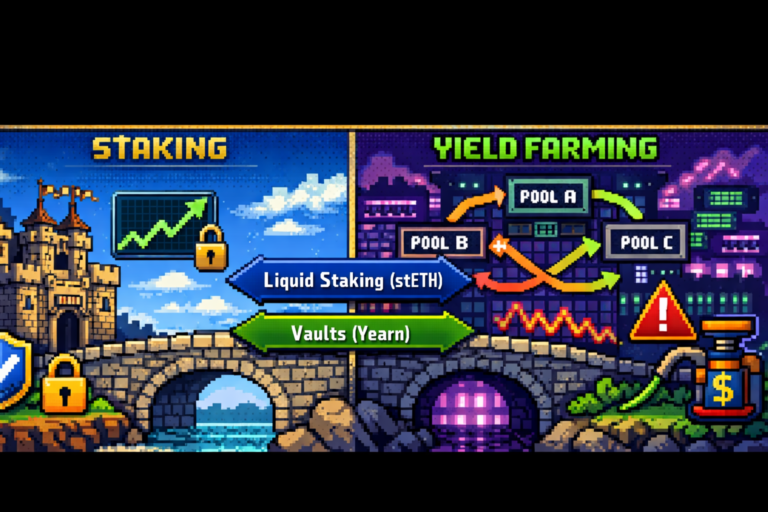
- Earn yield by providing liquidity (Balancer, Yearn)
- Synthetic assets (Mirror, Synthetix)
NFTs (Non-Fungible Tokens)
Own unique digital assets:
- Collect art from digital artists
- Buy virtual land in metaverses (Decentraland, The Sandbox)
- Collect in-game items you truly own
- Trade collectibles on marketplaces (OpenSea, Blur)
- Proof of attendance (POAPs) for events
DAOs (Decentralized Autonomous Organizations)
Join community-run organizations:
- Vote on proposals for protocols you use
- Pool funds for collective investments
- Govern treasuries with other members
- Coordinate work without traditional management
Gaming
Play games where you own your items:
- Earn crypto while playing (Axie Infinity)
- Trade items freely on open markets
- Carry items across different games (future)
- True ownership of in-game assets
Social and Identity
Control your online presence:
- Decentralized social media (Lens Protocol, Farcaster)
- Self-sovereign identity (Ethereum Name Service—ENS)
- Proof of attendance (POAPs)
- Reputation systems built on-chain
Payments and Transfers
Send value anywhere, anytime:
- Remittances without high fees
- Micropayments for content
- Programmable payments (release funds when conditions met)
- International in minutes, not days
The Scale
Today, Ethereum:
- Secures over $50 billion in DeFi
- Hosts millions of NFTs
- Processes millions of daily transactions
- Has the largest developer ecosystem in crypto
- Powers thousands of applications
The Vision: Ethereum aims to become the “world computer” – a decentralized platform for all kinds of applications, accessible to anyone with an internet connection.
Common Ethereum Myths
Myth 1: “Ethereum is just another Bitcoin”
Reality: Bitcoin is digital gold; Ethereum is a programmable blockchain. They serve different purposes and can complement each other. Bitcoin does one thing perfectly; Ethereum does many things well.
Myth 2: “Ethereum is too slow and expensive”
Reality: Base layer can be congested, but Layer 2 solutions (Arbitrum, Optimism, Polygon) make it fast and cheap, often pennies per transaction. The Merge and future upgrades are scaling it massively.
Myth 3: “Ethereum has no supply cap, so it’s inflationary”
Reality: While there’s no fixed cap, EIP-1559 burns fees and Proof of Stake reduces issuance. Ethereum can become deflationary during high usage. In 2023-2024, ETH supply actually decreased some months.
Myth 4: “Ethereum is centralized because of Vitalik”
Reality: Vitalik is influential but has no special control. Development is open-source, and thousands of developers contribute. Changes require community consensus through EIPs. Vitalik couldn’t change Ethereum alone even if he wanted to.
Myth 5: “Smart contracts are too risky; they get hacked”
Reality: Yes, poorly written code can be exploited. But well-audited contracts from reputable projects are generally safe. Insurance, formal verification, and best practices are evolving. It’s like saying “websites get hacked” – some do, but many are secure.
Myth 6: “Ethereum will be overtaken by a faster blockchain”
Reality: Speed isn’t everything. Ethereum has:
- Largest developer community
- Most dApps and users
- Strongest network effects
- Most liquidity (capital)
- Most battle-tested security
Newer chains may be faster but lack ecosystem. Ethereum’s lead is substantial and growing.
Myth 7: “I need to buy a whole ETH”
Reality: ETH is divisible to 18 decimal places. You can buy $10 worth if you want. The smallest unit is called a wei (like a satoshi for Bitcoin).
Myth 8: “Gas fees go to Vitalik”
Reality: Gas fees go to miners (pre-Merge) or validators (post-Merge) – the thousands of people around the world securing the network. Not to the founders.
Myth 9: “Ethereum wasted too much energy before the Merge”
Reality: Yes, Proof of Work used significant energy. But the Merge reduced energy consumption by ~99.9% overnight. Today, Ethereum is one of the most energy-efficient major blockchains.
Next Steps: From Learning to Using Ethereum
You now understand what Ethereum is. Here’s how to start using it:
The Beginner’s Path
| Step | Action | Resources |
|---|---|---|
| 1. Get a Wallet | Install MetaMask or Trust Wallet | Wallet Guide |
| 2. Buy ETH | Purchase on an exchange, withdraw to wallet | Best Crypto Exchanges 2026 |
| 3. Explore dApps | Try Uniswap (swap tokens), OpenSea (view NFTs) | dApp Guides |
| 4. Learn about L2s | Move funds to Polygon or Arbitrum for low fees | Layer 2 Guide |
| 5. Go Deeper | Try lending on Aave, staking with Lido | DeFi Guide |
Recommended Next Reads
- 📚 What is DeFi? Decentralized Finance Explained
- 🖼️ What are NFTs? A Beginner’s Guide
- ⚡ Layer 2 Scaling: Ethereum’s Future
- 🔒 Best Hardware Wallets 2026 (for securing your ETH)
Final Thought
Ethereum is more than a cryptocurrency. It’s a new way to build and interact with applications. Smart contracts, dApps, DeFi, NFTs, DAOs – these aren’t just buzzwords. They’re the building blocks of a more open, accessible financial system.
You’ve taken the first step. Now go explore.
Welcome to the world computer.
Disclosure: This guide is for educational purposes only and does not constitute financial advice. Ethereum and cryptocurrencies involve risk. Always do your own research and never invest more than you can afford to lose.
This guide was last updated for the 2026 edition. Ethereum evolves rapidly—check back for updates, and always verify information with multiple sources before making financial decisions.
Frequently Asked Questions
How is Ethereum different from Bitcoin?
Bitcoin is primarily digital gold, a store of value. Ethereum is a platform for building applications. Bitcoin transactions are simple; Ethereum transactions can execute complex code.
What are smart contracts?
Smart contracts are self-executing programs on the blockchain that automatically enforce agreements when conditions are met. They run exactly as coded, with no possibility of downtime, censorship, or fraud.
What is Ether (ETH) used for?
ETH is used to pay for transactions and computational services on Ethereum (gas fees). It's also held as an investment and used as collateral in DeFi applications.
How do I buy Ethereum?
You can buy ETH on cryptocurrency exchanges like Coinbase, Binance, or Kraken. After purchase, transfer it to your own wallet for safekeeping.
What is gas on Ethereum?
Gas is the fee required to perform transactions or execute smart contracts on Ethereum. It's paid in ETH and compensates validators for their work.
Is Ethereum a good investment?
We don't provide financial advice. However, ETH is the second-largest cryptocurrency and powers the most active developer ecosystem. Like all crypto, it's volatile and risky.
What is Ethereum 2.0?
Ethereum 2.0 refers to a series of upgrades, starting with The Merge (transition to Proof of Stake), aimed at making Ethereum more scalable, secure, and sustainable.
Can Ethereum be mined?
No. Ethereum switched from Proof of Work (mining) to Proof of Stake in September 2022. Now, validators secure the network by staking ETH.
What are Layer 2 solutions?
Layer 2s are secondary protocols built on Ethereum that offer faster and cheaper transactions. They bundle transactions and settle them on Ethereum. Examples: Arbitrum, Optimism, Polygon, zkSync.
What can I build on Ethereum?
Almost anything: DeFi protocols, NFT marketplaces, games, DAOs, social networks, identity systems, supply chain tracking, and more.
Is Ethereum safe?
The Ethereum network is highly secure, with billions of dollars in value secured. However, individual applications (smart contracts) can have bugs. Use well-audited, reputable dApps.
Why are gas fees sometimes high?
Gas fees rise when network demand exceeds capacity. Think of it like surge pricing, users bid higher fees to get their transactions processed faster. Layer 2 solutions avoid this.
Can I lose my ETH?
You can lose ETH by:
- Losing your private keys or seed phrase
- Sending to wrong address (transactions are irreversible)
- Getting scammed (phishing, fake dApps)
- Smart contract exploits (rare with reputable dApps)
What's the difference between Ethereum and Ethereum Classic?
Ethereum (ETH) is the chain that reversed the 2016 DAO hack. Ethereum Classic (ETC) continued the original chain without reversal. ETH has vastly more adoption, development, and value.
About the Author