


Imagine Ethereum mainnet as a congested city center with limited roads and expensive parking. Every transaction is a car trying to get through, and during rush hour, the traffic jams (gas spikes) make travel prohibitively expensive.
Rollups are the solution: they build express lanes (Layer 2s) above the city, handling thousands of cars off the main roads and sending only summary reports back to the center.
But there’s a fundamental disagreement about how those express lanes should operate.
Optimistic rollups act like a “trust‑but‑verify” toll road: they assume every car is following the rules unless someone spots a violation and challenges it within a 7‑day window.
ZK‑rollups are like a mathematically verified express lane: every car’s route is cryptographically proven correct before it even enters, with no waiting period.
In 2026, this choice is no longer academic. Optimistic rollups power the deepest DeFi ecosystems (Arbitrum alone holds $17 billion in TVL), while ZK‑rollups are gaining ground with instant finality and privacy features. Even Ethereum co‑founder Vitalik Buterin recently noted that his “attitude towards supporting native rollups has shifted significantly” as ZK technology matures.
In this ZK-rollups vs optimistic rollups guide, we’ll break down how each technology actually works, compare their trade‑offs in security, speed, cost, and ecosystem maturity, and, most importantly, help you decide which one fits your needs as a user, developer, or investor in 2026.

The Scaling Problem: Why Rollups Became Essential
Ethereum’s mainnet (Layer 1) prioritizes security and decentralisation above all else. With thousands of validators verifying every transaction, the network is incredibly robust, but inherently limited in throughput. At peak capacity, Ethereum processes only 15‑20 transactions per second, leading to congestion and gas fees spiking above $50 during high demand.
As Web3 adoption grows, from DeFi protocols to blockchain games to NFT marketplaces, user expectations have shifted. In 2026, users expect sub‑second transaction confirmations and fees below $0.01. Layer 1 alone cannot meet these demands without compromising decentralisation.
Rollups solve this by moving execution off‑chain while anchoring security to Ethereum. Instead of forcing every node to process every transaction, rollups batch thousands of transactions together and submit only compressed data or cryptographic proofs back to Layer 1. This approach reduces congestion, lowers fees dramatically, and allows applications to scale without compromising on trust assumptions. That’s why rollups now sit at the center of most serious Web3 roadmaps.
How Rollups Work: The Common Foundation
Regardless of type, all rollups follow the same basic pattern: transactions are processed off‑chain, bundled into batches, and periodically committed to Ethereum Layer 1. The key difference is how they prove those transactions are valid.
The Shared Anatomy
| Component | Function |
|---|---|
| Off‑chain execution | Transactions are processed outside Ethereum, reducing congestion |
| Batch aggregation | Hundreds of transactions are grouped into a single batch |
| On‑chain settlement | A compressed summary (and a proof) is posted to Ethereum |
| Security inheritance | Finality depends on Ethereum’s consensus |
This architecture means rollups can handle thousands of transactions per second while keeping security guarantees anchored to the most decentralized blockchain in existence.
Optimistic Rollups: Trust, Then Verify
The Core Philosophy
Optimistic rollups assume transactions are valid by default – they’re “optimistic.” Instead of proving correctness upfront, they rely on a challenge period during which anyone can submit a fraud proof to invalidate a malicious batch.
How Fraud Proofs Work
- An operator bundles transactions off‑chain and posts them to Ethereum, claiming they are valid.
- The batch is considered pending for a challenge period (typically 7 days).
- If anyone detects fraud, they can submit a fraud proof (a cryptographic demonstration that a specific step in the batch’s execution was invalid).
- If the proof is correct, the batch is rejected and the operator is penalized.
- If no challenge is raised, the batch becomes final.
The Challenge Period
The 7‑day window serves a critical security function: it gives watchtowers time to detect and challenge fraudulent batches. Without this delay, fraudulent withdrawals could become permanent before anyone could intervene.
Advantages & Disadvantages
| Advantage | Disadvantage |
|---|---|
| Simpler to implement | 7‑day withdrawal delay (native) |
| EVM‑equivalent (tools work out of the box) | Requires watchtowers to monitor fraud |
| Mature ecosystem, deep liquidity | Assumes someone will challenge invalid batches |
| Lower computational overhead | Economic security relies on incentive alignment |
The Watchtower Role
The security of optimistic rollups depends on watchtowers (independent actors who monitor the chain for fraud and submit challenges). If no one is watching, a malicious operator could submit invalid batches and steal funds. In practice, profit incentives (and reputable operators) keep this system functioning, but it’s a different security model than ZK’s mathematical guarantees.
Major Optimistic Rollups (2026)
| Rollup | Key Feature | Recent Development |
|---|---|---|
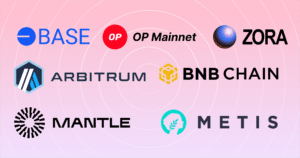
| Arbitrum One | Largest DeFi TVL ($17B) | Stylus upgrade enables Rust contracts |
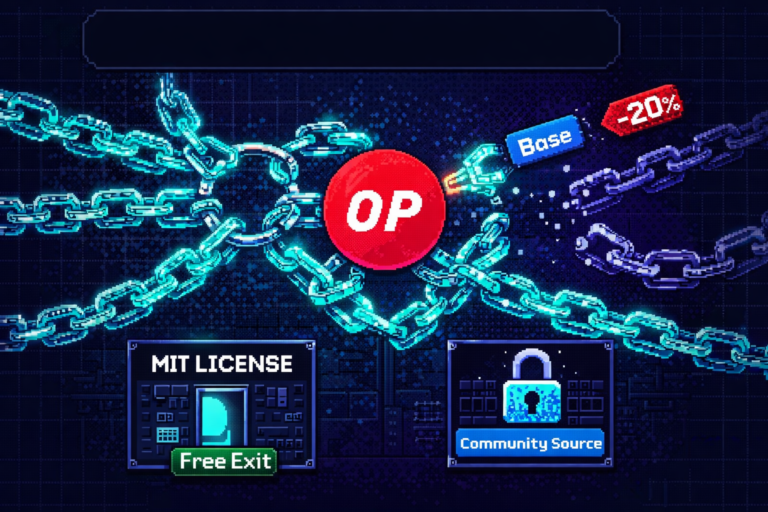
| Base | Coinbase‑backed, consumer‑focused | Transitioned from OP Stack to proprietary architecture |
| Optimism (OP Mainnet) | Superchain ecosystem | World Chain, Soneium built on OP Stack |
Real‑World Adoption
Optimistic rollups power some of the most widely used Layer 2 networks today. Reddit chose Arbitrum Nova for its community points system to handle over 50 million users. The 7‑day withdrawal delay was acceptable for this use case, while low fees were essential.
ZK-Rollups: Mathematical Certainty
The Core Philosophy
ZK‑rollups take a fundamentally different approach: they prove correctness upfront using advanced cryptography. Instead of trusting anyone to catch fraud later, they submit a mathematical proof that guarantees every transaction in a batch is valid.
How Validity Proofs Work
After aggregating transactions off‑chain, the ZK‑rollup operator generates a validity proof (a zero‑knowledge proof) that demonstrates the batch’s correctness. This proof, along with a summary of state changes, is submitted to Ethereum. Validators on Layer 1 verify the proof (far simpler than re‑executing every transaction) and accept the batch instantly.
The Zero‑Knowledge Advantage
| Advantage | Disadvantage |
|---|---|
| Instant finality (no challenge period) | Complex to implement and maintain |
| Stronger security (mathematical guarantees) | Higher computational cost to generate proofs |
| Better privacy (can hide transaction details) | EVM compatibility still maturing |
| Higher data compression (smaller L1 footprint) | Trusted setup concerns for SNARK‑based systems |
Types of Zero‑Knowledge Proofs
| Proof Type | Examples | Characteristics |
|---|---|---|
| ZK‑SNARKs | zkSync, Loopring | Smaller proof size, faster verification; requires trusted setup |
| ZK‑STARKs | Starknet | No trusted setup, quantum‑resistant; larger proofs, more computation |
The Cryptographic Backbone
Zero‑knowledge proofs allow one party to prove a statement is true without revealing the details. In ZK‑rollups, the operator proves “I processed these transactions correctly” without revealing the transactions themselves. This offers both security and potential privacy benefits.
Major ZK-Rollups (2026)
| Rollup | Proof Type | Key Feature |
|---|---|---|
| zkSync Era | SNARKs | User‑friendly onboarding, strong developer support |
| Starknet | STARKs | Advanced scalability, active gaming ecosystem |
| Polygon zkEVM | SNARKs | EVM‑equivalent, strong cross‑chain links |
| Scroll | SNARKs | Focus on EVM equivalence and decentralization |
| Linea | SNARKs | ConsenSys‑backed, deep Ethereum alignment |
Performance Metrics (2026)
ZK‑rollups achieve remarkable efficiency: Lighter processes over 2,000 TPS, while Starknet handles millions of daily transactions. Gas costs in ZK‑rollups can be as low as $0.001 per transaction in high‑volume scenarios (even lower than optimistic rollups).
Vitalik’s 2026 Statement
Buterin recently noted that his “attitude towards supporting native rollups has shifted significantly” as ZK technology matures. Previously, ZK‑EVMs were not mature enough for Ethereum‑level integration, but that timeline is now aligning.
Side-by-Side Comparison: Key Differences
| Feature | Optimistic Rollups | ZK-Rollups |
|---|---|---|
| Validation Mechanism | Fraud proofs (challenge period) | Validity proofs (cryptographic) |
| Finality Time | ~7 days (native) | Minutes to hours |
| Withdrawal Speed | Slow (challenge period) | Fast (proof verification) |
| Security Model | Economic incentives + watchtowers | Mathematical cryptography |
| EVM Compatibility | Full (native) | Partial (improving) |
| Computational Cost | Low | High (proof generation) |
| Data Efficiency | Medium | High (proofs are compact) |
| Privacy Features | Limited | Native (can hide transaction details) |
| Ecosystem Maturity | High (Arbitrum, Optimism, Base) | Growing (zkSync, Starknet, Polygon zkEVM) |
| Example DeFi TVL | Arbitrum $17B | ~$3‑5B combined |
Real-World Performance: 2026 Data
Transaction Volume Comparison (as of January 2026)
| Rollup | Type | Daily TPS | 30‑Day Transaction Count |
|---|---|---|---|
| Base | Optimistic | 111.86 | 332.81M |
| Arbitrum One | Optimistic | 26.74 | 69.17M |
| OP Mainnet | Optimistic | 26.93 | 58.69M |
| Lighter | ZK | 2.04K | 5.06B |
| Starknet | ZK | 2.87 | 6.87M |
| Linea | ZK | 2.98 | 3.89M |
Key Observations
- Base leads in optimistic rollup volume, benefiting from Coinbase’s distribution.
- ZK‑rollups show higher TPS in specialized chains (Lighter processes 2,000+ TPS).
- Transaction counts vary widely, reflecting different use cases and adoption stages.
Cost Data (2026)
| Rollup Type | Typical Fee (Simple Transfer) | Bulk Transaction Cost |
|---|---|---|
| Optimistic | $0.005 – $0.01 | $0.005 per tx |
| ZK | $0.001 – $0.005 | As low as $0.001 per tx |
The EIP-4844 Effect
Thanks to Proto‑Danksharding (EIP‑4844) implemented in March 2024, all rollups have seen dramatic fee reductions. Blob data storage has replaced expensive calldata, making rollup fees accessible to everyday users for the first time.
Security Models Compared: Fraud Proofs vs Validity Proofs
Optimistic Security: Economic Guarantees
Optimistic rollups secure transactions through economic incentives. A malicious operator can submit an invalid batch, but they risk losing their bond if a watchtower challenges it. The system works if three conditions hold:
- Someone is watching (watchtowers are incentivized).
- Challenges can be submitted (no censorship).
- Economic penalties deter fraud (bond exceeds potential gain).
The critical insight: if no one challenges an invalid batch within the 7‑day window, it becomes final, even if fraudulent. This is why the challenge period must be long enough for challenges to surface.
ZK Security: Mathematical Guarantees
ZK‑rollups rely on cryptography, not economics. A validity proof mathematically demonstrates that a batch of transactions follows all network rules. The only way to submit an invalid batch is to break the underlying cryptographic assumptions (considered computationally impossible).
The Trade‑Off in Practice
| Risk | Optimistic | ZK |
|---|---|---|
| Operator fraud | Possible during challenge window | Impossible (proof wouldn’t verify) |
| Censorship | Could prevent challenges | Proof verification is permissionless |
| Smart contract bug | Risk in fraud proof system | Risk in proof system/verifier |
| Economic attack | Could bribe watchtowers | No economic attack vector |
Real‑World Risk Events
In 2024, Polygon zkEVM tested a simulated attack, attempting to submit an invalid transaction. The attempt failed because it couldn’t generate a matching validity proof, demonstrating ZK’s cryptographic security.
The Human Factor
Optimistic rollups assume someone will challenge fraud. While watchtower incentives exist, this remains a less absolute guarantee than ZK’s mathematical certainty. For high‑value applications like institutional settlements, ZK’s stronger guarantees are often preferred.
Finality and Withdrawal Times: The 7‑Day Gap
This is perhaps the most user‑visible difference between the two technologies.
| Rollup Type | Native Withdrawal Time | Reason |
|---|---|---|
| Optimistic | ~7 days | Challenge period must expire |
| ZK | Minutes to hours | Proof verification is immediate |
Why the Challenge Period Exists
The 7‑day window in optimistic rollups serves a critical security function: it gives watchtowers time to detect and challenge fraudulent batches. Without this delay, fraudulent withdrawals could become permanent before anyone could intervene.
Workarounds and Trade‑Offs
By 2026, many users never experience the 7‑day delay because third‑party cross‑chain bridges (like Orbiter, Hop) offer instant withdrawals by acting as liquidity providers. However, these introduce additional trust assumptions and fees. The native mechanism remains slow.
What This Means for Users
| User Activity | Optimistic Impact | ZK Impact |
|---|---|---|
| Daily trading | Minimal (stay on L2) | Minimal (stay on L2) |
| Moving funds to CEX | Use third‑party bridge | Native withdrawal works |
| Emergency exits | 7‑day delay risk | Immediate |
| High‑value transfers | Consider counterparty risk | Native security |
The CEX Integration Workaround
Major centralized exchanges now support direct deposits from L2s, often with faster processing than the native bridge. This reduces the practical impact of the 7‑day delay for many users.
EVM Compatibility: Where Each Stands
Optimistic: The Gold Standard
Optimistic rollups like Arbitrum and Optimism are EVM‑equivalent (they execute Ethereum bytecode exactly as the mainnet does). This means:
- Existing Solidity contracts deploy without changes.
- All Ethereum developer tools (Hardhat, Foundry, etc.) work.
- Wallets like MetaMask integrate seamlessly.
- The learning curve is minimal.
ZK: The Evolving Landscape
ZK‑rollups have historically struggled with EVM compatibility because the cryptographic proof systems don’t naturally align with Ethereum’s execution model. Progress has been rapid:
| ZK Rollup | EVM Compatibility Level |
|---|---|
| Polygon zkEVM | Full EVM equivalence (type 2) |
| Scroll | Full EVM equivalence |
| zkSync Era | Bytecode‑compatible (type 4) |
| Starknet | Custom language (Cairo) |
The Compatibility Trade‑Off
ZK‑rollups with full EVM equivalence sacrifice some proof efficiency for compatibility. Those with custom languages (like Starknet’s Cairo) achieve higher performance but require developers to learn new tools.
Developer Impact
| Developer Background | Optimistic Advantage | ZK Advantage |
|---|---|---|
| Solidity developer | Deploy immediately | Some learning curve |
| Rust developer | Limited | Stylus (Arbitrum) or Cairo (Starknet) |
| Security‑focused | Standard tools | ZK proofs offer verification |
Vitalik’s View
Buterin has noted that the timeline for full ZK adoption at the L1 level is gradually aligning with the realistic progress of introducing native rollup precompiles, potentially eliminating compatibility obstacles in the future.
Use Cases: Which Rollup Fits Your Needs?
Optimistic Rollups Are Ideal For
| Use Case | Example | Why It Fits |
|---|---|---|
| DeFi applications | Aave, Uniswap on Arbitrum | Deep liquidity, mature tools, EVM compatibility |
| General‑purpose dApps | DAOs, governance platforms | Developer‑friendly, easy migration |
| Consumer apps with low exit frequency | Reddit community points | 7‑day delay acceptable; low fees critical |
| Projects needing EVM equivalence | Any existing Ethereum dApp | Deploy without code changes |
ZK-Rollups Are Ideal For
| Use Case | Example | Why It Fits |
|---|---|---|
| Payment systems | J.P. Morgan’s Kinexys | Instant finality, regulatory compliance |
| High‑frequency trading | Order book DEXs | Sub‑second finality, low latency |
| Privacy‑sensitive applications | Identity verification, supply chain | Zero‑knowledge proofs hide details |
| Blockchain gaming | Immutable X, high‑throughput games | Scalability for millions of micro‑transactions |
| Enterprise applications | Walmart food supply chain | Auditability, verification without data exposure |
The Gaming Example
ZK‑rollups like Immutable X have become the go‑to for blockchain gaming because they can handle millions of NFT trades and micropayments with zero gas fees for users. The gaming industry’s need for high throughput and low latency makes ZK a natural fit.
The DeFi Example
DeFi protocols overwhelmingly choose optimistic rollups for their mature infrastructure. Arbitrum’s $17 billion TVL and deep liquidity pools make it the preferred home for lending, trading, and derivatives applications. The 7‑day withdrawal delay is less relevant for DeFi users who stay within the ecosystem.
The Enterprise Example
J.P. Morgan chose a ZK‑based stack for its Kinexys blockchain platform because it required instant settlement, strict regulatory compliance, and client confidentiality. The mathematical proofs provide auditability without exposing sensitive transaction details.
Decision Framework
| Your Priority | Recommended Rollup Type |
|---|---|
| Maximum liquidity and DeFi depth | Optimistic (Arbitrum, Base) |
| Instant finality for withdrawals | ZK |
| Privacy and confidentiality | ZK |
| Easiest developer onboarding | Optimistic |
| High‑frequency gaming transactions | ZK |
| Proven ecosystem with existing tools | Optimistic |
The Future: ZK+Optimistic Hybrids and Native Rollups
The False Dichotomy
The question isn’t which technology will “win”, it’s how they’ll work together. Both have distinct advantages, and the future likely involves hybrid approaches.
Emerging Hybrid Models
| Model | Description | Example |
|---|---|---|
| ZK‑validation | ZK proofs with off‑chain data availability | Immutable X |
| Optimistic with ZK fraud proofs | Use ZK proofs to shorten challenge period | In development |
| Multi‑stack ecosystems | Different L2s optimized for different use cases | Superchain, Polygon CDK |
Native Rollups: The Next Frontier
Buterin has called for integrating rollup capabilities directly into Ethereum, allowing developers to build applications that inherit full security while gaining scalability. Native rollup precompiles could eliminate current compatibility challenges.
The Convergence Thesis
As ZK tooling matures and optimistic rollups adopt ZK fraud proofs, the distinction may blur. Some optimistic rollups already plan to integrate zero‑knowledge proofs to reduce challenge periods from 7 days to minutes.
Vitalik’s 2026 Outlook
Buterin stated that his “attitude towards supporting native rollups has shifted significantly” as the ZK timeline matures. The obstacles that previously forced a choice between ZK and optimistic modes are expected to be eliminated.
Our Verdict: Which Rollup Wins?
Summary Assessment
There is no single “winner” in the rollup war, and there shouldn’t be. Optimistic and ZK‑rollups serve fundamentally different needs, and the health of the Ethereum ecosystem depends on both thriving.
The Winners by Category
| Category | Winner | Why |
|---|---|---|
| DeFi ecosystem | Optimistic | $17B TVL on Arbitrum, mature protocols |
| Instant finality | ZK | No challenge period, immediate withdrawals |
| Developer experience | Optimistic | Full EVM equivalence, existing tools work |
| Privacy applications | ZK | Zero‑knowledge proofs enable confidentiality |
| Enterprise adoption | ZK | Mathematical proof of compliance |
| Consumer applications | Optimistic | Reddit’s success, Base’s distribution |
The Bottom Line
If you’re a DeFi user or developer building general‑purpose applications, optimistic rollups offer the most mature, liquid, and developer‑friendly environment.
If you need instant finality, privacy, or operate in regulated industries, ZK‑rollups provide stronger guarantees.
For most users, the right answer isn’t choosing one, it’s using both where they excel.
Final Thought
The rollup war was never about which technology would “win”, it was about building a scalable Ethereum. In 2026, both are winning.
Disclaimer: This guide is for educational purposes only and does not constitute financial advice. Layer 2 technologies involve technical and economic risks. Always do your own research before using any protocol.
This guide was last updated for the 2026 edition. Rollup technologies evolve rapidly – always verify current data on L2BEAT and official protocol documentation.
Frequently Asked Questions
Which rollup is more secure?
ZK‑rollups offer stronger security guarantees through mathematics, an invalid batch cannot generate a valid proof. Optimistic rollups rely on economic incentives and watchtowers to catch fraud; while they have strong track records, they’re theoretically less absolute.
How long does it take to withdraw from optimistic rollups?
Native withdrawals take approximately 7 days to allow for the challenge period. However, third‑party bridges can provide faster withdrawals by acting as liquidity providers, though they introduce additional trust assumptions.
Do ZK-rollups have instant finality?
Yes. Once a validity proof is verified on Ethereum (typically within minutes), the batch is finalized. There’s no waiting period, funds can be withdrawn immediately.
Which rollups are EVM-compatible?
Optimistic rollups (Arbitrum, Optimism, Base) are fully EVM‑equivalent. Among ZK‑rollups, Polygon zkEVM and Scroll offer full EVM equivalence, while zkSync Era is bytecode‑compatible, and Starknet uses a custom language (Cairo).
Which is cheaper: ZK or optimistic rollups?
Both offer dramatically lower fees than Ethereum mainnet. In 2026, optimistic rollup fees range from $0.005–0.01 per transaction, while ZK‑rollups can achieve $0.001 or lower in high‑volume scenarios.
Can I use MetaMask with both types?
Yes. MetaMask supports both optimistic rollups (Arbitrum, Optimism, Base) and ZK‑rollups (zkSync, Starknet, Polygon zkEVM), though you may need to add networks manually.
Which rollup has more DeFi applications?
Optimistic rollups, particularly Arbitrum, dominate DeFi with $17 billion TVL and mature lending, trading, and derivatives protocols. ZK‑rollups have growing DeFi ecosystems but significantly less liquidity.
Are ZK-rollups more private?
ZK‑rollups can offer enhanced privacy because zero‑knowledge proofs can hide transaction details while proving validity. However, most current ZK‑rollups prioritize scalability over privacy; true privacy features require additional development.
What is the challenge period in optimistic rollups?
The challenge period is a window (typically 7 days) during which anyone can dispute a transaction batch by submitting a fraud proof. This allows watchtowers to catch malicious operator behavior before withdrawals are finalized.
Can I lose money on a rollup?
Both technologies carry risks: smart contract bugs, sequencer centralization, and bridge vulnerabilities. ZK‑rollups have stronger mathematical security but more complex code. Optimistic rollups have longer track records but economic security models. Always research specific protocols before depositing funds.
What are fraud proofs vs validity proofs?
Fraud proofs are used in optimistic rollups. They show that a previously submitted batch was invalid, triggering a rollback. Validity proofs are used in ZK‑rollups. They demonstrate correctness upfront, so no rollback is ever needed.
Which rollup should a beginner use?
For beginners, optimistic rollups like Arbitrum or Base offer the most familiar experience with mature wallets, abundant tutorials, and deep liquidity. ZK‑rollups are catching up but still have steeper learning curves.
What’s happening with native rollups in Ethereum?
Vitalik Buterin has called for integrating rollup capabilities directly into Ethereum, potentially allowing developers to build applications that inherit full security while gaining scalability. The timeline is aligning with ZK‑EVM maturity.
Will one type of rollup win?
Unlikely. The future likely involves hybrid models where optimistic rollups handle general‑purpose computation and ZK‑rollups provide privacy and instant settlement for specific use cases. Both technologies will coexist and complement each other.
About the Author