Imagine you want to send $1,000 to your friend in another country.
Your bank charges $45, takes 3-5 business days, and the transaction can be blocked or reversed if someone decides it looks suspicious. Your friend waits nearly a week, loses nearly 5% to fees, and has no idea when the money will actually arrive.
Now imagine sending that same $1,000 instantly, for pennies, directly to your friend – no bank, no delays, no permission needed. The transaction settles in minutes. The money is theirs, completely, and no one can take it back.
That’s what Bitcoin enables.
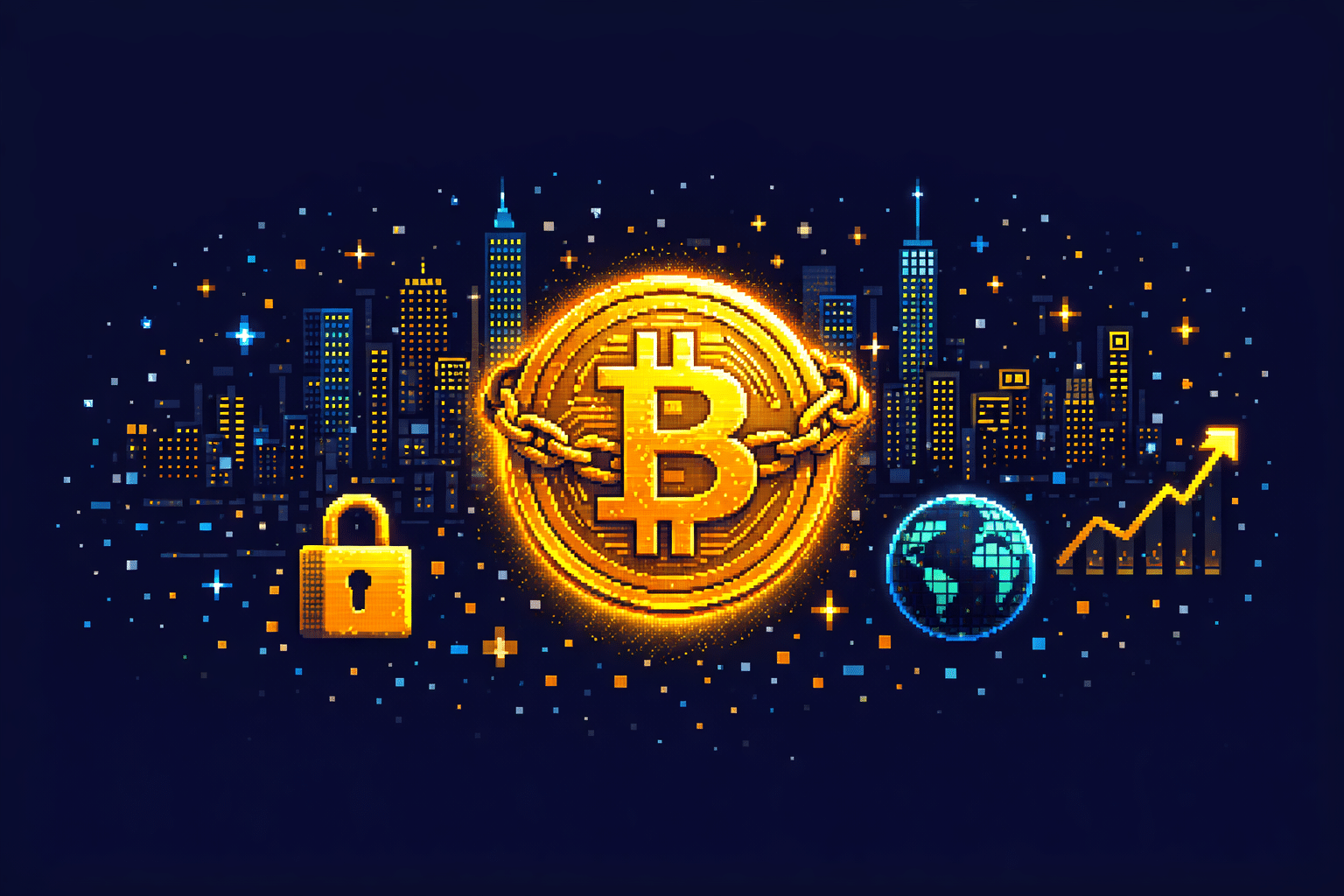
Bitcoin is digital money that works without banks or governments. It’s the first money the internet has ever had that’s truly global, borderless, and controlled by no single person or institution.
When I first bought Bitcoin in 2017, I’ll be honest, I didn’t fully understand it. I bought because prices were going up, and I didn’t want to miss out. I made mistakes (left it on an exchange that later had issues, panicked sold during a dip, the usual beginner story). But as I learned what Bitcoin actually is – not just what it’s worth. I realized this wasn’t just another investment. It was a completely new way of thinking about money.
In this guide, we’ll explain what is Bitcoin in plain English – how it works, why it has value, and how you can get started. No jargon, no technical degree required. By the end, you’ll understand Bitcoin better than most people who already own it.
Bitcoin in One Sentence
If you remember only one thing from this guide, remember this:
Bitcoin is digital cash that lets anyone, anywhere send money directly to anyone else, anywhere, without banks, borders, or permission, secured by mathematics instead of governments.
Here are a few other ways to think about it:
- For the financially minded: Bitcoin is a decentralized digital currency that operates on a peer-to-peer network, free from central authority.
- For the tech crowd: Bitcoin is a protocol for transferring value across the internet, powered by blockchain technology.
- For the skeptical: Bitcoin is internet money that no one controls, can’t be counterfeited, and has a fixed supply of 21 million coins.
The Problem Bitcoin Solves
To understand Bitcoin, you first need to understand the problems with traditional money.
Problem 1: You Don’t Actually Control Your Money
When you have money in a bank, you have an IOU from the bank. They can:
- Freeze your account (if they suspect fraud or comply with government requests)
- Limit your withdrawals (some banks have daily limits)
- Lose your money (bank failures happen—remember 2008 and 2023?)
With Bitcoin, you control your money directly. No permission needed. No one can freeze it, limit it, or take it away without your private keys.
Problem 2: Sending Money Is Slow and Expensive
- International wire transfers: $25-50 and 3-5 business days
- Credit card payments: 2-3% fees and can be reversed (chargebacks)
- Remittances: Workers sending money home lose billions in fees yearly
Bitcoin transactions settle in minutes for pennies. The recipient has the money – final, irreversible, theirs.
Problem 3: Not Everyone Has Access to Banking
1.7 billion adults worldwide don’t have bank accounts. But many have phones.
Bitcoin works for anyone with an internet connection. No ID required. No credit check. No minimum balance. Just a phone and the internet.
Problem 4: Money Can Be Manipulated
Governments can print unlimited money. The US dollar supply increased by 40% in 2020 alone. That’s inflation. Your $100 buys less every year.
Bitcoin’s supply is fixed at 21 million. No one can create more. Not governments, not companies, not even Satoshi themselves.
| Problem | Traditional Money | Bitcoin |
|---|---|---|
| Control | Banks control your access | You control your private keys |
| Transfer speed | Days (international) | Minutes |
| Transfer cost | $15-50 | Pennies to few dollars |
| Reversals | Payments can be charged back | Transactions are final |
| Supply | Unlimited (can print more) | Fixed at 21 million |
| Access | Requires bank account | Requires only internet |
Key Insight: Bitcoin isn’t just different money—it’s a different kind of money. It’s the first time in history that people can truly own and control value without trusting a third party.
Who Created Bitcoin?
The Mystery of Satoshi Nakamoto
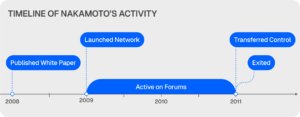
In 2008, someone (or a group) using the name Satoshi Nakamoto published a whitepaper titled “Bitcoin: A Peer-to-Peer Electronic Cash System.”
In January 2009, they released the first Bitcoin software and mined the first block, called the Genesis Block. Embedded in that block was a message:
“The Times 03/Jan/2009 Chancellor on brink of second bailout for banks”
It was a timestamp, a mission statement, and a middle finger to the traditional financial system all in one.
What We Know
- Satoshi communicated via email and forums for about two years
- They mined approximately 1 million Bitcoins (worth billions today)
- In 2011, Satoshi disappeared, handing control to other developers
- Satoshi’s identity remains unknown
Why Satoshi’s Identity Matters (and Doesn’t)
Many people want to know who Satoshi was. But here’s the beautiful part: Bitcoin doesn’t need a leader.
It’s open-source software that anyone can review, improve, and run. Satoshi could return tomorrow and couldn’t change Bitcoin without convincing thousands of other developers and miners. The code is now bigger than any single person.
Theories (Briefly)
- Individual genius: Nick Szabo (creator of “bit gold”) or Hal Finney (early Bitcoin contributor) are common candidates
- Group of cryptographers: Some believe it was a team – the writing style shifts
- Government agency: Less likely. Why create something that undermines government control of money?
The Legacy
Whoever Satoshi was, they created something revolutionary, then stepped away ensuring Bitcoin would become truly decentralized. That 1 million Bitcoin? Never moved. Satoshi’s coins sit untouched, a monument to an idea bigger than any individual.
On February 8, 2026, an anonymous entity transferred approximately 2.565 BTC (worth over $150,000–$180,000) to that Bitcoin Genesis block address.
How Does Bitcoin Work? (Simple Version)
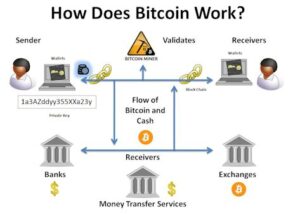
You don’t need to understand every technical detail to use Bitcoin, just like you don’t need to understand how email protocols work to send a message. But a basic understanding helps.
The Blockchain (The Public Ledger)
Think of the blockchain like a Google Doc that everyone can view but no one can delete. Every transaction ever made is recorded there, permanently and publicly.
This transparency prevents cheating – anyone can verify transactions. If someone tried to claim they had Bitcoin they didn’t actually own, the entire network would see it instantly.
Keys (Your Digital Signature)
You get two keys with Bitcoin:
- Public key: Like your email address. Share it to receive money.
- Private key: Like your email password. NEVER share it.
Your private key proves you own your Bitcoin. Lose it? Lose your Bitcoin. Someone steals it? They control your Bitcoin.
Mining (The Security System)
Mining is how new Bitcoin are created and transactions are verified.
Miners use powerful computers to solve complex math problems. The first to solve it adds the next “block” of transactions to the chain and earns new Bitcoin as a reward. This process secures the network, attacking it would require more computing power than exists.
Decentralization (No Boss)
There’s no Bitcoin company, no CEO, no headquarters. Thousands of computers around the world (called nodes) all keep a copy of the blockchain.
To cheat the system, you’d need to control more than half of all these computers (practically impossible). This is what makes Bitcoin trustless: you don’t need to trust anyone, just the math.
The Transaction Journey (Step by Step)
- You want to send 0.1 Bitcoin to your friend
- You create a transaction: “Send 0.1 BTC from my address to friend’s address”
- You sign it with your private key (proving you own it)
- You broadcast it to the Bitcoin network
- Miners pick it up and include it in the next block
- Other nodes verify the block is valid
- Block is added to the blockchain (permanent)
- Your friend now has the Bitcoin usually in 10-60 minutes
Simple Analogy
Bitcoin is like email for money. Just as you can email anyone instantly without going through a post office, you can send Bitcoin to anyone without going through a bank.
What Gives Bitcoin Value?
The question everyone asks: “Why does this digital code have value? It’s not backed by gold or governments.”
The Answer
Bitcoin has value for the same reasons anything has value – people agree it does.
Gold has value because we collectively decide it’s valuable. Dollars have value because the government says they do (and we accept them). Bitcoin has value because a growing global network of people, businesses, and institutions agree it does.
The 7 Properties of Valuable Money
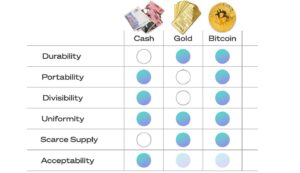
| Property | Bitcoin | Gold | US Dollar |
|---|---|---|---|
| Durable | Yes (digital) | Yes | Yes (paper/electronic) |
| Portable | Extremely (send anywhere instantly) | Heavy to move | Portable but slow internationally |
| Divisible | Yes (to 8 decimal places – satoshis) | Can be divided | Yes (cents) |
| Fungible | Yes (each Bitcoin = same value) | Yes | Yes |
| Scarce | Fixed supply (21 million) | Limited but new mined yearly | Unlimited (printed at will) |
| Recognizable | Growing rapidly | Universal | Universal |
| Secure | Cryptographically | Physical security | Government backing |
The Scarcity Argument
There will only ever be 21 million Bitcoin. No more. This makes it the first absolutely scarce asset in human history.
- Gold’s supply grows about 2% yearly (new mining)
- The US dollar supply increased 40% in 2020 alone
When something is scarce and people want it, price tends to rise.
The Network Effect
Bitcoin’s value grows as more people use it. More users = more merchants accept it = more useful = more value. This flywheel has been spinning since 2009.
Store of Value vs Medium of Exchange
Today, most people treat Bitcoin like digital gold – a store of value rather than daily spending money. They buy and hold, expecting it to become more valuable over time. The infrastructure for spending is being built (more on that later).
Simple Explanation: Think of it this way. A painting by Picasso has value because people agree it does, it’s scarce, and others want it. Bitcoin is similar, except its value transfers instantly anywhere in the world, and its authenticity is mathematically guaranteed.
Bitcoin vs Traditional Money
| Feature | Bitcoin | Bank Money | Cash |
|---|---|---|---|
| Who controls it? | You (with private keys) | Your bank | You |
| Can it be frozen? | No (only if someone gets your keys) | Yes | No (if physical) |
| Transaction cost | Low ($0.10-2) | Varies ($0-50) | Free |
| Transaction speed | 10-60 minutes | Instant to days | Instant |
| Privacy | Pseudonymous | Known to bank | Anonymous |
| Supply | Fixed (21 million) | Unlimited | Unlimited |
| Global acceptance | Growing | Yes, but with conversion | Varies |
The Inflation Difference
Your $100 bill today buys less than it did 10 years ago because governments print more money. Bitcoin’s fixed supply means it can’t be inflated away. Some call it “hard money” – the hardest money ever created.
The Freedom Difference
With Bitcoin, you don’t ask permission. No bank can deny your transaction. No government can freeze your funds (unless they get your keys). For people in countries with unstable currencies or oppressive governments, this is revolutionary.
Important: Bitcoin isn’t trying to replace your bank account for daily spending yet. Think of it as a new layer of the financial system, one that exists alongside traditional money, not instead of it.
How to Get Bitcoin
There are four ways to acquire Bitcoin. For beginners, Method 1 is the place to start.
Method 1: Buy on a Centralized Exchange (Easiest)
This is how most people buy their first Bitcoin.
Steps:
- Create account on an exchange (Coinbase, Kraken, Binance)
- Verify your identity (KYC – Know Your Customer)
- Deposit money (bank transfer is cheapest, card is fastest)
- Buy Bitcoin
- Withdraw to your own wallet (recommended for amounts over $1,000)
Time: 10-30 minutes setup, then minutes to buy
Fees: 0.5-3.5% depending on payment method
Recommended: Best Crypto Exchanges 2026 Guide
Method 2: Peer-to-Peer (More Private)
Platforms like Bisq, LocalBitcoins, or Paxful let you buy directly from other people.
Steps:
- Find a seller with good reputation
- Agree on price and payment method
- Complete payment (bank transfer, cash, gift cards, etc.)
- Seller releases Bitcoin to you
Time: Varies (minutes to hours)
Fees: Usually higher than exchanges
Privacy: Can be more private (no KYC on some platforms)
Method 3: Mining (Not for Beginners)
You can run specialized computers to earn Bitcoin by verifying transactions. This requires expensive hardware, cheap electricity, and technical expertise.
Reality: Individual mining is rarely profitable today. Large mining farms dominate. Skip this unless you’re seriously committed.
Method 4: Earn It
You can get paid in Bitcoin for work. Many freelancers accept Bitcoin, and some companies offer Bitcoin payment options.
Where to find Bitcoin jobs:
- Crypto-focused job boards
- Freelance platforms with crypto payment options
- Direct arrangements with clients
CRITICAL SAFETY WARNING: After buying, move your Bitcoin to your own wallet if you’re holding more than you can afford to lose. Exchanges get hacked. Your wallet (with your private keys) is the only way you truly own your Bitcoin. See our Best Hardware Wallets 2026 Guide for secure storage.
What Can You Buy with Bitcoin?
The Growing Acceptance
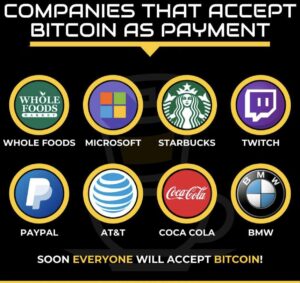
More businesses accept Bitcoin every year. While you can’t buy groceries everywhere yet, the list keeps growing.
Major Companies Accepting Bitcoin
- Microsoft: Add Bitcoin to your account for app and game purchases
- AT&T: Pay bills with Bitcoin (via BitPay)
- Overstock: Thousands of products
- Newegg: Electronics
- Twitch: Subscriptions and bits
- Whole Foods: (via third-party apps like Flexa)
- Starbucks: (via Bakkt app)
Travel and Lifestyle
- Expedia: Hotels and flights (via Travala)
- CheapAir: Flights
- Namecheap: Domains and hosting
- Private jet charters: Several companies accept Bitcoin
Gift Cards (Most Flexible Option)
Services like Bitrefill and Gyft let you buy gift cards with Bitcoin for hundreds of brands – Amazon, Uber, Walmart, Netflix, and more. This is how many people spend Bitcoin indirectly.
The Lightning Network
Bitcoin’s main network can be slow for small purchases (10-60 minutes). The Lightning Network is a “layer 2” solution that makes Bitcoin transactions instant and nearly free – perfect for buying coffee. It’s growing rapidly.
Realistic Take
Today, most people treat Bitcoin as an investment rather than spending money. But the infrastructure for spending is being built. Each year, it gets easier to use Bitcoin for everyday purchases.
Is Bitcoin Safe?
Two types of safety to consider: the network itself, and your personal responsibility.
1. Safety of the Network (The Technology)
Bitcoin has never been hacked. Not once.
The network has operated continuously for 15+ years with 100% uptime. This is remarkable for any software, let alone one securing hundreds of billions of dollars.
Why Bitcoin is secure:
- Decentralized: No single point of failure
- Proof of Work: Mining makes attacks prohibitively expensive
- Open source: Thousands of developers review the code
- Growing hashrate: More computing power securing it than ever
2. Safety of Your Bitcoin (Your Responsibility)
This is where most people lose Bitcoin – not because Bitcoin is unsafe, but because they make mistakes.
| Mistake | Consequence | Prevention |
|---|---|---|
| Losing private keys | Bitcoin gone forever | Multiple backups, seed phrase stored safely |
| Sharing private keys | Theft | Never share keys with anyone |
| Exchange hacks | Loss of funds on exchange | Move to your own wallet |
| Phishing scams | Send Bitcoin to scammers | Verify addresses, use hardware wallet |
| Sending to wrong address | Funds unrecoverable | Double-check, test with small amounts |
The 3 Golden Rules of Bitcoin Safety
- Not your keys, not your coins. If you don’t control the private keys, you don’t own the Bitcoin.
- Backup your seed phrase. Write it on paper. Store it safely. Never digitally.
- Start small. Learn with tiny amounts before moving serious money.
Price Volatility (The Other “Safety” Concern)
Bitcoin’s price goes up and down a lot. 30-50% drops happen. This isn’t a bug; it’s the nature of a new asset finding its value. Only invest what you can afford to hold for years.
The Truth: Bitcoin itself is extremely safe. The risks are all around you – exchanges, scammers, your own mistakes. Learn proper self-custody, and your Bitcoin can be safer than money in a bank.
Common Bitcoin Myths
Myth 1: “Bitcoin is used mostly for illegal things”
Reality: Early on, yes (Silk Road). Today, illegal activity is a tiny fraction of Bitcoin transactions – less than 1% according to Chainalysis. Cash is still the king of crime because it’s truly anonymous. Bitcoin leaves a permanent public record.
Myth 2: “Bitcoin is a bubble that will go to zero”
Reality: Bitcoin has been declared dead hundreds of times. Each time, it recovered and grew. The network is stronger than ever. Could it drop 80%? Yes. Go to zero? Extremely unlikely given its adoption and network effects.
Myth 3: “Bitcoin is too slow for payments”
Reality: The base layer is slower (10-60 minutes). But Lightning Network makes Bitcoin instant and nearly free. It’s early, but working.
Myth 4: “Bitcoin is anonymous”
Reality: Bitcoin is pseudonymous. Your transactions are public on the blockchain. With analysis, transactions can often be traced to individuals, especially if you use regulated exchanges.
Myth 5: “Bitcoin wastes too much energy”
Reality: Bitcoin mining uses significant energy. However:
- Much mining uses renewable energy (especially stranded energy that would otherwise be wasted)
- It’s securing a global financial network
- Traditional banking and gold mining also use enormous energy
- The debate continues, but “waste” is subjective
Myth 6: “It’s too late to buy Bitcoin”
Reality: Adoption is still early. Estimates suggest 2-5% of the global population owns Bitcoin. If it becomes global money, there’s still massive growth potential. Also, you can buy fractions (satoshis) – you don’t need a whole Bitcoin.
Myth 7: “Someone could create a better Bitcoin”
Reality: Thousands have tried. None have surpassed Bitcoin’s network effect, security, or brand recognition. Bitcoin is like email protocol – first mover matters.
Bitcoin Price and Volatility
The Roller Coaster
Bitcoin’s price history looks like a heart attack on a chart. But zoom out, and you see a clear pattern: higher highs over time.
Why So Volatile?
- New asset class: Still finding fair value
- Thin liquidity: Relatively small market compared to gold or stocks
- Speculation: Traders amplify moves
- News sensitivity: Regulatory announcements, hacks, adoption news all move price
- Halving cycles: Supply cuts every 4 years historically precede price increases
The Halving Explained
Every 4 years, the reward miners get for adding a block is cut in half. This reduces new supply. Historically, 12-18 months after each halving, Bitcoin enters a bull market.
| Halving Date | Block Reward Before | After | Price 12 Months Later |
|---|---|---|---|
| Nov 2012 | 50 BTC | 25 BTC | ~$1,000 (from $12) |
| July 2016 | 25 BTC | 12.5 BTC | ~$20,000 (from $650) |
| May 2020 | 12.5 BTC | 6.25 BTC | ~$69,000 (from $8,000) |
| April 2024 | 6.25 BTC | 3.125 BTC | ~$94,000 |
What This Means for Beginners
If you buy Bitcoin, expect 30-50% drops. They’re normal. The people who succeed are those who don’t panic sell, who keep learning, and who hold for years, not weeks.
Price Analogy: Think of Bitcoin like Amazon stock in the late 1990s. Volatile, controversial, many thought it would fail. Those who held through the ups and downs did well. No guarantees, but that’s the comparison.
The Future of Bitcoin
Scenario 1: Digital Gold (Most Likely)
Bitcoin becomes a global store of value, like gold but digital. Institutions hold it in their treasuries. Individuals use it for savings. Price could reach hundreds of thousands or millions per coin over decades.
Scenario 2: Global Payment Network
Lightning Network and other layer 2 solutions make Bitcoin practical for everyday payments. It becomes a true currency, competing with credit cards and cash.
Scenario 3: The Doom Scenario
Governments ban it globally (unlikely but possible). A better technology replaces it (hasn’t happened yet). Quantum computing breaks cryptography (distant future, Bitcoin can upgrade).
Trends to Watch
| Trend | Current Status | Implication |
|---|---|---|
| Institutional adoption | BlackRock, Fidelity, pension funds buying | Legitimacy, price support |
| ETF approvals | US Bitcoin ETFs launched 2024 | Easier access for mainstream investors |
| Country adoption | El Salvador, others | Sovereign legitimacy |
| Lightning Network | Growing rapidly | Usability improving |
| Regulation | Increasing clarity | Mixed—legitimacy but restrictions |
The Optimistic View
Bitcoin is the first sound money humanity has ever created. It’s censorship-resistant, borderless, and absolutely scarce. In a world of printing presses, that matters more every year.
The Realistic View
Bitcoin will likely continue its pattern: boom, bust, then higher. It won’t replace all money. It will coexist as a new layer of the global financial system. Adoption will continue growing, but not in a straight line.
Next Steps: From Learning to Owning
You’ve learned what Bitcoin is. Now what?
The Beginner’s Path
| Step | Action | Time |
|---|---|---|
| 1. Keep Learning | Read our Complete Cryptocurrency Guide | 1-2 hours |
| 2. Choose an Exchange | Compare options in our Best Crypto Exchanges 2026 guide | 30 minutes |
| 3. Buy a Small Amount | Start with $50-100 | 10 minutes |
| 4. Get a Wallet | Software wallet for small amounts | 15 minutes |
| 5. Practice | Send small amount between wallets | 20 minutes |
| 6. Go Deeper | Hardware wallet for larger amounts | 1 hour |
Recommended Resources
- 📚 Read Next: Complete Cryptocurrency Guide for Beginners
- 📊 Compare Exchanges: Best Crypto Exchanges 2026
- 🔒 Secure Your Bitcoin: Best Hardware Wallets 2026
Final Thought
Bitcoin is the beginning of something new. Money that answers to no one and works for everyone. You now understand it better than most people who already own it.
The next step is yours. Start small, stay curious, and welcome to the revolution.
Disclosure: This guide is for educational purposes only and does not constitute financial advice. Bitcoin is volatile and involves risk. Always do your own research and never invest more than you can afford to lose.
This guide was last updated for the 2026 edition. Bitcoin evolves – check back for updates, and always verify information with multiple sources before making financial decisions.
Frequently Asked Questions
Who controls Bitcoin?
No one controls Bitcoin. It's run by thousands of computers around the world, all following the same rules. Changes require consensus from the community - no single person or company can change it.
How many Bitcoin exist?
There will only ever be 21 million Bitcoin. Currently, about 20 million have been mined. The last Bitcoin will be mined around the year 2140.
Can I buy a fraction of Bitcoin?
Yes! Bitcoin divides into 100 million smaller units called satoshis (or sats). You can buy as little as $10 worth.
Is Bitcoin anonymous?
No, Bitcoin is pseudonymous. Transactions are public on the blockchain, though they're linked to addresses, not names. With effort, transactions can often be traced, especially through exchanges.
How do I store Bitcoin safely?
For small amounts: software wallet on your phone. For larger amounts: hardware wallet (like Ledger or Trezor). Always keep your seed phrase (backup words) offline and secure.
How long does a Bitcoin transaction take?
Usually 10-60 minutes for confirmation. With Lightning Network, it's instant.
Are Bitcoin transactions reversible?
No. Once confirmed, Bitcoin transactions are permanent. This prevents fraud but means you must be careful sending to the right address.
Do I have to pay taxes on Bitcoin?
In most countries, yes. Selling Bitcoin for cash, trading for other crypto, or spending it may be taxable events. Consult a tax professional.
Is Bitcoin a good investment?
We don't give financial advice. But we can say: Bitcoin is volatile, risky, and could go to zero, or much higher. Only invest what you can afford to lose, and plan to hold for years, not days.
What's the difference between Bitcoin and other cryptocurrencies?
Bitcoin was first and remains the most secure, decentralized, and valuable. Others (altcoins) try different approaches - faster transactions, smart contracts, etc. Think of Bitcoin as digital gold, others as different experiments.
Can Bitcoin be hacked?
The Bitcoin network has never been hacked. Individual wallets can be hacked if private keys are stolen, but the network itself remains secure.
About the Author