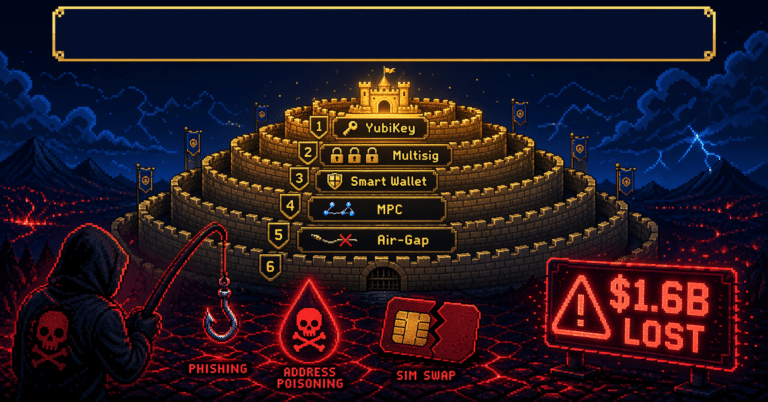
A single private key is a single point of failure. Lose it, and your funds are gone forever. Share it with someone, and you’ve lost sole control. Let it get stolen, and the thief empties your wallet before you can blink. Over $1.6 billion was lost in the first half of 2026 due to access control failures (leaked private keys, SIM swapping, and insider threats). There is a better way.
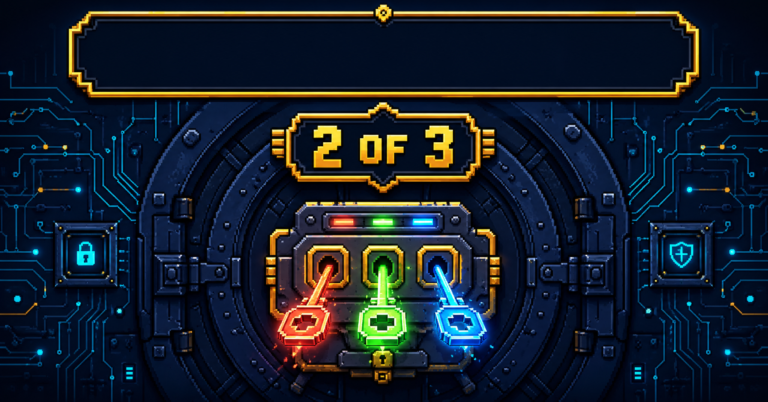
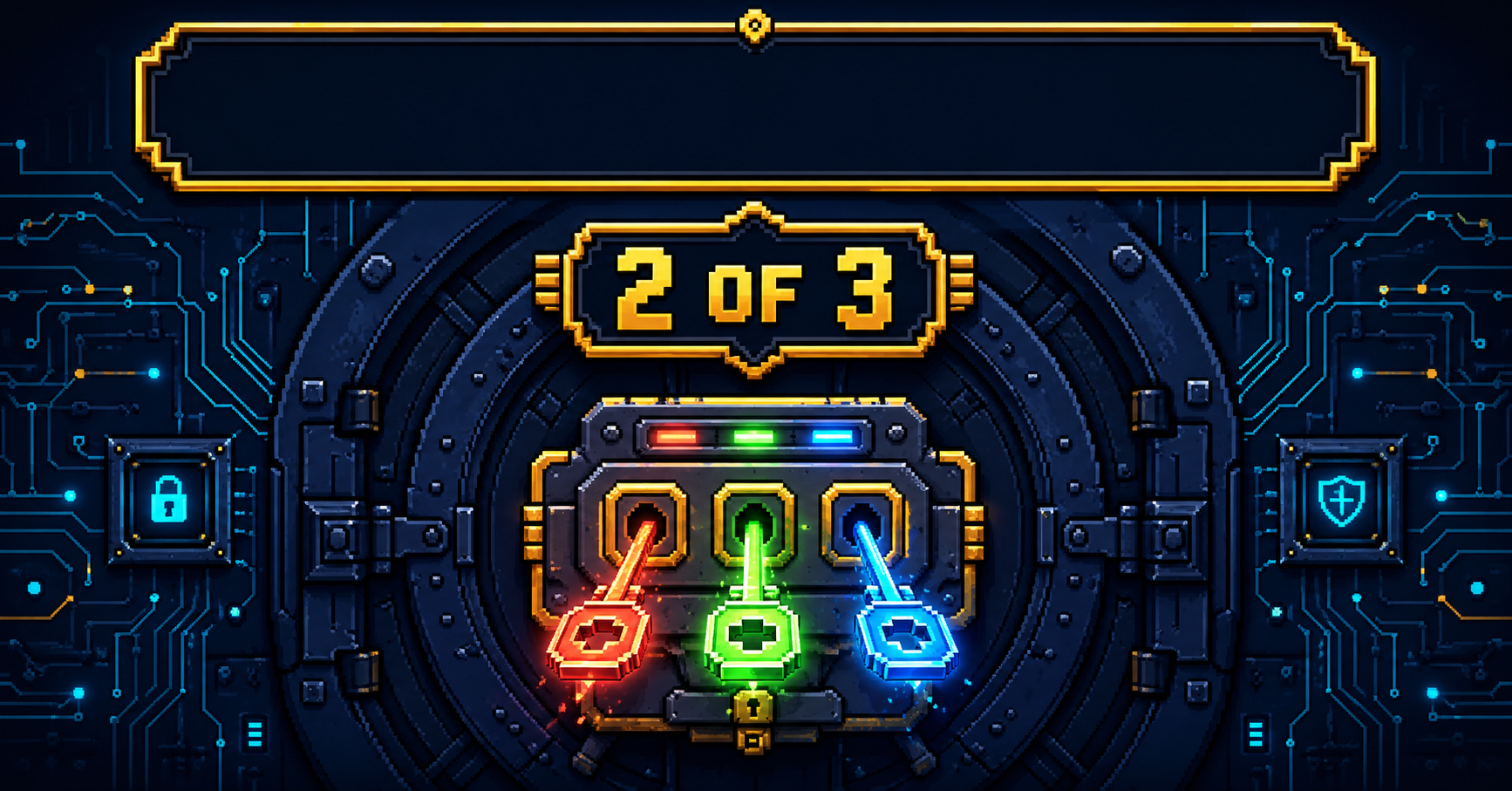
Multisignature (multisig) wallets require multiple independent private keys to authorize any transaction. A 2‑of‑3 configuration means you need at least two key holders to sign off before funds move. One key lost? You still have the other two. One key compromised? The attacker can’t move funds without the second. This is how DAO treasuries protect millions, how families share crypto safely, and how institutional custody has operated for years, and in 2026, it’s accessible to anyone.
In this multisig wallet setup guide, we’ll walk you through everything you need to know: how multisig works, the best providers and setups for 2026 (Safe, Electrum, Nunchuk, Vultisig), step‑by‑step setup instructions for Ethereum and Bitcoin, security best practices, and how to choose the right threshold for your needs. By the end, you’ll have a working multisig wallet and the confidence to move significant value into it.
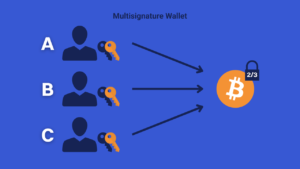
What is a Multisig Wallet? M‑of‑N Explained
The Basic Definition
A multisignature (multisig) wallet is a smart contract or wallet configuration that requires multiple independent private keys to authorize a transaction. You define a rule (commonly called an M‑of‑N scheme). For example, a 2‑of‑3 setup creates three distinct keys but requires any two of them to approve a transfer of funds.
How It Differs from a Single‑Key Wallet
| Feature | Single‑Key Wallet | Multisig Wallet |
|---|---|---|
| Keys required | 1 | M of N (e.g., 2 of 3) |
| Single point of failure | Yes – lose key, lose funds | No – loss of 1 key still leaves access |
| Theft risk | One compromised key = total loss | One compromised key cannot move funds |
| Recovery options | None without seed | Built‑in redundancy via remaining keys |
| Setup complexity | Low | Moderate |
The M‑of‑N Notation
- M = number of signatures required to approve a transaction
- N = total number of signers who hold keys
A 2‑of‑3 multisig is the most common configuration for individuals and small teams. A 3‑of‑5 or 4‑of‑7 is often used by DAOs and institutional custodians.
A Simple Analogy
Think of a traditional safe that requires two keys turned simultaneously, one held by you, one by your partner. Neither of you can open the safe alone. Multisig wallets work the same way, but on the blockchain. The security standard for DAO treasuries, family funds, and institutional custody, multisig ensures no single person controls the funds.
Why Multisig? The Problem It Solves
The Single Point of Failure Problem
Traditional wallets rely on a single private key or seed phrase. That key is a target, and if it’s compromised or lost, everything is gone. Keyloggers, malicious browser extensions, SIM swaps, and physical theft all target single keys. Multisig wallets eliminate this single point of failure.
Real‑World Scenarios Where Multisig Protects You
| Scenario | Without Multisig | With Multisig |
|---|---|---|
| One keyholder’s device is compromised | Total loss | Funds remain safe (attacker lacks second key) |
| One keyholder loses access | Total loss | Remaining keyholders can recover/update configuration |
| Internal collusion (team/DAO) | Single rogue employee could drain funds | Multiple signers must collude to act maliciously |
| Malicious transaction approval (blind signing) | One click, funds drained | Transaction only executes after multiple independent approvals |
The 2026 Context
Over $1.6 billion was lost in the first half of 2026 due to access control failures (leaked private keys, SIM swapping, and insider threats). Multisig would have prevented nearly all of these losses. By requiring consensus to move funds, a multisig wallet protects you from hackers, rogue employees, and even your own mistakes.
The Best Multisig Wallets in 2026
Safe (formerly Gnosis Safe). For Ethereum & EVM Chains
Overview: Safe is the most widely used multisig wallet in the world. It is the common multisig wallet for Ethereum DAOs, ecosystem projects, and institutional treasuries. Safe uses a smart contract model on EVM‑compatible chains and supports flexible quorum thresholds.
| Feature | What It Does |
|---|---|
| Smart contract wallet | More programmable and powerful than simple address‑based multisig |
| Flexible quorum thresholds | Configure any M‑of‑N combination up to N = 100+ |
| Gasless signatures | Signers can approve without paying gas (executor pays) |
| Deep dApp integration | Hundreds of DeFi and Web3 apps integrate natively |
| Multi‑chain support | Ethereum, Polygon, Arbitrum, Base, BNB Chain, Optimism, Avalanche, and more |
| Hardware wallet compatibility | Connect Ledger, Trezor, and other hardware wallets as signers |
Who It’s For: Safe is ideal for DAOs, protocol treasuries, family offices, and individuals who want the most battle‑tested multisig solution on EVM chains. It’s the gold standard.
Security Audits: Safe has been audited by OpenZeppelin and Trail of Bits, among others.
Electrum. For Bitcoin

Overview: Electrum is a lightweight, open‑source Bitcoin wallet that has offered robust multisignature functionality for over a decade. It’s a time‑tested way to protect your Bitcoin with open‑source apps for PC, Mac, Linux, and Android, supporting hardware wallets, multi‑signature security, and even cold storage.
| Feature | What It Does |
|---|---|
| Open source | Fully auditable codebase |
| Lightweight | No blockchain download required |
| Hardware wallet support | Works with Ledger, Trezor, Coldcard |
| Multi‑sig up to 15 keys | Supports complex M‑of‑N configurations |
| Cold storage capable | Create signing keys on offline devices |
Who It’s For: Electrum is the best choice for Bitcoin‑only users who prioritize open‑source transparency and lightweight operation.
Nunchuk. For Shared Bitcoin Custody
Overview: Nunchuk is a modern Bitcoin multisig wallet designed specifically for shared custody between multiple parties. A step‑by‑step guide explains how to create a 3‑of‑4 multisig wallet using Nunchuk, making it ideal for families, partnerships, and small organizations.
| Feature | What It Does |
|---|---|
| Shared custody focus | Built for multiple independent parties |
| Mobile‑first | iOS and Android apps with intuitive interface |
| Hardware wallet support | Works with Ledger, Trezor, Coldcard |
| Coordinator model | Secure communication between signers without exposing keys |
Who It’s For: Nunchuk is ideal for families managing shared inheritance, business partners, or any group that needs secure, coordinated Bitcoin custody without trusting a single coordinator.
Vultisig․ Seedless Multi‑Device Multisig
Overview: Vultisig eliminates seed phrase vulnerabilities while delivering enterprise‑grade multisig security for over 30 chains including Bitcoin, Ethereum, and Solana. It works like a traditional multisig wallet but with flexible setup options and modern convenience. Its Fast Vault feature offers a single‑device + Vultisig server setup for quick setup and instant signing.
| Feature | What It Does |
|---|---|
| Seedless design | No single seed phrase to protect; eliminates a major attack vector |
| 30+ chain support | Bitcoin, Ethereum, Solana, and many more |
| Multi‑device synchronization | Access your vault across multiple devices |
| Fast Vault (+ Vultisig server) | Single‑device setup for quick access |
| Traditional multisig option | Full M‑of‑N control for security‑maximizers |
Who It’s For: Vultisig is ideal for users who want multisig security without the complexity of managing multiple hardware wallets. It’s perfect for active DeFi participants, NFT collectors, and anyone who prioritizes convenience alongside security.
How to Choose Your Threshold: 2‑of‑3, 3‑of‑5, and Beyond
Decision Framework
| Configuration | Best For | Trade‑offs |
|---|---|---|
| 2‑of‑2 | Two equal partners, shared account | No redundancy; lose one key, lose access |
| 2‑of‑3 (most common) | Individuals, small teams, families | Balance between security and accessibility; one backup key provides recovery |
| 3‑of‑5 | DAO treasuries, larger teams | Higher security (requires 3 parties to collude), but slower transaction approval |
| 3‑of‑7 | Institutional custody | Extreme security; slower operations |
| 4‑of‑7 or higher | High‑stakes protocols, exchanges | Maximum security, operational overhead |
The Redundancy Rule
For wallets that implement a multi‑signer mechanism, they must include at minimum one redundant key for recovery purposes. This redundancy guarantees that funds remain accessible if one operational key is lost, compromised, or unavailable. The 2‑of‑3 configuration is widely considered the standard across the industry, offering flexibility and recovery assurance.
Key Considerations
- Security: Higher M (e.g., 3‑of‑5) means more keys must be compromised before funds are stolen.
- Recovery: A 2‑of‑3 configuration allows you to lose one key without losing access. A 2‑of‑2 configuration offers no such redundancy.
- Operational speed: Lower thresholds (2‑of‑3) are faster for daily operations. Higher thresholds are more secure but slower.
- Team size: For a DAO with 7 members, 4‑of‑7 ensures no single leader can act unilaterally and that approval requires meaningful consensus.
Recommendation for most users: For individuals and small teams, 2‑of‑3 is the sweet spot. It offers robust security (an attacker would need to compromise two independent parties) while retaining redundancy (you can lose one key and still operate). For DAO treasuries and institutional funds, 3‑of‑5 or higher is recommended.
Step‑by‑Step: Set Up a Safe Multisig Wallet (Ethereum)
Prerequisites
- At least three Ethereum addresses from separate wallets (hardware wallets recommended for production use)
- A small amount of ETH for gas fees on the network you choose
Step 1: Open Safe and Connect Your Wallet
Go to app.safe.global. Click “Connect Wallet” in the top right corner. Select your wallet provider (MetaMask, WalletConnect, or a hardware wallet) via the browser extension.
Step 2: Create a New Safe
Once connected, click “Create new Safe.” You’ll be guided through the configuration process.
Step 3: Set the Network
Choose the blockchain where your Safe will operate (Ethereum Mainnet, Polygon, Arbitrum, Optimism, Base, or others supported by Safe).
Step 4: Add Owners (Signers)
Enter the Ethereum addresses of all signers. You’ll need at least two addresses (for a 2‑of‑2 setup) or three (for a 2‑of‑3 or 3‑of‑3 setup). For maximum security, use addresses from hardware wallets like Ledger or Trezor as your signers.
Step 5: Set the Signature Threshold
Define how many signers are required to approve any transaction. For a 2‑of‑3 setup, enter “2” as your threshold. This number should always be greater than 1 and less than or equal to the total number of owners.
Step 6: Review and Create
Review the Safe details: name, network, owners, and threshold. If everything is correct, click “Create.” You’ll need to confirm a transaction from your connected wallet to deploy the Safe smart contract (requires gas fees).
Step 7: Add Funds
Once created, copy your Safe’s address and transfer funds to it. Your Safe is now live and requires multi‑signature approval for any outgoing transaction.
Step 8: Test with a Small Amount
Before moving significant value, send a small test amount back to your original wallet. Practice approving a transaction from two different signer wallets to confirm the workflow works as expected.
Pro Tip for Maximum Security: For high‑value Safes, all signers should use hardware wallets. This ensures that even if your computer is compromised, the attacker cannot approve a transaction without physical access to your hardware wallet.
Step‑by‑Step: Set Up a Bitcoin Multisig Wallet (Electrum)
Prerequisites
- Electrum software installed on multiple devices (one per signer)
- A plan for how signers will communicate and coordinate unsigned/signed transactions (USB drive, encrypted messaging, etc.)
Step 1: Install Electrum
Download Electrum from the official website on each signer’s device. Avoid third‑party repositories.
Step 2: Generate Keys/Seeds
On each device, create a new standard wallet. Write down the seed phrase and store it securely. Each signer will have their own distinct seed phrase and corresponding public key.
Step 3: Create the Multisig Wallet
Open Electrum on the primary device. Select File → New/Restore. Name your wallet. Choose “Multi‑signature wallet.” Specify your M‑of‑N configuration (e.g., 2‑of‑3).
Step 4: Add Cosigner Public Keys
Enter the public keys or extended public keys (xpub) from each cosigner wallet. If devices are offline, transfer the xpub via USB drive, QR code, or another secure method.
Step 5: Finalize Wallet Creation
Review the configuration. Once confirmed, your multisig wallet address will be generated. All cosigners must create identical wallet configurations using the same parameters on their respective devices.
Step 6: Fund the Wallet
Send Bitcoin to your multisig address. Confirm the transaction on a blockchain explorer.
Step 7: Practice a Test Transaction
Send a small amount back to yourself. The transaction must be signed by the required M of N signers. Each signer exports their signature; the final signer broadcasts the transaction to the network.
Pro Tip for Coordination: For air‑gapped signing, transfer unsigned and signed transactions via USB drive. For convenience, Electrum can handle signing across local network connections, but the most secure method is to keep the signing device offline.
Multisig vs MPC: Key Differences in 2026
While both multisig and MPC (Multi‑Party Computation) wallets provide enhanced security through distributed control, they achieve this through fundamentally different architectures.
| Feature | Multisig | MPC (Multi‑Party Computation) |
|---|---|---|
| Private key model | Multiple full private keys each stored separately | Single private key split into shares; full key never assembled |
| Transaction signature | Multiple signatures visible on‑chain | Single, standard signature (ECDSA/EdDSA) |
| Gas costs | Higher (each signature uses gas) | Lower (one signature total) |
| On‑chain footprint | Multiple signatures visible | Single signature |
| Auditability | Clear on‑chain (all signers visible) | Off‑chain coordination (single signer on‑chain) |
| Maturity | Battle‑tested (Bitcoin era) | Newer, evolving rapidly |
| Chain compatibility | Varies by chain (EVM native, Bitcoin native) | Broader (single signature works anywhere) |
Which Should You Choose?
- Choose multisig if you prioritize transparency, battle‑tested security, and on‑chain auditability, and you’re working on EVM or Bitcoin.
- Choose MPC if you need lower gas costs, broader chain compatibility, and are comfortable with newer, less battle‑tested infrastructure.
For most high‑net‑worth individuals and DAOs, multisig remains the gold standard in 2026 due to its proven track record and transparency.
Security Best Practices for Multisig Wallets
- Use Hardware Wallets for Each Signer in Production
Multi‑signature signers should use independent cold devices solely for signing operations and should independently verify transaction hashes. Signers must be reachable and expected to respond in a timely manner. Thresholds should balance speed and resilience.
- Distribute Signers Geographically and Across Trust Relationships
Geographic redundancy reduces risk from single‑location disasters. A 2‑of‑3 setup is stronger when signers are independent and not all reachable through the same attack vector.
- Never Share Keys or Seeds
Keys should never be shared. Multisig security assumes each key is held by a distinct, independent party. Sharing keys reintroduces single‑point‑of‑failure vulnerabilities.
- Set Rate Limits on Withdrawals
Set rate limits on withdrawals and avoid control by the same multi‑signature. This protects against rapid drain even if enough keys are compromised.
- Test Recovery and Workflows with Small Amounts
Test multisig and recovery flows with small amounts before moving significant value. Practice a complete transaction cycle (creation, signing, and broadcasting).
- Prefer Audited, Widely‑Used Contracts
For smart‑contract multisig wallets like Safe, prefer audited, widely used contract wallets when opting into smart‑contract multisig.
- Clarify Signature Threshold Parameters Upfront
Clarify signature threshold parameters before operations commence. All parties must understand the M‑of‑N configuration before any funds are deposited.
- Use Time Locks for Critical Operations
Set time locks for relevant operations to provide a delay to verify and cancel malicious transactions scheduled for the future.
The Redundancy Rule (Reinforced): A wallet must include at minimum one redundant key for recovery purposes. Always keep at least one backup key for each operational key.
Recovery and Backup: Don’t Lose Your Keys
The Multisig Recovery Paradox
A loss of N total keys in an M‑of‑N multisig configuration means you are locked out of your wallet. If you have a 2‑of‑3 wallet and lose two keys, or a 3‑of‑5 wallet and lose three keys, your funds become permanently inaccessible.
Recovery Planning
- Maintain Redundant Backups
Each signer should maintain their own secure backup of their seed phrase or private key (e.g., on a metal backup plate stored in a geographically safe location). Back up seeds or key material securely.
- Implement the 3‑2‑1 Rule for Each Key
- 3 copies of the key/seed phrase
- 2 different media types (paper and metal)
- 1 copy stored off‑site
- Designate a Recovery Key for Loss Scenarios
In a 2‑of‑3 configuration, treat the third key as a recovery key, stored in a safety deposit box with trusted legal counsel.
- Maintain an Updated Contact/Signer Registry
Document who holds which keys and how to contact them. If a signer becomes unreachable (injury, travel, life event), operations may stall.
Key Takeaways
- Multisig wallets do not eliminate backup requirements, they multiply them.
- Individual seed phrases are just as critical as they are for single‑key wallets.
- A wallet must include at least one redundant key for recovery purposes, a cornerstone of the CryptoCurrency Security Standard (CCSS).
Common Mistakes That Cost Users Millions
| Mistake | Why It’s Dangerous | Prevention |
|---|---|---|
| Using the same wallet/device for multiple signers | Defeats multisig’s distributed trust model | Use separate devices or hardware wallets for each signer |
| All keys stored in the same physical location | Fire, theft, or disaster can eliminate all keys simultaneously | Distribute backups geographically |
| Not testing the signing process before depositing funds | A misconfiguration could leave funds inaccessible from day one | Always test a small transaction first |
| No documented recovery plan | An unreachable signer can paralyze operations indefinitely | Maintain a plan for how missing keys will be handled |
| Choosing a threshold without redundancy | 2‑of‑2 provides no backup if one key is lost | Always use thresholds that provide redundancy (e.g., 2‑of‑3) |
| Forgetting gas fees | Smart‑contract multisigs require ETH for execution | Keep a small gas reserve in a separate wallet |
| Not securing each seed phrase individually | Compromised seed for one key defeats multisig’s security if others are also compromised | Apply single‑key security best practices to each signer |
Our Verdict: Is Multisig Right for You?
Summary Assessment
Multisig is not for everyone. If you hold less than $10,000 in crypto and use a well‑secured hardware wallet, you may not need multisig. But if you hold significant value ($50,000, $100,000, or more) or if you manage funds with a team, a family, or a DAO, multisig is non‑negotiable.
The Bottom Line
Don’t wait until after a loss to upgrade your security. Single‑key wallets are a single point of failure; a lost seed phrase, a compromised computer, or a trusted insider turning rogue could cost you everything. Multisig wallets require multiple independent keys to move funds. An architecture that has protected billions in crypto assets across DAOs, exchanges, and institutions for years.
Who Should Implement Multisig
- High‑net‑worth individuals ($100k+ in crypto)
- DAOs and protocol treasuries (any size)
- Families managing shared inheritance
- Business partners with shared assets
- Anyone who has already experienced a security incident
Who Can Skip Multisig (For Now)
- Users with less than $10,000 in crypto (a properly secured hardware wallet is sufficient)
- Absolute beginners still learning self‑custody basics
- Those unwilling to manage the inherent coordination complexity
About the Author
Cryptomanic has been researching crypto security since 2021, with a focus on multisig architectures, DAO treasuries, and institutional self‑custody. They have set up multisig wallets for families, small teams, and protocol treasuries, and have advised on security best practices following the CCSS framework.
Disclaimer: This guide is for educational purposes only and does not constitute financial or legal advice. Multisig wallets require careful configuration and management. Test all workflows with small amounts before securing significant funds.
This guide was last updated for the 2026 edition. Multisig providers, features, and best practices evolve rapidly. Always verify current information on official documentation.
Frequently Asked Questions
Safe is the undisputed leader for Ethereum and EVM chains, used by most DAOs and protocol treasuries. For Bitcoin, Electrum and Nunchuk are the top picks. For seedless convenience across 30+ chains, Vultisig is an emerging leader. Go to app.safe.global, connect your wallet, click “Create new Safe,” choose your network, add owner addresses, set your signature threshold (e.g., 2 of 3), review, and confirm the deployment transaction. Yes. Multisig wallets are considered the gold standard for crypto security in 2026, used by DAOs, exchanges, and institutions to secure billions. However, security depends on proper configuration: distributing keys independently, using hardware wallets for each signer, and maintaining backups. Multisig eliminates single points of failure but multiplies the need for secure key management. For smart‑contract multisigs like Safe on Ethereum, each transaction incurs gas costs proportional to the number of signatures (typically higher than a single‑key transaction because multiple signatures are validated on‑chain). For off‑chain multisig coordination (e.g., Electrum), only the final broadcast transaction incurs network fees. Yes. Safe supports hardware wallets (Ledger, Trezor) as signers. Electrum supports hardware wallets for Bitcoin multisig. This is considered best practice for high‑value holdings, combining offline key security with distributed control. Recovery depends on your threshold. In a 2‑of‑3 configuration, if you lose access to one key, you can still sign with the remaining two keys and move funds to a new wallet. If you lose more keys than your threshold allows (e.g., losing two keys in a 2‑of‑3 setup), funds become permanently inaccessible. Maintain redundant key backups to avoid this scenario. Multisig uses multiple full private keys and produces multiple on‑chain signatures. MPC splits a single private key into shares and produces a single signature. Multisig is more transparent and battle‑tested; MPC offers lower gas costs and broader chain compatibility. The core multisig architecture cannot be remotely hacked, as attackers would need to compromise multiple independent keys (and potentially hardware devices). However, poor configuration (sharing keys, storing all backups in one place, using compromised devices) can still lead to loss. Properly configured multisig is among the most secure options available. Industry standard for DAO treasuries is 3‑of‑5 or 4‑of‑7. This balances security (requires multiple people to collude) with operational efficiency (not so many signers that approvals take months).
What is the best multisig wallet in 2026?
How to set up a Gnosis Safe wallet?
Is a multisig wallet safe?
How much does a multisig transaction cost?
Can I use a hardware wallet with a multisig wallet?
How to recover a multisig wallet?
What is the difference between multisig and MPC?
Can multisig wallets be hacked?
How many signers should a DAO multisig have?
About the Author