If you’re in the United States and thinking about buying your first cryptocurrency, Coinbase is almost certainly the name you’ve heard.
It’s the largest US-based exchange, a publicly-traded company on Nasdaq (ticker: COIN), and the platform millions of beginners have used for their first Bitcoin purchase. Its user-friendly interface and strong regulatory compliance have made it the default choice for Americans entering crypto.
But with its dominant position comes scrutiny. Is it still the best choice for newcomers in 2026?
Coinbase faced significant challenges in 2025, including a data breach involving alleged insider participation that shook user confidence. Combined with ongoing complaints about high fees and slow customer support, many beginners wonder if Coinbase remains the safe starting point it once was.
I’ve used Coinbase since 2017. I’ve watched it grow from a simple Bitcoin wallet into a financial super-app. I’ve also felt the frustration of its fees and waited days for support responses. In this comprehensive Coinbase review, we’ll examine everything: security (including the 2025 incident), fees, supported coins, regulatory compliance, and, most importantly, whether Coinbase is the right choice for your first crypto purchase in 2026.

Our Verdict: Coinbase at a Glance
| Aspect | Rating | Notes |
|---|---|---|
| Overall | ★★★★½ | Best for US beginners despite higher fees |
| Safety | ★★★★ | Public company, FDIC insurance, but 2025 breach concerns |
| Fees | ★★ | Higher than competitors (0.4-0.6% Advanced, higher for simple buys) |
| Coin Selection | ★★★★ | ~350 coins, curated for quality |
| User Experience | ★★★★★ | Gold standard for beginner-friendly design |
| Regulation | ★★★★★ | Publicly traded, strongest US compliance |
| Customer Support | ★★½ | Slow during peak periods, AI-driven help can be frustrating |
Best For: Coinbase is ideal for US beginners making their first crypto purchase who prioritize regulatory safety and ease of use over low fees. If you’re willing to pay a premium for a trusted, compliant on-ramp, Coinbase delivers.
What Is Coinbase?
Founding and History
Founded in 2012 by Brian Armstrong and Fred Ehrsam, Coinbase set out to create a simple, compliant way for everyday people to buy Bitcoin. What started as a humble Bitcoin wallet has grown into the largest US-based cryptocurrency exchange, serving over 100 million users and processing billions in quarterly volume.
Public Company Status
In April 2021, Coinbase made history as the first major crypto exchange to go public on Nasdaq (ticker: COIN). This public company status subjects Coinbase to strict financial reporting requirements, SEC oversight, and quarterly earnings transparency, giving users a level of corporate accountability that most private exchanges can’t match.
The Coinbase Ecosystem
Today, Coinbase encompasses multiple products:
| Component | Description |
|---|---|
| Coinbase Exchange | Simple buy/sell interface for beginners |
| Coinbase Advanced Trade | Professional trading platform with lower fees |
| Coinbase Wallet | Self-custody wallet (separate from exchange) |
| Base | Ethereum Layer 2 blockchain built by Coinbase |
| Coinbase Card | Visa debit card for spending crypto |
| Coinbase Earn | Learn-and-earn educational program |
| Coinbase One | Subscription service with zero fees and priority support |
2026 Vision: The “Everything Exchange”
CEO Brian Armstrong has outlined an ambitious 2026 roadmap to transform Coinbase into a global “everything exchange” spanning crypto, equities, commodities, and prediction markets – all integrated with the Base chain for on-chain finance. Whether this vision materializes remains to be seen, but it signals Coinbase’s intent to be more than just a crypto exchange.
Coinbase Pros and Cons
Pros
1. Beginner-Friendly Interface
Coinbase’s user experience is the industry gold standard. The simple buy/sell interface guides users through each step, with clear confirmations and educational tooltips. For absolute beginners, no exchange is easier.
2. Strong Regulatory Compliance
As a publicly-traded US company, Coinbase operates with transparency few competitors match. It’s registered as a Money Services Business with FinCEN and holds licenses or registrations in most US states, including New York’s BitLicense.
3. FDIC Insurance on USD Balances
US dollar deposits held on Coinbase are FDIC-insured up to $250,000 per depositor. The same protection you get at a traditional bank. This is a massive safety advantage for beginners keeping cash on the platform.
4. High Liquidity
As the largest US-based exchange, Coinbase offers deep liquidity for major pairs, meaning your trades execute at fair prices without significant slippage.
5. Educational Resources
Coinbase Earn rewards users with free crypto for learning about different projects. It’s a unique, risk-free way for beginners to build their first small portfolio while learning.
6. Broad US Availability
Coinbase operates in all 50 US states, including New York, unlike some competitors restricted in certain jurisdictions.
7. Base Ecosystem Integration
Coinbase’s Layer 2 blockchain, Base, offers lower fees and growing dApp ecosystem, all accessible through Coinbase products.
Cons
1. High and Complicated Fees
This is the most common complaint. Simple buys include spread fees that can effectively cost 1.5-3%, much higher than competitors. Even Advanced Trade fees (0.4-0.6%) are significantly above Binance (0.1%) or Kraken (0.16%).
2. 2025 Data Breach
In 2025, Coinbase experienced a data breach allegedly involving insider participation. While no funds were stolen, user data was compromised, damaging trust.
3. Slow Customer Support
During high-volume periods, support response times lag. Many users report getting stuck in AI-driven chat loops without reaching human agents.
4. No Futures or Derivatives
Unlike Binance, Kraken, or Bybit, Coinbase doesn’t offer futures trading – a limitation for advanced traders.
5. Conservative Coin Listings
Coinbase lists only ~350 coins, far fewer than competitors. While this means curated quality, it also means missing out on emerging projects before they gain traction.
6. Account Freezes and Reviews
Coinbase’s automated security systems sometimes freeze accounts during routine activities, with vague “under review” messages and unclear resolution timelines.
7. Phone Support Lacking
For a platform handling billions, the absence of reliable phone support frustrates users needing immediate help.
Security: Is Coinbase Safe in 2026?
Overall Security Assessment
Coinbase employs robust security measures befitting a public company handling billions in assets. However, 2025 tested user trust with a significant data breach that requires honest examination.
Key Security Measures
1. Cold Storage
The vast majority of customer funds (98%) are held in offline cold storage, geographically distributed and requiring multiple authorizations for access. This means even if Coinbase’s online systems were compromised, most funds would remain safe.
2. FDIC Insurance on USD
US dollar balances are FDIC-insured up to $250,000, the same protection as bank accounts. If Coinbase were to fail, your cash (not crypto) would be protected. This is a significant advantage over most global exchanges.
3. Criminal Insurance
Coinbase carries private insurance covering a portion of crypto assets held online (hot wallets) against theft or hacking.
4. SOC 2 Certification
Coinbase maintains SOC 2 Type II certification, validating that its security controls meet rigorous standards.
5. Public Company Oversight
As a Nasdaq-listed company, Coinbase faces SEC scrutiny, quarterly audits, and transparency requirements that private exchanges don’t.
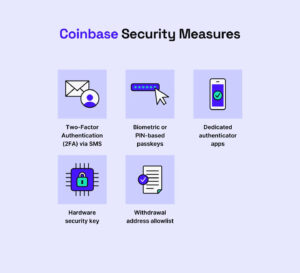
6. User Security Features
- Two-factor authentication (2FA) with authenticator app support
- Whitelisting withdrawal addresses (adds time delay for new addresses)
- Device management and login alerts
- Anti-phishing codes for emails
- Recovery phrase for account recovery (note: this is different from seed phrases)
What This Means for Beginners
- Funds were never at risk in the 2025 breach, only personal data
- Cash balances remain FDIC-insured regardless of data incidents
- Your security still depends heavily on your own practices (strong passwords, 2FA, withdrawal whitelisting)
- For amounts over $10,000, move to hardware wallet regardless of exchange security
IMPORTANT CONTEXT: The 2025 breach was serious and eroded trust, but no user funds were stolen. Coinbase remains more regulated and transparent than most global exchanges. Your primary risk with Coinbase isn’t hacking. It’s account freezes, slow support, and high fees.
The 2025 Data Breach: What Happened?
Timeline of Events
| Date | Event |
|---|---|
| 2025 | Data breach occurred, allegedly involving insider participation |
| Post-breach | User data (names, emails, personal info) compromised |
| Immediate aftermath | No funds stolen; security enhanced |
| 2026 | Critics still express concern about security prioritization |
What Was Compromised
Customer data – names, email addresses, and possibly other personal information was exposed. Importantly, no cryptocurrency funds were stolen because private keys and account balances remained secure in cold storage.
User Backlash
Prominent crypto user Tay wrote on X: “Brian still doesn’t see user safety to be a priority for Coinbase. It could’ve been prevented. A year later, instead of fixing that shit, leadership says ‘bring more lambs to my slaughterhouse, pls’.”
Developer Coco added that builders feel unsupported, and users perceive a gap between Coinbase’s ambitious 2026 vision and on-the-ground security execution.
What Coinbase Did After
- Enhanced access controls
- Increased security monitoring
- Expanded security team
- Implemented additional insider threat protections
Our Take
The breach was real, serious, and damaged trust. But perspective matters: data breaches happen to banks, retailers, and every type of financial institution. No exchange has a perfect security record. What matters is how they respond and whether funds remain protected, which they did.
For beginners, the key takeaway: your funds were never at risk, but your personal data was. This is a privacy concern, not a direct financial one, though it’s understandably unsettling.
Coinbase Fees Explained
Fee Complexity Warning
Coinbase’s fee structure is notoriously complex. You can pay dramatically different amounts for the same trade depending on how you execute it.
Fee Comparison Table
| Trading Method | Fee Type | Approximate Cost |
|---|---|---|
| Simple Buy (Standard) | Spread-based | 1.5-3% effective |
| Coinbase Advanced (Entry) | Maker/Taker | 0.40% maker / 0.60% taker |
| Coinbase Advanced (Highest Tier) | Volume-based | As low as 0.00% / 0.05% |
| Credit/Debit Card Purchase | Convenience fee | ~3.99% |
| Bank Transfer (ACH) | Deposit fee | Free |
| Wire Transfer | Deposit fee | $10 incoming |
| Crypto Withdrawal | Network fee | Variable by coin |
Competitor Comparison
| Exchange | Spot Maker/Taker Fee |
|---|---|
| Coinbase Advanced | 0.40% / 0.60% (entry) |
| Binance | 0.10% / 0.10% |
| Kraken Pro | 0.16% / 0.26% |
| Gemini ActiveTrader | 0.20% / 0.35% |
| Bitget | 0.01% / 0.01% |
Real-World Cost Example
Buying $1,000 of Bitcoin:
| Method | Total Cost | You Receive |
|---|---|---|
| Simple Buy (1.5% spread) | ~$1,015 | ~$985 worth |
| Advanced Trade (0.5% fee) | ~$1,005 | ~$995 worth |
| Advanced Trade + ACH | ~$1,005 | ~$995 worth |
| Credit Card (3.99%) | ~$1,040 | ~$960 worth |
The difference between Simple Buy and Advanced Trade on a $1,000 purchase is about $30. Over time, that adds up significantly.
How to Minimize Fees on Coinbase
1. Use Advanced Trade, Not Simple Buy
The simple buy interface charges a spread that effectively adds 1-2% to your cost. Always use Advanced Trade for better rates.
2. Use Bank Transfer (ACH), Not Cards
Credit card purchases incur ~3.99% fees. ACH transfers are free. Just plan ahead for the 3-5 day settlement.
3. Increase Your Trading Volume
Higher 30-day trading volumes qualify for lower fee tiers. If you trade frequently, fees drop significantly.
4. Consider Coinbase One
At $29.99/month, Coinbase One includes zero trading fees, priority support, and $1M in theft protection. Worth it only if you trade enough that the fee savings exceed the monthly cost.
5. Batch Your Trades
Instead of multiple small trades, batch them into fewer larger trades to reduce fee impact.
Hidden Costs to Watch
- Spread on Simple Buy: Not transparently disclosed
- Network fees for withdrawals: Vary with blockchain congestion
- Currency conversion fees: If buying with non-USD
Regulatory Status and Compliance
The Compliance Advantage
Coinbase’s public company status is its strongest regulatory differentiator. Unlike private exchanges that can operate opaquely, Coinbase must file quarterly reports, disclose risks, and answer to shareholders.
Key Regulatory Credentials
| Credential | Status |
|---|---|
| Public Company | Nasdaq: COIN |
| MSB Registration | FinCEN registered |
| State Licenses | All 50 states, including NY BitLicense |
| FDIC Insurance | Yes (on USD balances) |
| SOC 2 Type II | Certified |
| Money Transmitter Licenses | Multi-state |
What This Means for Users
- Transparency: Coinbase publishes quarterly earnings, financials, and risk factors
- Accountability: As a public company, missteps have immediate stock price consequences
- Regulatory protection: US laws govern operations; users have legal recourse
- Tax reporting: Coinbase reports to the IRS; all transactions are tracked
The CLARITY Act Context
The anticipated passage of bipartisan crypto market structure legislation in the US positions Coinbase favorably. Its compliance-first approach aligns with regulatory trends, potentially giving it advantages over less regulated competitors.
Limitations
Strong regulation comes with trade-offs: Coinbase cannot offer many products available elsewhere (like leveraged futures) and lists coins only after extensive legal review, missing many early opportunities.
Supported Cryptocurrencies
Coin Selection Overview
Coinbase offers approximately 350 cryptocurrencies – fewer than global competitors but a curated selection focused on regulatory compliance and liquidity.
Major Categories Available
Blue Chip (Always Available)
- Bitcoin (BTC)
- Ethereum (ETH)
- Solana (SOL)
- Cardano (ADA)
- Dogecoin (DOGE)
- XRP
- Litecoin (LTC)
DeFi Leaders
- Uniswap (UNI)
- Aave (AAVE)
- Chainlink (LINK)
- Maker (MKR)
- Compound (COMP)
Layer 2 and Infrastructure
- Polygon (MATIC)
- Optimism (OP)
- Arbitrum (ARB)
- Base ecosystem tokens
Meme Coins (Selective)
- Shiba Inu (SHIB)
- Pepe (PEPE)
- Dogwifhat (WIF) – availability varies by region
What Coinbase Won’t List
Coinbase avoids coins with regulatory uncertainty, privacy coins (Monero, Zcash), and extremely speculative low-cap tokens. This protects users but means missing potential gains.
Comparison with Competitors
| Exchange | Approximate Coin Count |
|---|---|
| Bitget | 1,500+ |
| Binance | ~1,100 |
| Kraken | ~800 |
| Coinbase | ~350 |
| Gemini | ~150 |
Asset Safety Note
Coinbase’s conservative listing approach means every coin on the platform has passed legal review. This is valuable for beginners who might otherwise buy unvetted tokens on less regulated platforms.
Coinbase Products and Services
Beyond Basic Trading
Coinbase offers a growing ecosystem of products:
1. Coinbase Advanced Trade
The professional trading interface with lower fees, advanced charting, and multiple order types. Essential for anyone trading more than occasionally.
2. Staking Rewards
Earn yield on Proof-of-Stake assets including Ethereum, Solana, Cardano, and more. Rewards vary by asset and are paid automatically.
| Asset | Approximate APY (2026) |
|---|---|
| Ethereum (ETH) | 2.5-3.5% |
| Solana (SOL) | 4-6% |
| Cardano (ADA) | 3-4% |
| Cosmos (ATOM) | 5-7% |
3. Coinbase Wallet (Self-Custody)
A separate non-custodial wallet where you control private keys. Connects to dApps and the Base ecosystem. Important distinction: this is NOT your exchange account.
4. Base (Layer 2 Network)
Coinbase’s Ethereum Layer 2 blockchain, built with Optimism technology. Growing ecosystem of dApps with lower fees than Ethereum mainnet.
5. Coinbase Card
Visa debit card that lets you spend crypto anywhere Visa is accepted. Funded from your Coinbase balance. Available in many regions with up to 4% crypto back on purchases.
6. Coinbase Earn
Learn-and-earn program: watch educational videos, answer quizzes, earn small amounts of crypto. Risk-free way for beginners to build first portfolio.
7. Recurring Buys
Set up automated purchases daily, weekly, or monthly. Perfect for dollar-cost averaging (DCA).
8. Coinbase One (Subscription)
$29.99/month includes:
- Zero trading fees
- Priority support
- $1M in theft protection
- Exclusive benefits
Worth it only for active traders.
9. Institutional Services
Coinbase Prime serves institutions with custody, trading, and staking. The same infrastructure protecting pension funds protects retail users.
Coinbase Advanced Trading (The “Pro” Alternative)
What Is Advanced Trade?
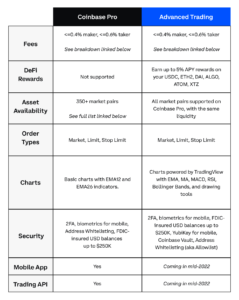
Formerly Coinbase Pro, Advanced Trade is the platform’s professional interface. It’s the same account, same funds, just lower fees and more tools.
Key Features
| Feature | Advanced Trade | Simple Buy |
|---|---|---|
| Fee Structure | Transparent maker/taker | Opaque spread-based |
| Typical Fee | 0.4-0.6% | 1.5-3% effective |
| Order Types | Limit, market, stop | Market only |
| Charting | Full technical tools | None |
| Learning Curve | Moderate | None |
How to Switch
- Log into Coinbase.com
- Click “Advanced Trade” in navigation
- You’ll see your same balance and deposit options
- Place orders using limit or market
Pro Tip for Beginners
Even if you’re new, start with Advanced Trade. Place a simple market order. It’s not much harder than the simple interface, but you’ll save significantly on fees. There’s no downside.
Coinbase Wallet: Not Your Keys?
Critical Distinction
This is where beginners get confused. Coinbase offers two completely different products:
| Feature | Coinbase Exchange | Coinbase Wallet |
|---|---|---|
| Type | Custodial (exchange) | Non-custodial (wallet) |
| Who holds keys? | Coinbase | You |
| FDIC insured? | Yes (USD only) | No |
| Recovery if lost? | Customer support can help | Seed phrase or funds gone |
| Best for | Buying, selling, trading | DeFi, NFTs, self-custody |
The Wallet Advantage
Coinbase Wallet lets you truly own your crypto – private keys on your device. You can:
- Connect to dApps on Base and Ethereum
- Store NFTs
- Access DeFi protocols
- Use multiple blockchains
But with control comes responsibility: lose your seed phrase, lose your funds. No customer support can help.
Our Recommendation
- Use Exchange for buying and selling
- Use Wallet for long-term storage and dApp interaction
- Consider hardware wallet for amounts over $5,000
Coinbase vs Competitors
Coinbase vs Kraken
| Factor | Coinbase | Kraken |
|---|---|---|
| Fees | Higher (0.4-0.6%) | Lower (0.16-0.26%) |
| Beginner Friendliness | Superior | Good but more data-heavy |
| Security Track Record | 2025 breach | Never hacked |
| Coin Selection | ~350 | ~800 |
| Futures Trading | No | Yes |
| Ideal User | Absolute beginners | Security-focused traders |
Verdict: Kraken offers better fees and security; Coinbase offers better UX and regulatory comfort.
Coinbase vs Gemini
| Factor | Coinbase | Gemini |
|---|---|---|
| Fees | Higher on simple buys | Competitive with ActiveTrader |
| Coin Selection | More (350 vs ~150) | Curated, conservative |
| Regulatory Focus | Public company | NY Trust Company |
| Unique Strength | Base L2 ecosystem | Security-first branding |
| Ideal User | Variety seekers | Security purists |
Verdict: Gemini is even more conservative; Coinbase offers more options and ecosystem growth.
Coinbase vs Binance
| Factor | Coinbase | Binance |
|---|---|---|
| Fees | Much higher | Very low (0.1%) |
| US Availability | Full (all states) | Binance.US only (limited) |
| Coin Selection | ~350 | 400+ (global) |
| Regulation | Public company, full compliance | Complex global status |
| Ideal User | US beginners | Global cost-conscious traders |
Verdict: For US beginners, Coinbase wins on compliance and ease. For everyone else, Binance offers better value.
Coinbase vs Bitget
| Factor | Coinbase | Bitget |
|---|---|---|
| Fees | 0.4-0.6% | 0.01% (significantly lower) |
| Coin Selection | ~350 | 1,500+ |
| Protection Fund | FDIC on USD | $300M+ Protection Fund |
| Copy Trading | No | Industry leader |
| Ideal User | US compliance-focused | Asset variety seekers |
Verdict: Bitget dominates on variety and fees; Coinbase dominates on US regulatory safety.
The Bottom Line
Coinbase wins on regulatory safety and ease of use, and loses on fees and coin selection. For US beginners, that’s often the right trade-off. For experienced traders, competitors offer better value.
How to Get Started on Coinbase
Step 1: Create Account
- Visit Coinbase.com or download app
- Enter email and create strong password
- Verify email address
Step 2: Complete Identity Verification
- Provide full name, address, date of birth
- Upload government ID (driver’s license, passport)
- Take live photo for verification
- Wait for approval (usually minutes)
Step 3: Enable Security Features
Do not skip this step.
- Set up 2FA using authenticator app (Google Authenticator, Authy), not SMS
- Enable withdrawal whitelist (addresses must be pre-approved)
- Set anti-phishing code
- Review connected devices
Step 4: Fund Your Account
Option A: Bank Transfer (ACH) – Cheapest
- Link bank account (micro-deposits or instant verification)
- Transfer funds (free, 3-5 days settlement)
Option B: Debit/Credit Card – Fastest
- Add card details
- Complete 3D Secure verification
- Funds available instantly (3.99% fee)
Option C: Wire Transfer – Large Amounts
- Get wire instructions from Coinbase
- Send from bank (fees vary, faster than ACH)
Step 5: Make Your First Purchase
Method 1: Simple Buy (Easiest)
- Click “Buy” button
- Select cryptocurrency
- Enter amount
- Review total including fees
- Confirm
Method 2: Advanced Trade (Cheaper)
- Navigate to “Advanced Trade”
- Select trading pair (e.g., BTC-USD)
- Choose market order
- Enter amount
- Review fee (0.4-0.6%) and confirm
Pro Tip: Start with Advanced Trade even as a beginner. Place a simple market order—it’s almost as easy as the simple interface but saves significant money.
Who Should Use Coinbase?
Coinbase Is Ideal For
| User Type | Why Coinbase Fits |
|---|---|
| Absolute beginners | Easiest interface, educational resources |
| US residents | Full regulatory compliance, available in all states |
| Those with USD savings | FDIC insurance on cash balances |
| Buy-and-hold investors | Set recurring buys, stake for yield |
| Regulatory-conscious users | Public company transparency |
| Base ecosystem explorers | Native integration with Coinbase’s L2 |
Coinbase May NOT Be Ideal For
| User Type | Better Alternative |
|---|---|
| Fee-sensitive traders | Kraken, Binance, Bitget |
| Altcoin hunters | Bitget (1,500+ coins) |
| Futures traders | Kraken, Binance, Bybit |
| Security purists concerned about 2025 breach | Kraken (never hacked) |
| Those wanting phone support | Limited—support is primarily chat/email |
The Bottom Line
For the vast majority of US beginners, Coinbase is the safest, easiest starting point. Just be aware of the fee premium and use Advanced Trade immediately. Once you outgrow it, keep Coinbase for fiat on-ramp and move trading activity elsewhere.
Our Final Verdict
Summary Assessment
Coinbase remains the best starting point for US beginners. But it’s not the best destination for everyone. Its regulatory safety, FDIC insurance, and user-friendly interface make it the ideal on-ramp. However, its higher fees, limited coin selection, and 2025 security incident mean most users will eventually outgrow it.
Scorecard
| Category | Score | Comments |
|---|---|---|
| Ease of Use | 10/10 | Gold standard for beginners |
| Safety | 8/10 | Strong measures but 2025 breach |
| Fees | 5/10 | Higher than competitors |
| Coin Selection | 7/10 | Quality over quantity |
| Regulation | 10/10 | Public company, full US compliance |
| Customer Support | 6/10 | Can be slow and frustrating |
The Bottom Line
Start with Coinbase. Use Advanced Trade to minimize fees. Learn the basics. Then, as your portfolio grows and needs evolve, consider:
- Kraken for better security and lower fees
- Bitget for coin variety and copy trading
- Hardware wallets for self-custody
Coinbase is the perfect first exchange – just don’t make it your only exchange.
Ready to Start Your Crypto Journey?
👉 Sign Up for Coinbase – Start your crypto journey
👉 Read our Kraken Review – Compare with security-focused alternative
👉 Best Crypto Exchanges Comparison – See all options side-by-side
Disclosure: This article contains affiliate links. If you sign up for Coinbase through these links, we may earn a commission at no extra cost to you. We only recommend platforms we’ve personally tested and trust. This review is based on our independent research and experience, including testing with real funds.
This review was last updated for the 2026 edition. Exchange fees, features, and security status change frequently. Check Coinbase’s official website for current information.
Frequently Asked Questions
It depends on how you trade. Simple buys cost 1.5-3% in hidden spread fees. Advanced Trade charges transparent 0.4-0.6% maker/taker fees. Credit cards add ~3.99%. Bank transfers are free for deposits. Coinbase is better for absolute beginners; Kraken offers lower fees and more coins. Kraken has never been hacked; Coinbase had a 2025 data breach. Choose based on your priorities. Approximately 350 cryptocurrencies, including all major coins (BTC, ETH, SOL) and a curated selection of altcoins. Fewer than global competitors but higher quality bar. Yes. Coinbase reports transactions to the IRS and provides tax documents. All US users should expect their activity to be reported. Consult a tax professional. Yes, Coinbase operates in all 50 states, including New York (BitLicense obtained). This is a significant advantage over some competitors. A data breach involving alleged insider participation exposed user data - names, emails, etc. No funds were stolen, but user trust was damaged. Coinbase enhanced security measures afterward. Yes, Coinbase offers staking for Ethereum, Solana, Cardano, and other Proof-of-Stake assets. Rewards are paid automatically. Use Advanced Trade instead of simple buy, fund with bank transfer (ACH) not credit card, and consider Coinbase One if you trade frequently. Coinbase exchange holds your keys (custodial). Coinbase Wallet lets you hold your own keys (non-custodial). Use exchange for buying/selling, wallet for long-term storage and dApps. Coinbase is simpler and more US-regulated. Crypto.com offers more perks (cards, staking) but a busier interface. Choose Coinbase for simplicity, Crypto.com for features. Yes, but fees are high (~3.99%). Bank transfer is much cheaper. Yes, Coinbase offers a Visa debit card that lets you spend crypto. Available in many regions with crypto rewards. It's the professional trading interface with lower fees and advanced tools. Use it instead of simple buy to save money. Through help center, email, or chat. Phone support is limited. Response times can be slow during peak periods.
How much are Coinbase fees?
Is Coinbase better than Kraken?
What coins are on Coinbase?
Does Coinbase report to IRS?
Is Coinbase available in all US states?
What happened with the 2025 Coinbase security breach?
Can I stake on Coinbase?
How do I avoid high Coinbase fees?
What's the difference between Coinbase and Coinbase Wallet?
Is Coinbase better than Crypto.com?
Can I buy crypto with credit card on Coinbase?
Does Coinbase have a card?
What is Coinbase Advanced Trade?
How do I contact Coinbase customer support?
About the Author