
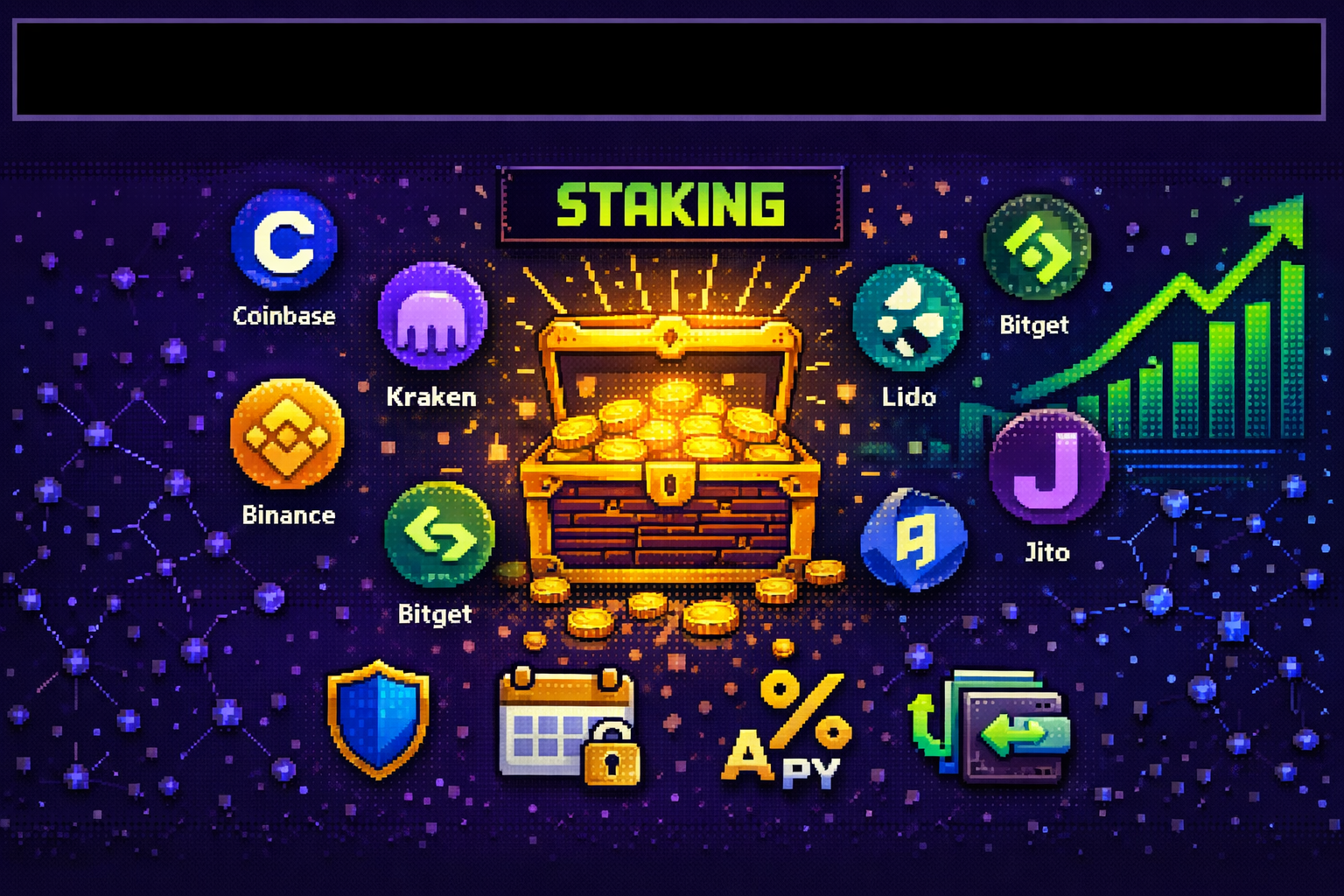
If you hold Proof-of-Stake assets like Ethereum, Solana, or Cardano and aren’t staking them, you’re leaving money on the table.
Staking rewards across major platforms range from 3% to 20% APY, turning idle crypto into passive income. With over $50 billion currently locked in staking protocols, this has evolved from a niche technical activity into a mainstream investment strategy.
But with dozens of platforms competing for your assets, choosing where to stake isn’t always straightforward.
The best platform for you depends on your priorities:
- Do you want the highest possible yield, or are you willing to accept lower returns for the safety of a regulated exchange?
- Do you need instant liquidity, or can you lock up your funds for higher rewards?
- Are you comfortable with DeFi protocols, or do you prefer the simplicity of a centralized exchange?
In this comprehensive guide, we’ve compared the best crypto staking platforms of 2026 based on real APY data, commission structures, lock-up terms, supported assets, and security track records. Whether you’re a beginner looking for simplicity or an advanced user chasing maximum yield, you’ll find the right platform here.

How We Evaluated Staking Platforms
Our Methodology
To create this ranking, we evaluated over 15 staking platforms based on five critical criteria:
| Criteria | What We Looked For |
|---|---|
| Reward rates | Current APY ranges; fixed vs variable; promotional rates noted |
| Commission structure | Platform fees on staking rewards (ranges from 10-40%) |
| Lock-up options | Flexible vs locked; unbonding periods; withdrawal restrictions |
| Supported assets | Number of stakeable coins; major PoS assets covered |
| Security track record | Historical breaches; cold storage; insurance funds; regulatory compliance |
Data Currency
All APY data and commission structures reflect March 2026 rates. Staking rewards are variable and can change with network participation rates and market conditions. Always verify current rates on platform websites before committing funds.
Quick Comparison Table
| Platform | Best For | ETH APY (Approx) | Commission | Lock-up Options | Supported Assets | Security Feature |
|---|---|---|---|---|---|---|
| Coinbase | Absolute beginners | 3.2-4.5% | Up to 35% | Flexible | 80+ | Public company, regulated |
| Kraken | Security & transparency | 3.5-4.8% | Up to 26-30% | Flexible & bonded | 100+ | Never hacked since 2013 |
| Binance | Asset variety | 3.6-5.0% | Up to 39.95% | Flexible; 30-90 day locked | 300+ | SAFU fund ($1B+) |
| Bitget | Altcoin diversity | 3.8-5.2% | Competitive | Flexible & fixed | 1,300+ | $300M Protection Fund |
| OKX | DeFi integration | Variable | Variable | Flexible & fixed | 100+ | Proof of Reserves |
| MEXC | High-yield flexibility | Up to 8.8% (USDT) | Low | Flexible or locked | 25+ | Cold storage |
| Crypto.com | Mobile experience | Up to 19.07% (with CRO) | Up to 35% | Flexible & fixed | 20+ | Multi-layer security |
| Lido | ETH liquid staking | 3-8% | 10% protocol fee | None (stETH liquid) | ETH, SOL, MATIC | $28B+ TVL |
| Jito | Solana holders | 7-9% | Validator fees | None (JitoSOL liquid) | SOL only | MEV-enhanced yields |
| Rocket Pool | Decentralized ETH staking | 3-4% | 15% protocol fee | None (rETH liquid) | ETH only | Highly decentralized |
Best Staking Platforms by Category
Best for Beginners: Coinbase
Who It’s For
I tested Coinbase staking with ~0.5 ETH for 21 days. The biggest advantage is how automatic everything is – staking starts instantly without any setup.
But the downside is obvious: out of ~4% APY, I was effectively receiving closer to ~2.6% after fees.
If you’re new to crypto and find the idea of managing validators or navigating DeFi protocols intimidating, Coinbase removes all complexity.
Staking Experience: Once you hold an eligible asset (ETH, SOL, ADA), staking begins automatically with no setup required. Rewards accumulate directly in your account, and you can unstake anytime with flexible terms on most assets.
The Trade-Off: Simplicity comes at a cost. Coinbase charges commissions of up to 35% on staking rewards – significantly higher than competitors. For example, if you earn 4% APY on ETH, Coinbase keeps roughly 1.4% and you receive 2.6%.
Supported Assets: Approximately 80 stakeable assets, including ETH, SOL, ADA, and DOT.
Security: Coinbase is a publicly traded company (NASDAQ: COIN) subject to SEC reporting requirements. Most assets are held in cold storage, and USD balances are FDIC-insured up to $250,000.
Verdict: Choose Coinbase if you value simplicity and regulatory protection over maximizing yield. It’s the ideal starting point for first-time stakers, but you may outgrow it as your portfolio grows.
Best for Security: Kraken
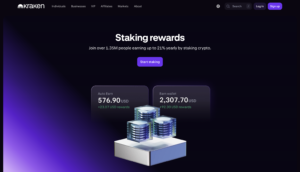
Who It’s For: Kraken is for security-conscious investors who want transparency and a proven track record. Operating since 2013 without a major security breach, Kraken has earned its reputation as one of the safest exchanges in crypto.
Staking Options: Kraken offers both flexible staking (withdraw anytime, lower yields) and bonded staking (higher yields with 3-28 day lock-ups depending on the asset). Rewards are updated in real-time, and commissions are disclosed upfront – up to 26% for bonded staking and 30% for flexible.
Supported Assets: Over 20 stakeable assets, including ETH, SOL, DOT, ADA, and KSM.
Auto-Earn Feature: Kraken’s Auto Earn program lets you set and forget staking – eligible assets automatically earn rewards without manual intervention.
Security Highlights:
- Funds stored in offline cold storage
- Regulatory compliance in multiple jurisdictions
- Real-time reward tracking and transparency
Verdict: Choose Kraken if security and transparency are your top priorities. The interface is slightly more complex than Coinbase, but the peace of mind is worth it, especially for larger holdings.
Best for Asset Variety: Binance
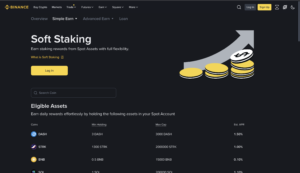
Who It’s For: Binance is for investors with diverse altcoin portfolios who want access to the widest possible range of staking options under one roof.
Staking Programs: Through Binance Earn, you can access flexible staking, locked staking (30, 60, or 90 days), DeFi staking, and ETH liquid staking. Locked staking offers significantly higher APYs in exchange for committing your funds for fixed periods.
Supported Assets: Over 300 stakeable assets – far more than any competitor. This includes ETH, BNB, SOL, ADA, DOT, and hundreds of smaller altcoins.
Commission Structure: Binance charges up to 39.95% commissions on bonded staking rewards – among the highest in the industry. Always check the net APY after commissions before committing.
Security: Binance maintains a $1 billion SAFU (Secure Asset Fund for Users) insurance fund and stores the majority of funds in cold storage. However, the platform has faced regulatory challenges in multiple jurisdictions.
US Availability Note: US residents are redirected to Binance.US which offers a more limited selection of stakeable assets. Verify availability in your jurisdiction before proceeding.
Verdict: Choose Binance for maximum asset variety and competitive yields, but be prepared to navigate a complex platform and accept higher commissions.
👉 Start Staking on Binance Click Here
👉 Binance.US for American Users
Best for Altcoin Diversity: Bitget
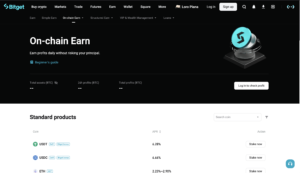
Who It’s For: Bitget is for investors who want exposure to emerging altcoins and smaller-cap PoS assets. With support for over 1,300 cryptocurrencies, Bitget offers the widest selection of any major platform.
Staking Products: Bitget offers both flexible and fixed-term staking across hundreds of assets. The platform’s “Earn” hub includes simple staking products for beginners and more advanced options for experienced users.
Supported Assets: 1,300+ cryptocurrencies, including all major PoS assets plus hundreds of smaller projects. This makes Bitget the go-to platform for discovering and staking new altcoins.
ETH Staking APY: 3.8-5.2%, competitive with market leaders.
BGB Ecosystem: Holders of Bitget’s native token BGB can access additional staking bonuses and higher interest rates on select products. This creates an ecosystem where active platform users are rewarded.
Security: Bitget maintains a $300 million Protection Fund and publishes monthly Proof of Reserves (PoR) reports, allowing users to verify that assets are fully backed 1:1.
Verdict: Choose Bitget if you hold a diverse altcoin portfolio and want access to staking for emerging projects before they appear on other platforms.
Best for DeFi Integration: OKX
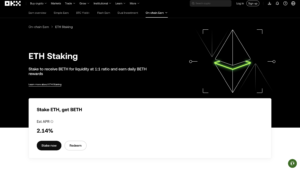
Who It’s For: OKX is for intermediate to advanced users who want the convenience of a centralized exchange plus access to DeFi’s highest-yielding pools, all in one platform.
Dual Approach: OKX offers both centralized staking products (Simple Earn) and a decentralized staking aggregator that connects directly to hundreds of DeFi pools. This means you can access yields across multiple protocols without managing multiple wallets.
Supported Assets: 100+ cryptocurrencies, with particularly strong support for DeFi tokens and Ethereum ecosystem assets.
Yield Potential: Through its DeFi integration, OKX users can access yields significantly higher than standard exchange staking – up to 144% APY on some assets, though these rates carry correspondingly higher risk.
Fees: Spot trading fees are competitive at 0.08% maker / 0.10% taker, with zero deposit fees.
US Availability: OKX officially launched in the US in 2025, but product availability is still expanding across states. Verify your state’s status before signing up.
Verdict: Choose OKX if you’re comfortable with DeFi risks and want to maximize yields through a single, feature-rich platform.
Best for Flexible Staking: MEXC
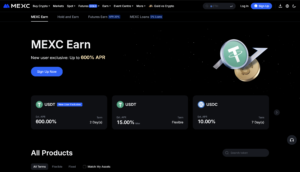
Who It’s For: MEXC is for users who want high-yield staking options without being locked into long-term commitments. The platform serves over 30 million users across 170+ countries with access to over 1,500 cryptos.
Staking Flexibility: MEXC offers both flexible staking (withdraw anytime without penalties) and locked staking for higher yields. USDT flexible staking earns up to 8.8% APY, while promotional campaigns regularly push certain tokens above 25% annually.
Auto-Compounding: Rewards are distributed daily and automatically compounded, meaning your stake generates additional returns without manual intervention, maximizing the power of compound interest over time.
Supported Assets: 25+ stakeable assets including major PoS coins and stablecoins.
Security: MEXC uses cold storage for most funds, multi-signature wallets, and standard 2FA protections. The platform has built trust with over 30 million users.
Editor’s Note: MEXC feels like a platform built for people who already know their way around crypto. It’s not the most beginner-friendly, but it’s liquid, reliable, and practical for yield-focused users.
Verdict: Choose MEXC if you prioritize flexibility and daily compounding over hand-holding and simplicity.
Best Mobile Experience: Crypto.com

Who It’s For: Crypto.com is for users who manage their crypto primarily from a phone. Its app is one of the most polished in the industry, with intuitive navigation and a clean interface.
Staking Structure: Crypto.com’s staking rewards are heavily influenced by whether you stake the platform’s native token, Cronos (CRO). Higher rates are only accessible if you lock up a minimum amount of CRO for six months. Flexible staking is available, but rates are significantly lower unless CRO requirements are met.
Supported Assets: 20+ stakeable assets, with promotional rates frequently available.
The CRO Requirement: To access the platform’s advertised 19.07% APY on some assets, you must stake CRO, a volatile token whose price movements can outweigh staking gains. This adds complexity and risk that pure staking platforms don’t have.
Security: Crypto.com has experienced security incidents in the past (including a $35 million hack in 2022) but has since enhanced its security infrastructure and insurance coverage.
Verdict: Choose Crypto.com if you’re already invested in the CRO ecosystem or prioritize mobile experience above all else. For pure staking without token requirements, other platforms offer better value.
Best for ETH Liquid Staking: Lido
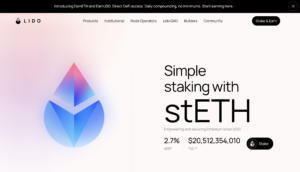
Who It’s For: Lido is for Ethereum holders who want to stake without sacrificing liquidity. As the largest liquid staking protocol with over $28 billion in total value locked, Lido has become the dominant player in ETH staking.
How It Works: When you stake ETH with Lido, you receive stETH tokens in return. These tokens track the value of your staked ETH and continue to accumulate rewards, but you can use them across DeFi protocols – trade them, lend them, or provide liquidity, while your ETH is technically staked.
Supported Assets: ETH, SOL, and MATIC (with ETH being the primary focus).
Yield Range: 3-8% APY depending on network conditions and validator performance.
Protocol Fees: Lido charges a 10% fee on staking rewards, which is standard for liquid staking protocols.
Risks
- Smart contract risk (you’re trusting code, not a company)
- stETH can trade at a slight discount to ETH during market stress (depeg risk)
- DeFi integrations add complexity
Verdict: Choose Lido if you’re an active DeFi user who wants to maximize capital efficiency. Your staked ETH becomes productive capital across the entire ecosystem.
Best for Solana Holders: Jito
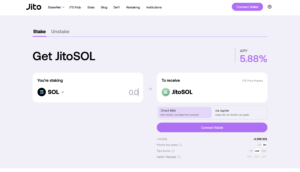
Who It’s For: Jito is a liquid staking protocol built specifically for Solana. If you hold SOL and want to maximize yield while maintaining liquidity, Jito is the purpose-built solution.
Unique Advantage: Jito validators participate in MEV (Maximal Extractable Value) tip distribution, which adds an extra layer of yield on top of standard staking rewards. This pushes effective APY to 7-9%, notably higher than standard Solana staking.
How It Works: You stake SOL and receive JitoSOL tokens in return, which can be used across Solana’s DeFi ecosystem – trading, lending, or providing liquidity while your SOL continues earning rewards.
Supported Assets: SOL only – focused specialization rather than broad coverage.
Lock-up: None – JitoSOL is liquid and can be traded or redeemed at any time.
Verdict: Choose Jito if you’re a Solana holder who wants maximum yield on your SOL and plans to participate in Solana DeFi.
Best for Decentralization: Rocket Pool

Who It’s For: Rocket Pool is for users who care deeply about decentralization and censorship resistance. Rather than routing all ETH through a centralized set of validators, Rocket Pool distributes it across a network of independent node operators.
How It’s Different: Both Lido and Rocket Pool offer liquid staking, but Rocket Pool is more decentralized. This reduces single points of failure and aligns more closely with crypto’s original ethos of trust minimization.
How It Works: You stake ETH and receive rETH, which automatically accrues rewards over time. The minimum stake is just 0.01 ETH, making it accessible without the 32 ETH required to run your own validator.
Supported Assets: ETH only (specialized focus).
Yield Range: 3-4% APY.
Protocol Fees: 15% fee on staking rewards, slightly higher than Lido’s 10%.
Verdict: Choose Rocket Pool if decentralization matters to you and you’re willing to accept slightly lower yields for a more resilient, trust-minimized protocol.
👉 Start Staking on Rocket Pool
Staking Platform Comparison: Key Metrics
APY Comparison (March 2026)
| Platform | ETH APY | SOL APY | DOT APY | USDT APY |
|---|---|---|---|---|
| Coinbase | 3.2-4.5% | ~5% | ~5% | Not offered |
| Kraken | 3.5-4.8% | 5-7% | 10-15% | Not offered |
| Binance | 3.6-5.0% | Up to 8.9% (120-day) | 10-15% | 4-10% |
| Bitget | 3.8-5.2% | Competitive | Competitive | 4-10% |
| MEXC | Up to 8.8% (promo) | Promotional rates | Promotional rates | Up to 8.8% |
| Lido | 3-8% | N/A | N/A | N/A |
| Jito | N/A | 7-9% | N/A | N/A |
Commission Rates
| Platform | ETH Commission | Notes |
|---|---|---|
| Coinbase | 25-35% | Highest among major exchanges |
| Kraken | Up to 26-30% | Transparent, tiered structure |
| Binance | Up to 39.95% | Highest maximum commission |
| Lido | 10% | Protocol fee on rewards |
| Rocket Pool | 15% | Protocol fee on rewards |
Lock-Up Periods
| Platform | Flexible Staking | Locked Staking | Unbonding Period |
|---|---|---|---|
| Coinbase | Yes | Yes | 1-5 days (ETH) |
| Kraken | Yes | Yes, 3-28 days | Varies by asset |
| Binance | Yes | 30, 60, 90 days | Up to 28 days (DOT) |
| Bitget | Yes | Fixed terms | Varies |
| Lido | N/A | No lock-up | Liquid (stETH) |
Understanding Staking Fees and Commissions
Why Commissions Vary
Staking platforms don’t validate transactions themselves – they operate nodes or delegate to validators. They charge commissions to cover infrastructure costs, security, and profit. These commissions can take 10-40% of your staking rewards.
Commission Comparison
| Platform | Typical Commission | Net Impact on $1,000 ETH Staked (4% gross APY) |
|---|---|---|
| Lido | 10% | $36 annual return ($4 commission) |
| Kraken | 26-30% | $28-30 annual return ($10-12 commission) |
| Coinbase | 35% | $26 annual return ($14 commission) |
| Binance | Up to 39.95% | $24 annual return ($16 commission) |
The Fine Print
Some platforms advertise eye-catching APYs that include promotional bonuses or are based on locked staking with long commitments. Always check the “net APY” after commissions—that’s what you actually receive.
Hidden Costs
- Gas fees: Moving assets between wallets and platforms costs network fees
- Spread: Converting rewards to other assets may incur trading spreads
- Withdrawal fees: Unstaking and moving funds off-platform costs network fees
Lock-Up Periods: What to Know Before You Stake
The Liquidity Trade-Off
Higher yields typically require longer lock-ups. Before committing, understand exactly how long your funds will be inaccessible and what happens if you need them early.
Lock-Up Types
| Type | Description | Typical Assets |
|---|---|---|
| Flexible staking | Unstake anytime; lower yields | ETH, SOL, stablecoins |
| Locked staking | Fixed terms (30-90 days); higher yields | DOT, KSM, promotional offers |
| Network unbonding | Mandatory waiting period after unstaking | ETH (1-5 days), DOT (28 days), ATOM (21 days) |
Network Unbonding Periods
The blockchain itself may require waiting periods after you unstake. Even on flexible staking platforms, you may face these delays:
| Network | Unbonding Period |
|---|---|
| Ethereum | 1-5 days |
| Solana | 2-4 days |
| Polkadot | 28 days |
| Cosmos | 21 days |
| Cardano | None (instant) |
⚠️ Critical Warning
During market crashes, lock-up periods can trap your funds while prices plummet. Consider keeping some assets in flexible staking or liquid staking derivatives to maintain exit optionality.
Security Considerations for Staking
Platform Risk
Exchange failures (like FTX 2022) can wipe out staked assets. Prioritize platforms with proven security track records and transparent reserve proofs.
| Security Feature | What to Look For |
|---|---|
| Cold storage | Majority of funds offline |
| Insurance fund | Binance SAFU ($1B+), Bitget ($300M) |
| Proof of Reserves | Monthly/quarterly audits verifying 1:1 backing |
| Regulatory compliance | Licensed in your jurisdiction |
| Track record | Years without major breaches |
Smart Contract Risk
For DeFi protocols like Lido and Rocket Pool, you’re trusting code. Ensure protocols have:
- Multiple independent audits
- Bug bounty programs
- Long operational history without exploits
Slashing Risk
Validators who misbehave can be penalized (“slashed”), potentially affecting delegators. Choose platforms that:
- Select reputable validators
- Offer protection against slashing (some exchanges)
- Disclose validator performance transparently
Your Responsibility
Remember: with non-custodial staking, you are your own bank. Lose your private keys or send funds to the wrong address, your funds are gone forever.
How to Choose the Right Platform for You
Decision Framework
| If you are… | Choose… | Why |
|---|---|---|
| Absolute beginner, small amounts | Coinbase | Simplest interface, automatic staking |
| Security-focused, larger holdings | Kraken | Never hacked, transparent operations |
| Altcoin hunter with diverse portfolio | Bitget | 1,300+ assets, early access |
| Yield maximizer comfortable with complexity | OKX | DeFi integration, highest potential yields |
| ETH holder wanting DeFi access | Lido | stETH unlocks DeFi while staking |
| SOL holder wanting maximum yield | Jito | MEV-enhanced rewards, liquid |
| Mobile-first user | Crypto.com | Best app experience (with CRO caveats) |
| Flexibility seeker | MEXC | Daily compounding, flexible terms |
Asset-by-Asset Recommendations
| Asset | Recommended Platform | Why |
|---|---|---|
| Ethereum (ETH) | Lido or Kraken | Lido for liquidity; Kraken for simplicity |
| Solana (SOL) | Jito | MEV-enhanced yields, liquid |
| Polkadot (DOT) | Kraken or Binance | Competitive yields, clear lock-up terms |
| Cardano (ADA) | Binance or Bitget | Broad support, reasonable rates |
| Stablecoins (USDT/USDC) | MEXC or Binance | 4-10% yields, flexible access |
The “Set and Forget” Strategy
For long-term holders, choose a platform with auto-compounding features (most major exchanges offer this). Your rewards automatically reinvest, growing your stake exponentially over time.
Our Verdict: Which Platform Wins?
Summary Assessment
There’s no single “best” staking platform. The right choice depends entirely on your priorities. After comparing over 15 platforms across five key criteria, here’s our guidance:
The Winners by Category
| Category | Winner | Why |
|---|---|---|
| Best for Beginners | Coinbase | Unmatched simplicity, automatic staking |
| Best for Security | Kraken | Never hacked, transparent operations |
| Best for Asset Variety | Bitget | 1,300+ coins, early altcoin access |
| Best for ETH Liquid Staking | Lido | $28B TVL, deep DeFi integration |
| Best for Solana | Jito | MEV-enhanced yields, liquid |
| Best for Yield Chasers | OKX | DeFi integration, highest potential |
The Bottom Line
If you’re a beginner with modest holdings, start with Coinbase or Kraken – the simplicity and peace of mind are worth the fee premium.
As your portfolio grows, consider moving ETH to Lido for liquidity or exploring Bitget for altcoin diversity. For Solana holders, Jito is the clear winner. And if you’re comfortable with DeFi and chasing maximum yields, OKX offers the most powerful toolkit.
Final Advice
Whichever platform you choose, start small, understand the lock-up terms, and never stake more than you can afford to lose. Staking is a powerful tool for passive income, but it carries real risks. Platform failure, price volatility, and slashing among them.
Ready to Start Staking?
👉 Compare Top Staking Platforms
👉 Read our Full Exchange Reviews
👉 Subscribe to Newsletter for weekly staking updates
Disclosure: This article contains affiliate links. If you sign up for an exchange through these links, we may earn a commission at no extra cost to you. We only recommend platforms we’ve personally tested and trust. Staking involves risk, including potential loss of principal. This guide is for educational purposes only and does not constitute financial advice.
This guide was last updated for the 2026 edition. Staking yields, commission structures, and platform availability change frequently. Always verify current information on official platform websites before staking.
Frequently Asked Questions
Is staking on Coinbase worth it?
For absolute beginners, yes. The simplicity justifies the higher fees. But Coinbase charges up to 35% commissions, significantly reducing your returns. Once you're comfortable, consider moving to Kraken (lower fees) or Lido (higher yields).
What are the safest staking platforms?
Kraken has operated since 2013 without a major security breach. Coinbase is a publicly traded US company with FDIC insurance on USD. Binance maintains a $1B SAFU insurance fund. Bitget offers a $300M protection fund and monthly Proof of Reserves.
How much can I earn staking Ethereum?
ETH staking yields range from 3-8% APY depending on platform and conditions. Liquid staking protocols (Lido, Rocket Pool) typically offer 3-5%. Exchange staking on Binance or Kraken ranges 3.5-5%. Higher rates usually involve trade-offs (lock-ups, additional risk).
Can I unstake anytime on Binance?
Binance offers both flexible staking (unstake anytime) and locked staking (30, 60, or 90-day commitments). Even with flexible options, network unbonding periods may apply. For example, unstaking DOT requires a 28-day waiting period after you initiate withdrawal.
What is the difference between flexible and locked staking?
Flexible staking lets you withdraw anytime but offers lower yields. Locked staking requires committing your funds for fixed periods (30-90 days) in exchange for higher APYs. Some networks also have mandatory unbonding periods after unstaking regardless of your chosen platform.
Does Kraken charge fees on staking rewards?
Yes. Kraken charges commissions of up to 26% on bonded staking rewards and up to 30% on flexible staking. These are disclosed upfront, and you can see real-time APY after fees in your account dashboard.
Which platform has the most staking coins?
Bitget leads with over 1,300 cryptocurrencies available, including hundreds of stakeable altcoins. Binance offers approximately 300 stakeable assets. For maximum variety, Bitget is the clear choice.
Is liquid staking better than exchange staking?
Liquid staking (Lido, Jito, Rocket Pool) lets you stake while maintaining liquidity through tradable derivative tokens. This is superior for DeFi users who want to maximize capital efficiency. Exchange staking is simpler but locks your funds. Neither is objectively "better". It depends on your needs.
How do I choose a staking platform?
Consider five factors:
(1) Supported assets - does it have your coins?
(2) Yield after fees, not just headline APY.
(3) Lock-up terms - can you access funds when needed?
(4) Security track record - has the platform been hacked?
(5) Regulatory status - is it available in your jurisdiction?
What is slashing and should I worry?
Slashing is a penalty where a portion of staked funds is destroyed if a validator misbehaves. On major exchanges, the platform typically absorbs slashing losses, not users. For non-custodial staking (Lido, Rocket Pool), you're exposed to slashing risk. Choose reputable protocols with strong validator track records.
Are staking rewards taxable?
In most jurisdictions, yes. Staking rewards are generally treated as income at the time of receipt, valued at fair market price. When you later sell, you may owe capital gains tax on any appreciation. Consult a tax professional familiar with crypto in your country.
What's the minimum amount needed to stake?
Most exchanges have no minimum or very low requirements (0.1 ETH or equivalent). Liquid staking protocols accept any amount. Solo staking requires significant capital (e.g., 32 ETH for Ethereum). Exchange staking is the most accessible for small holders.
Can I stake on mobile?
Yes. Most major exchanges offer mobile apps with full staking functionality. Crypto.com has the most polished mobile experience, though its staking requires CRO for competitive rates. Kraken, Binance, and Bitget also offer robust mobile apps.
What happens to my staked crypto if the platform fails?
This depends on custody. On exchanges, you're a creditor. If the exchange fails, you may lose your assets (as with FTX). On non-custodial protocols (Lido, Rocket Pool), you control your assets via smart contracts, reducing counterparty risk. Always consider spreading assets across multiple platforms and using hardware wallets for long-term holdings.
About the Author