Decentralized finance has grown from a niche experiment into a $98 billion ecosystem where over 14 million independent wallets interact with lending protocols, DEXs, and yield strategies every month. But none of this activity is possible without a gateway: the crypto wallet. And in 2026, choosing the right wallet is more consequential than ever.
The wallet market has matured dramatically. MetaMask remains the dominant force with 30 million monthly active users, but Trust Wallet has surged to over 220 million total users (three times the customer base of fintech giant Revolut). Rabby has emerged as the power user’s choice with AI‑powered fraud detection and 240+ chain support. And Phantom continues to ride the Solana wave with 22 million users and a $3 billion valuation.
In this comprehensive guide, we’ve tested and compared the top 10 self‑custody wallets for DeFi in 2026. Whether you’re an EVM power user, a Solana native, a mobile‑first investor, or a security‑maximizer with a hardware wallet, you’ll find the right fit here.
How We Evaluated DeFi Wallets
To create this ranking, we evaluated each wallet across six critical criteria:
| Criteria | What We Assessed |
|---|---|
| DeFi compatibility | Number of supported chains; dApp integration quality; swap functionality |
| Security architecture | Self‑custody model; open‑source status; audit history; security features |
| User experience | Interface design; onboarding ease; mobile vs desktop experience |
| Multi‑chain support | EVM compatibility; non‑EVM chains (Solana, Bitcoin); cross‑chain features |
| Key management | Seed phrase generation; recovery options; hardware wallet integration |
| Fees | Swap fees; network gas costs; platform charges |
All rankings reflect April 2026 data. Crypto wallets evolve rapidly. Always verify features on official sources before making a decision.
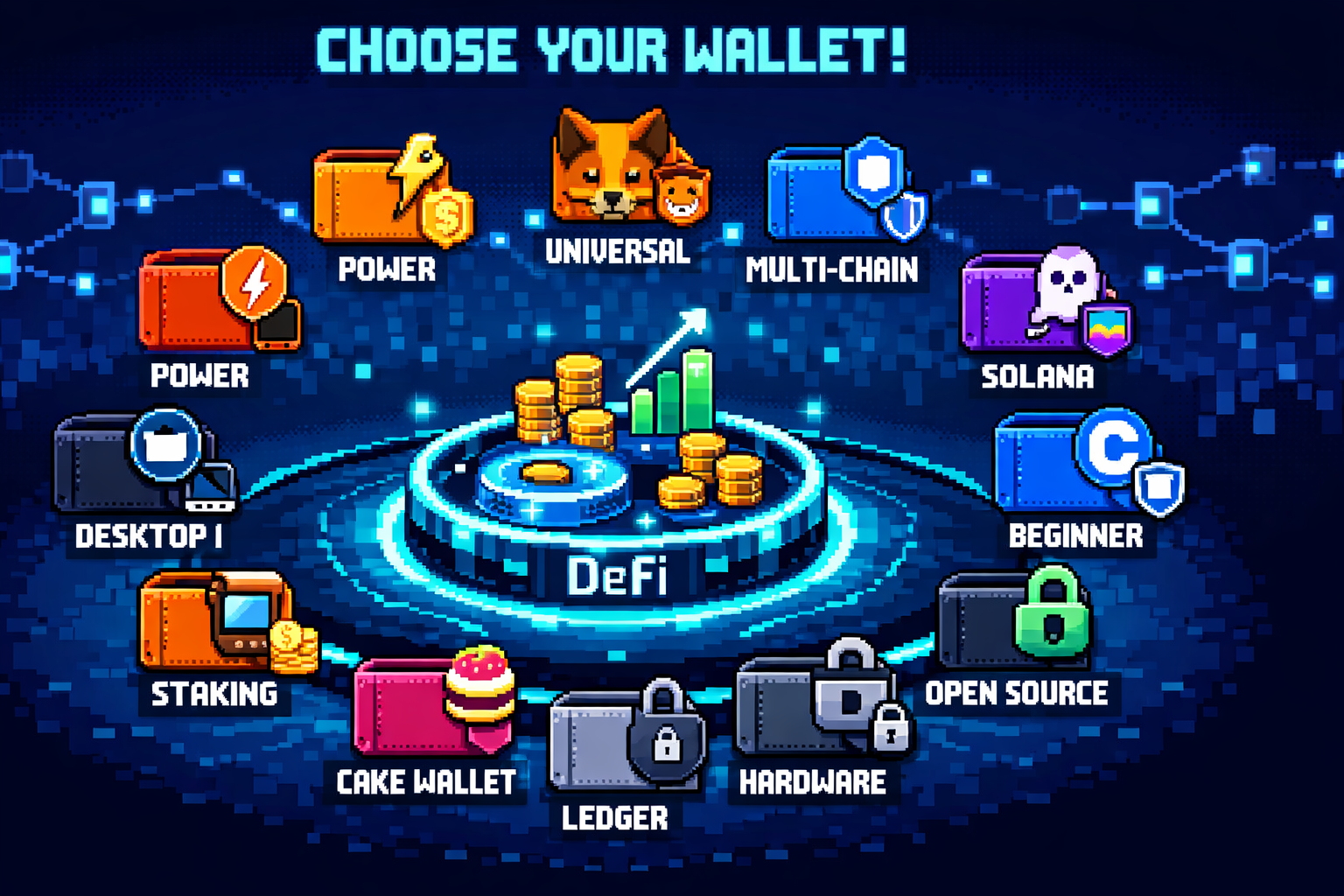
Quick Comparison Table
| Wallet | The Block Score | Best For | Chains | Swap Fee | Open Source |
|---|---|---|---|---|---|
| Rabby | 4.5/5 | DeFi power users | All EVM | 0.25% | No |
| MetaMask | 4.3/5 | EVM compatibility | EVM + SOL + BTC | 0.875% | No |
| Trust Wallet | 4.1/5 | Mobile & multi‑chain | 110+ | 0% | No |
| Phantom | 4.0/5 | Solana ecosystem | SOL + ETH + BTC | 0.85% | No |
| Coinbase Wallet | 3.8/5 | Beginners | EVM + SOL + BTC | Up to 1% | No |
| Exodus | — | Desktop & hardware bridge | 260+ | Varies | No |
| Atomic Wallet | — | Staking & rewards | 300+ | Varies | No |
| Cake Wallet | — | Privacy (Monero) | XMR + BTC + LTC | Varies | Yes |
| Ledger | — | Hardware security | 5,500+ | Via integrations | Partial |
| Trezor | — | Open source hardware | 9,000+ | Via integrations | Yes |
The Best Wallets for DeFi in 2026
Best Overall DeFi Wallet: Rabby

Quick Verdict: Rabby has become the default choice for serious DeFi participants. It’s not the most popular wallet (that’s still MetaMask). But for users who prioritize security transparency, transaction simulation, and multi‑chain efficiency, Rabby is the superior tool.
The Block Score: 4.5/5
Key Features:
| Feature | What It Does |
|---|---|
| Transaction simulation | Previews exactly what a transaction will do before you sign – no blind signing |
| Phishing detection | AI‑powered fraud detection flags malicious sites and approvals |
| Automatic network switching | Automatically changes to the chain required by the dApp |
| Multichain gas account | Pay gas on any EVM chain from a single balance |
| 240+ chains supported | Extensive EVM ecosystem coverage |
Who It’s For: Rabby is for the DeFi power user who interacts with multiple protocols daily, values security transparency, and wants to avoid the pitfalls of blind signing. If you’ve ever been concerned about approving a malicious contract, Rabby’s simulation feature is a game‑changer.
Why It Beats MetaMask: MetaMask requires you to manually switch networks and offers limited transaction preview. Rabby automates network switching and shows you exactly what you’re approving, including token approvals, permit signatures, and contract interactions. For active DeFi participants, this safety net is invaluable.
Security Note: Rabby is non‑custodial (you control your private keys). The wallet is not fully open source, but its security architecture has been audited by leading firms.
Most Popular & Widely Supported: MetaMask
Quick Verdict: MetaMask remains the gateway to Web3 for over 30 million monthly active users and 100 million total users. It’s the wallet that “just works” with virtually every EVM dApp – from Uniswap to Aave to OpenSea.
The Block Score: 4.3/5
Key Features:
| Feature | What It Does |
|---|---|
| 30M+ monthly active users | Largest user base in Web3 |
| 70+ EVM chains | Polygon, Arbitrum, Optimism, Base, and more |
| Snaps extensibility | Add non‑EVM functionality (Bitcoin, Solana) |
| Built‑in swaps | Uniswap API integration across 16+ networks |
| MetaMask Card | Self‑custody Mastercard for spending crypto |
Recent 2026 Developments: MetaMask has continued to evolve aggressively in 2026. The Uniswap API integration (announced in March 2026) makes in‑wallet swaps significantly more efficient across 16+ networks. The MetaMask Card, rolled out in February 2026, turns your wallet into a spending account, enabling crypto payments at millions of merchants.
Who It’s For: MetaMask is for anyone entering DeFi for the first time or any user who needs the broadest possible dApp compatibility. It’s the wallet that every other wallet is compared against.
The Snaps Advantage: The Snaps framework has transformed MetaMask into a modular platform. You can now add functionality for Bitcoin, Solana, and custom security tools, all without leaving the MetaMask interface.
Security Note: MetaMask is non‑custodial with regular security audits and an active bug bounty program. Its transaction risk analysis helps identify suspicious approvals before they execute.
Best for Multi‑Chain & Mobile: Trust Wallet
Quick Verdict: Trust Wallet has become the world’s most downloaded mobile crypto wallet, surpassing 220 million total users and topping CoinGecko’s 2026 hot wallet rankings. Its massive multi‑chain support and zero swap fees make it an exceptional choice for mobile‑first DeFi users.
The Block Score: 4.1/5
Key Features:
| Feature | What It Does |
|---|---|
| 220M+ total users | Largest user base among mobile wallets |
| 110+ blockchains | Including EVM, Solana, Bitcoin, BNB Chain, and more |
| Zero swap fees | Only network gas costs – no additional platform fee |
| Address poisoning protection | Automatic detection of lookalike scam addresses across 32 EVM chains |
| Built‑in staking | Stake ETH, SOL, BNB, MATIC directly |
Recent 2026 Developments: In February 2026, Trust Wallet launched Cash Deposits at 15,000 retail locations across the US, enabling users to convert physical cash into crypto directly through the app. This is a significant step toward bridging the gap between traditional finance and DeFi.
Who It’s For: Trust Wallet is for users who manage crypto primarily on their phones and want access to the widest possible range of blockchains without juggling multiple apps.
Multi‑Chain Excellence: With support for over 110 blockchains, Trust Wallet arguably offers the broadest multi‑chain coverage of any non‑custodial wallet. Whether you’re trading on Ethereum, staking on Solana, or holding Bitcoin, everything lives in one interface.
Security Note: Trust Wallet is non‑custodial. In January 2026, the wallet issued a security reminder that it will never request mnemonic phrases or private keys (a common phishing vector).
Best for Solana Ecosystem: Phantom

Quick Verdict: Phantom has grown from Solana’s native wallet into a multi‑chain powerhouse with 22 million users, a $3 billion valuation, and a spot on Forbes’ Fintech 50 list. It remains the default wallet for anyone serious about Solana DeFi.
The Block Score: 4.0/5
Key Features:
| Feature | What It Does |
|---|---|
| 22M active users | Rapid growth with 3M new users added in past year |
| Solana‑native optimization | Near‑instant confirmations, seamless NFT management |
| Multi‑chain expanded | Ethereum, Bitcoin, and Polygon support (added 2024) |
| Hyperliquid integration | Perpetual futures trading |
| Phantom Cash | Stripe‑powered fiat on‑ramp with Visa card |
Financial Growth: Phantom’s annual revenue grew 60% to $320 million, driven by user expansion and product diversification. The company is aggressively positioning itself as a “super app” competitor to Coinbase and Robinhood.
Who It’s For: Phantom is essential for anyone participating in Solana DeFi. Its deep integration with protocols like Jito, Marinade, and Jupiter makes it the most seamless Solana experience available. With its expansion to Ethereum and Bitcoin, it’s also becoming a viable multi‑chain option.
The Super App Vision: Phantom is no longer just a wallet, it’s building an integrated platform for derivatives trading, fiat on‑ramps, and prediction markets. This “super app” strategy mirrors the vision of Coinbase and could fundamentally change how users interact with DeFi.
Security Note: Phantom includes built‑in scam detection, biometric approval, and hardware wallet support. The wallet is non‑custodial—you retain full control of your private keys.
Best for Beginners: Coinbase Wallet
Quick Verdict: Coinbase Wallet is the ideal entry point for users transitioning from centralized exchanges to self‑custody. It leverages the trusted Coinbase brand while giving you full control of your private keys.
The Block Score: 3.8/5
Key Features:
| Feature | What It Does |
|---|---|
| Seamless Coinbase transfer | Move funds between exchange and wallet instantly |
| Biometric authentication | Fingerprint/face unlock for mobile security |
| Encrypted cloud backups | Optional seed phrase backup (your choice) |
| Educational quests | Earn crypto while learning DeFi basics |
Who It’s For: Coinbase Wallet is for users who are already comfortable with the Coinbase exchange and want to take their first steps into DeFi without learning an entirely new interface. It’s the lowest‑friction transition from custodial to non‑custodial finance.
The Trust Advantage: For users hesitant about self‑custody (the idea that one lost seed phrase means lost funds) Coinbase Wallet’s optional encrypted cloud backup provides a safety net. This reduces the anxiety that often keeps beginners on centralized exchanges.
Security Note: Coinbase Wallet is non‑custodial, meaning Coinbase cannot access your funds. The wallet includes biometric authentication and transaction previews to help users avoid mistakes.
Best for Desktop & Hardware Integration: Exodus
Quick Verdict: Exodus is the best‑in‑class desktop wallet for users who prefer managing their portfolio on a larger screen. Its clean interface, native support for over 260 cryptocurrencies, and seamless Trezor integration make it a compelling choice.
Key Features:
| Feature | What It Does |
|---|---|
| 260+ supported assets | Bitcoin, Ethereum, Solana, Polygon, BNB Chain |
| Trezor hardware integration | Cold storage security with hot wallet interface |
| Cross‑platform sync | Desktop and mobile sync via 12‑word recovery phrase |
| In‑app swaps | Instant exchange without leaving the wallet |
Who It’s For: Exodus is ideal for desktop‑focused investors who want a beautiful, intuitive interface for portfolio tracking and occasional swaps. It’s less suited for high‑frequency DeFi interaction but excellent for buy‑and‑hold investors who want hardware wallet security without complexity.
The Desktop Advantage: While most wallets prioritize mobile, Exodus shines on desktop. Its charting tools, portfolio analytics, and visual asset management are best‑in‑class for users who prefer a full‑screen experience.
Security Note: Exodus is non‑custodial. For users who want maximum security, the Trezor integration allows you to manage cold storage assets through the Exodus interface, keeping private keys offline while enjoying the wallet’s usability.
Best for Staking & Crypto Rewards: Atomic Wallet
Quick Verdict: Atomic Wallet has built a reputation as a staking‑first wallet, supporting native staking for over 15 assets without charging additional wallet fees. It’s a solid option for users who want to earn passive income directly from their wallet.
Key Features:
| Feature | What It Does |
|---|---|
| 300+ cryptocurrencies | Broad multi‑chain support |
| Native staking for 15+ assets | No additional wallet commission |
| Membership program | Up to 1% monthly rewards for using in‑app exchange |
| Atomic Swap technology | Trustless peer‑to‑peer swaps (HTLC) |
Who It’s For: Atomic Wallet is for users who want to earn yield on their holdings without moving funds to a separate staking platform. Its all‑in‑one approach (store, stake, and swap) makes it convenient for passive income seekers.
The Trade‑Off: Atomic Wallet is best treated as a convenience wallet for small balances rather than long‑term storage. Its closed‑source codebase and security history make it less suitable for serious holdings.
Best for Privacy & Built‑In Exchange: Cake Wallet
Quick Verdict: Cake Wallet is the go‑to wallet for privacy‑focused users, offering native support for Monero (XMR) along with Bitcoin and Litecoin. Its built‑in exchange and open‑source codebase appeal to users who prioritize financial confidentiality.
Key Features:
| Feature | What It Does |
|---|---|
| Native Monero support | Full privacy features for XMR transactions |
| Built‑in exchange | Swap between XMR, BTC, LTC without third‑party risks |
| Open source | Fully auditable codebase |
| Hardware wallet support | Compatible with Ledger devices |
Who It’s For: Cake Wallet is essential for anyone who holds Monero or prioritizes transaction privacy. While its DeFi ecosystem is limited, it excels at its core mission: secure, private value transfer.
The Privacy Advantage: Unlike most wallets that only support transparent blockchains, Cake Wallet is built from the ground up with privacy as the primary feature. For users who need to transact confidentially, there are few better options.
Best for Hardware‑Secured DeFi: Ledger
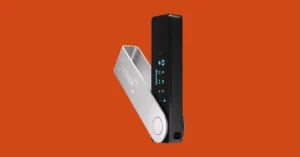
Quick Verdict: Ledger has transformed from a simple cold storage device into a secure gateway for DeFi. With OKX DEX and 1inch integrations launched in 2026, Ledger users can now swap tokens, earn yield, and access dApps, all while keeping private keys isolated on a secure element.
Key Features:
| Feature | What It Does |
|---|---|
| OKX DEX integration | Swap across Ethereum, Arbitrum, Optimism, Base, Polygon, BNB Chain |
| 1inch Swap API | Intent‑based swaps with liquidity aggregation and clear signing |
| BTC yield | Lombard LBTC yield via Figment app |
| 8M+ devices sold | Secures over 20% of global crypto assets |
The Clear Signing Breakthrough: Ledger CTO Charles Guillemet has been emphatic about solving the “blind signing” problem: “Blind signing a crypto transaction is like signing a blank cheque. It only takes one mistake to get drained.” The 1inch integration now shows users full transaction details (including what’s being swapped, at what rate, and gas costs) before they sign.
Who It’s For: Ledger is for users who hold significant crypto assets and want to participate in DeFi without compromising security. If you have more than $5,000 in crypto and actively use DeFi, a Ledger device is not optional. It’s essential.
Security Note: Ledger devices keep private keys isolated on a secure element chip. Even if your computer is compromised, an attacker cannot sign a transaction without physical confirmation on the device.
Best for Open Source & Self‑Custody: Trezor
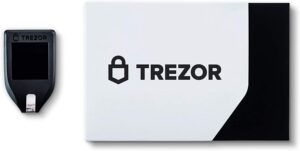
Quick Verdict: Trezor remains the leading open‑source hardware wallet, appealing to users who prioritize code transparency and community verification over proprietary security chips. Its support for DeFi through MetaMask integration makes it a viable option for security‑conscious DeFi participants.
Key Features:
| Feature | What It Does |
|---|---|
| Fully open source | Auditable code – no backdoors, no trust required |
| MetaMask integration | Use hardware security with any EVM dApp |
| 9,000+ assets | Extensive coin support |
| Shamir Backup | Split seed phrase into multiple shares |
Who It’s For: Trezor is for open‑source purists who want to audit the code running their security. If you believe “don’t trust, verify” applies to your hardware wallet, Trezor is the natural choice.
The Open Source Philosophy: Trezor has always prioritized transparency over proprietary hardware solutions. While this means slightly less physical attack resistance than Ledger’s secure element, it means thousands of independent researchers can verify there are no backdoors.
DeFi Workflow: Connect your Trezor to MetaMask, and you can interact with any EVM dApp (Uniswap, Aave, Curve) while your private keys remain offline. This gives you the best of both worlds: hot wallet convenience with cold storage security.
Wallets Comparison Matrix
| Feature | Rabby | MetaMask | Trust Wallet | Phantom | Coinbase Wallet | Exodus | Atomic |
|---|---|---|---|---|---|---|---|
| Best for | DeFi power | EVM dApps | Mobile | Solana | Beginners | Desktop | Staking |
| Chains | All EVM | EVM + SOL + BTC | 110+ | SOL + ETH + BTC | EVM + SOL + BTC | 260+ | 300+ |
| Swap fee | 0.25% | 0.875% | 0% | 0.85% | Up to 1% | Varies | Varies |
| Mobile app | ✓ | ✓ | ✓ | ✓ | ✓ | ✓ | ✓ |
| Browser ext. | ✓ | ✓ | ✓ | ✓ | ✓ | ✗ | ✗ |
| Desktop app | ✗ | ✗ | Limited | Limited | Limited | ✓ | ✓ |
| Hardware int. | ✓ | ✓ | ✗ | ✓ | Limited | Trezor | Limited |
| Open source | No | No | No | No | No | No | No |
| Staking | Via int. | Via int. | ✓ | ✓ | ✓ | ✓ | ✓ |
How to Choose the Right Wallet for You
Decision Framework
| If you are… | Recommended Wallet | Why |
|---|---|---|
| A DeFi power user with multiple protocols daily | Rabby | Transaction simulation and automatic network switching save time and prevent errors |
| An EVM‑first user who needs maximum dApp compatibility | MetaMask | The universal standard—every dApp supports it |
| A mobile‑first user managing many different assets | Trust Wallet | 110+ chains, zero swap fees, address poisoning protection |
| A Solana ecosystem participant | Phantom | Deepest Solana integrations, near‑instant confirmations |
| Transitioning from Coinbase exchange | Coinbase Wallet | Seamless transfer, optional cloud backup reduces anxiety |
| A desktop‑focused portfolio manager | Exodus | Beautiful interface, Trezor integration, cross‑platform sync |
| A passive income seeker (staking) | Atomic Wallet | Native staking for 15+ assets without wallet fees |
| A privacy‑focused user (Monero) | Cake Wallet | Native XMR support, open source, built‑in exchange |
| A large holder ($10,000+) using DeFi | Ledger + MetaMask | Hardware security with hot wallet convenience |
| An open‑source purist | Trezor + MetaMask | Auditable code, Shamir Backup, community trust |
The Multi‑Wallet Strategy
Most serious DeFi users don’t use just one wallet. The recommended setup:
- Hardware wallet (Ledger/Trezor): 80‑90% of funds, long‑term storage
- Hot wallet (Rabby/MetaMask): 10‑20% of funds, active DeFi participation
- Specialized wallet (Trust/Phantom): For chains not covered by your primary
Security Best Practices for DeFi Wallets
Critical Security Principles
1. The 80/20 Rule (Compartmentalization)
Store 80‑90% of your crypto in a hardware wallet. Keep only 10‑20% in hot wallets for active DeFi. This limits your exposure if a hot wallet is compromised.
2. Never Enter Seed Phrases Anywhere
Your seed phrase is your money. No legitimate website, dApp, or support agent will ever ask for it. If a site asks for your seed phrase, it’s a scam.
3. Use a Hardware Wallet for DeFi
With Ledger’s OKX DEX and 1inch integrations, and Trezor’s MetaMask compatibility, there’s no reason to compromise security for convenience. Hardware wallets can now access virtually all major DeFi protocols while keeping keys offline.
4. Revoke Unused Approvals Monthly
Every DeFi interaction leaves a token approval. Use Revoke.cash to review and revoke unused approvals. An old approval from a shady site is an open door to your funds.
5. Verify Addresses (Avoid Poisoning)
Scammers send $0 transactions from addresses that look like yours. Always verify the full address before sending—not just the first and last characters. Trust Wallet now offers automatic address poisoning protection across 32 EVM chains.
6. Download from Official Sources Only
There are dozens of fake MetaMask extensions and wallet apps. Always download from the official website or verified app store, never from ads or search results.
The “Test First” Rule
Before moving large amounts to a new wallet or interacting with an unfamiliar dApp, test with a small amount first. Send $5, confirm it arrives, then send the rest.
Our Verdict: Which Wallet Wins?
Summary Assessment
There’s no single “best” DeFi wallet. The right choice depends entirely on your needs. After evaluating ten leading wallets across six criteria, here’s our guidance:
The Winners by Category
| Category | Winner | Why |
|---|---|---|
| DeFi Power User | Rabby | Transaction simulation, auto network switching, protocol dashboards |
| EVM dApp Compatibility | MetaMask | Universal standard; every dApp supports it |
| Mobile Multi‑Chain | Trust Wallet | 110+ chains, zero swap fees, address poisoning protection |
| Solana Ecosystem | Phantom | Deepest Solana integrations, super app vision |
| Beginner‑Friendly | Coinbase Wallet | Seamless exchange transfer, optional cloud backup |
| Desktop Portfolio | Exodus | Beautiful interface, Trezor integration, cross‑platform sync |
| Hardware‑Secured DeFi | Ledger | OKX DEX, 1inch swaps, 8M+ devices |
| Open Source | Trezor | Auditable code, Shamir Backup, community trust |
The Bottom Line
Use MetaMask or Rabby as your daily driver for EVM dApps. If you want maximum safety and advanced features, choose Rabby. If you need the broadest compatibility, choose MetaMask.
Use Trust Wallet or Phantom for mobile or non‑EVM DeFi. Trust Wallet excels at multi‑chain; Phantom is essential for Solana.
And if you hold more than $5,000 in crypto, buy a Ledger or Trezor. Hardware wallets are not optional for serious investors.
Ready to Secure Your DeFi Experience?
👉 Read our Crypto Wallet Setup Guide
Disclosure: This article contains affiliate links. If you download or purchase a wallet through these links, we may earn a commission at no extra cost to you. We only recommend wallets we’ve personally tested and trust. Your security is our priority.
This guide was last updated for the 2026 edition. Wallet features and rankings change frequently. Always verify current information on official sources.
Frequently Asked Questions
What is the safest DeFi wallet?
The safest DeFi wallet combines a hardware wallet (Ledger or Trezor) with a hot wallet interface. Ledger’s recent integrations with OKX DEX and 1inch allow secure swaps while keeping private keys offline. For hot wallets alone, Rabby’s transaction simulation and phishing detection offer strong protection.
Is MetaMask still good in 2026?
Yes. MetaMask remains the dominant Web3 wallet with over 30 million monthly active users. Recent 2026 updates include Uniswap API integration across 16+ networks and the MetaMask Card for spending crypto. Its Snaps framework also extends functionality to non‑EVM networks.
Which wallet has the most DeFi integrations?
MetaMask has the broadest dApp support. Virtually every EVM dApp is built to work with MetaMask. Trust Wallet offers extensive dApp browser functionality across 110+ chains. Rabby is optimized for DeFi power users with advanced features like transaction simulation and protocol analysis dashboards.
Can I use a hardware wallet for DeFi?
Yes. Both Ledger and Trezor integrate with MetaMask, allowing you to interact with any EVM dApp while keeping private keys offline. Ledger has added OKX DEX and 1inch swaps directly in its wallet app, enabling secure token swaps without leaving the hardware environment.
What is the best mobile wallet for DeFi?
Trust Wallet is widely considered the best mobile DeFi wallet, with over 220 million users and support for 110+ blockchains. Its zero swap fees and address poisoning protection make it an excellent mobile choice. Coinbase Wallet is also strong for beginners.
Which wallet has the lowest swap fees?
Trust Wallet charges 0% swap fees (only network gas costs). Rabby charges 0.25%, Phantom 0.85%, MetaMask 0.875%. Always compare the net cost including gas fees.
What is the difference between MetaMask and Rabby?
Rabby offers advanced features missing in MetaMask: automatic network switching, detailed transaction simulation, and protocol analysis dashboards. MetaMask has broader dApp support and a much larger user base. Rabby is optimized for DeFi power users; MetaMask is the universal gateway.
Is Trust Wallet better than MetaMask?
They serve different purposes. Trust Wallet is stronger for mobile users and multi‑chain support (110+ chains). MetaMask is better for desktop users and EVM‑first dApp compatibility. Many users use both.
What is the best wallet for Solana DeFi?
Phantom is the clear choice for Solana DeFi. It has 22 million users, integrates deeply with Solana protocols like Jito and Marinade, and offers near‑instant confirmations. It has also expanded to support Ethereum and Bitcoin.
Are non‑custodial wallets safe?
Yes, but security depends on your habits. Non‑custodial wallets give you full control of your private keys, which also means full responsibility. Never share your seed phrase, always download from official sources, and use a hardware wallet for large holdings. Non‑custodial wallet users have surged 217% year‑over‑year as users reject centralized custody.
Which wallet supports the most blockchains?
Trust Wallet supports 110+ blockchains, making it one of the most comprehensive multi‑chain options. Atomic Wallet supports 300+ coins and tokens. However, “support” can mean different things (verify specific chain compatibility before assuming).
What is the best wallet for beginners?
Coinbase Wallet is the most beginner‑friendly, with seamless transfer from Coinbase exchange, biometric authentication, and optional encrypted cloud backups for seed phrases. MetaMask is also accessible, but its interface is more oriented toward power users.
How do I choose between Ledger and Trezor?
Ledger has stronger DeFi integrations (OKX DEX, 1inch) and a larger user base (8M+ devices). Trezor offers full open‑source code and Shamir Backup for advanced seed protection. Both integrate with MetaMask for dApp access. Choose Ledger for DeFi convenience, Trezor for open‑source transparency.
Which wallet has the best security features?
For hot wallets, Rabby leads with transaction simulation, AI‑powered phishing detection, and automatic network switching. For maximum security, a Ledger or Trezor hardware wallet paired with MetaMask provides offline private key storage. MetaMask also includes transaction risk analysis and a bug bounty program.
About the Author