
You have 32 ETH. You understand the economics of staking (the ~3‑5% APY), the security benefits to the network. But you don’t have the technical expertise to run a validator, the time to maintain 24/7 infrastructure, or the risk appetite to manage slashing. You’re not alone. In 2026, a rapidly growing category of institutional‑grade providers has emerged to solve exactly this problem.
Staking‑as‑a‑service (SaaS) is the middle ground between running your own validator (maximum control, maximum technical burden) and delegating to a liquid staking pool (ease of use, but with pooled risk and DeFi complexity). You deposit your 32 ETH, retain custody of your withdrawal keys, and a professional operator handles the rest – node maintenance, software updates, MEV optimization, and slashing protection.
In this Staking as a Service guide, we’ll break down everything you need to know about staking‑as‑a‑service in 2026: how it works, who the major providers are (Figment, Kiln, P2P.org, Everstake), how fees and slashing work, the regulatory landscape, and, most importantly, how to choose the right provider for your needs.

Staking‑as‑a‑Service in One Sentence
Staking‑as‑a‑service (SaaS) is a non‑custodial solution where you deposit your own 32 ETH to run a validator, but delegate all node operations (hardware, software, maintenance, and slashing protection) to a professional third‑party operator in exchange for a commission on rewards.
Alternative ways to think about it:
- For institutions: SaaS provides regulated financial entities with compliant, non‑custodial staking infrastructure that meets enterprise‑grade security, reporting, and operational standards.
- For technical users: It’s validator‑as‑a‑service: you retain withdrawal keys, the operator handles signing keys, slashing is mitigated through professional‑grade infrastructure.
- For the curious: Think of SaaS as hiring a professional driver for a car you own. You keep the keys in your pocket, but a trained expert drives, maintains, and insures the vehicle.
The Problem SaaS Solves: The 32 ETH Barrier
Solo staking on Ethereum requires 32 ETH (roughly $100,000 at current prices) and a non‑trivial amount of technical know‑how: setting up clients, managing uptime, staying on top of software updates, and monitoring for slashing risks. For many long‑term holders, that’s a high barrier.
On the other hand, exchange staking and liquid staking pools are easy to use but come with trade‑offs: custodial risk, high fees (up to 40% of rewards), or the complexity of DeFi composability.
Staking‑as‑a‑service bridges this gap. It allows you to keep the economic benefits of solo staking (full control of your ETH, no middleman on your principal) while offloading the operational burden to a professional team. You don’t need to be a system administrator; you just need to hold 32 ETH.
How SaaS Works: Non‑Custodial Delegation
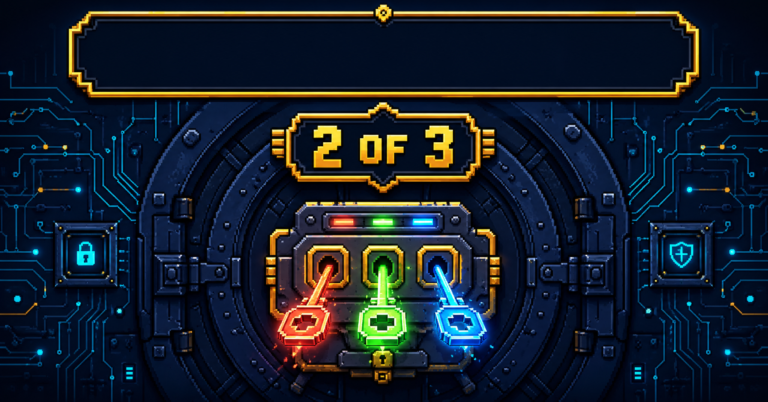
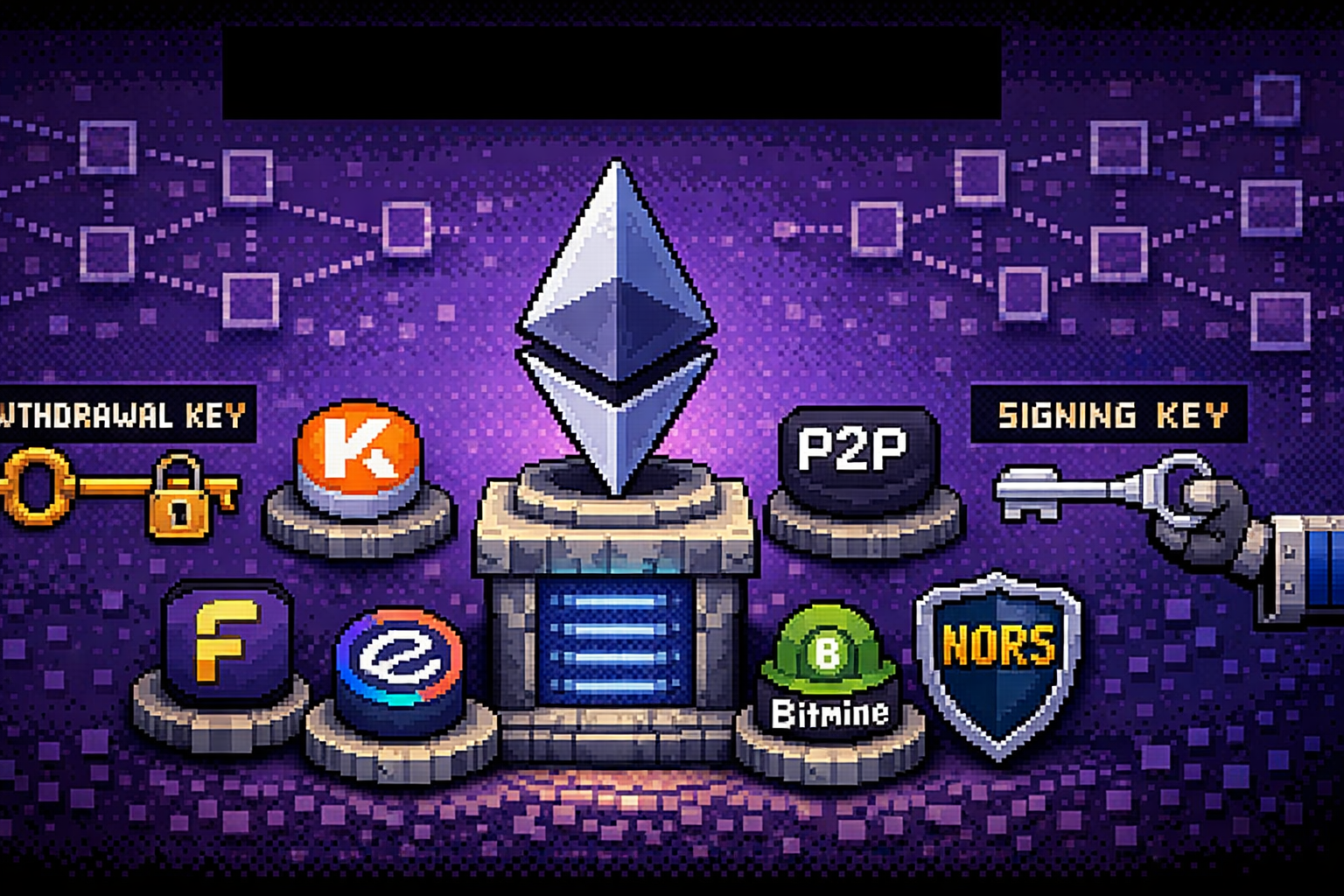
The magic of SaaS lies in a two‑key system that keeps your funds secure while allowing a third party to perform validation duties.
The Two‑Key Architecture
| Key Type | Who Holds It | What It Does |
|---|---|---|
| Withdrawal key | You (never shared) | Controls the ability to exit the validator and withdraw funds |
| Signing key | SaaS provider | Signs attestations and blocks; cannot move funds |
Step‑by‑Step Flow
- Generate validator keys – You create both keys locally (or using the provider’s tooling). The withdrawal key stays with you.
- Deposit 32 ETH – You send exactly 32 ETH to the Ethereum deposit contract, referencing your validator credentials.
- Upload signing keys – You securely transmit only the signing keys to the SaaS provider.
- Provider runs the validator – The provider operates the node, attests to blocks, and earns rewards.
- Rewards accumulate – Rewards are credited directly to your validator’s balance on the Beacon Chain.
- You withdraw – When ready, you use your withdrawal key to exit the validator and claim your ETH plus rewards.
Because you control the withdrawal key, the provider can never move, trade, or withdraw your funds. This non‑custodial design is the core security feature of SaaS.
Key Security Principle: Staking‑as‑a‑service is non‑custodial․ You retain full ownership and control of your tokens throughout the staking process. The provider can only perform validation duties.
SaaS vs Other Staking Methods: A Comparison
| Method | Min ETH | Custody | Technical Skill | Liquidity | Fee Structure | Best For |
|---|---|---|---|---|---|---|
| Solo Staking | 32 ETH | Non‑custodial | High | Locked | 0% (full rewards) | Technical users with 32 ETH |
| Staking‑as‑a‑Service | 32 ETH | Non‑custodial | Low‑Medium | Locked | 5‑15% of rewards | Users with 32 ETH who want simplicity |
| Staking Pools | <0.1 ETH | Pooled | Low | Locked | 5‑15% of rewards | Small holders |
| Liquid Staking | Any | Pooled (LST) | Low | Liquid (LST) | 10‑15% protocol fees | DeFi users, active participants |
| Exchange Staking | Any | Custodial | None | Variable | 10‑40% of rewards | Absolute beginners |
Detailed comparison:
| Dimension | SaaS | Liquid Staking | Exchange Staking |
|---|---|---|---|
| Key control | You hold withdrawal keys | Protocol holds keys (LSTs) | Exchange holds keys |
| Liquidity | Locked until validator exit | Fully liquid (LSTs trade) | Usually locked |
| Validator diversity | You choose provider | Pool selects operators | Exchange selects |
| Slashing risk | Shared with provider (mitigated) | Socialized across pool | Borne by exchange |
| DeFi composability | None | Full (LSTs in DeFi) | None |
| Complexity | Moderate (once setup) | Low (deposit, receive LST) | Very low (one click) |
| Institutional compliance | High (audits, NORS, SOC) | Moderate | High (regulated exchanges) |
Key insight: SaaS occupies a unique niche: it offers the control and security of solo staking with the operational simplicity of exchange staking. The trade‑off is liquidity (your ETH is locked until you exit the validator) but for long‑term holders, this is often acceptable.
The Market in 2026: Growth and Institutional Adoption
The institutional staking services market reached USD 5.8 billion in 2024 and is projected to grow to USD 33.31 billion by 2033 – a nearly sixfold increase in a decade.
Institutional Participation Surge
| Year | Institutional Participation in Staking |
|---|---|
| 2024 | 31% |
| 2025 | 44% |
| 2026 | Growing rapidly |
Total value locked in EU crypto platforms grew by 28% in Q1 2026 alone, and more than 150 crypto firms now hold MiCA licenses, reflecting traditional finance’s increasing entry into digital assets.
Notable Institutional Milestones
- Kingdom of Bhutan became the first publicly confirmed government to engage in on‑chain staking, transferring 320 ETH (nearly $1 million) to Figment’s validator infrastructure.
- BlackRock selected Figment as a validator for its iShares Staked Ethereum Trust ETF (ETHB), which began trading on Nasdaq on March 12, 2026.
- Grayscale became the first U.S. issuer to distribute staking rewards directly to shareholders in cash, paying over $9 million in January 2026.
Players such as Coinbase Prime, Figment, and Kiln are shaping a distinct vertical now known as staking‑as‑a‑service, tailored to the operational, regulatory, and custody requirements of large financial institutions.
Major Staking‑as‑a‑Service Providers
Figment: The Largest Independent Provider
Overview: Figment is the world’s largest independent provider of institutional staking infrastructure, serving over 1,000 institutional clients including asset managers, exchanges, wallets, foundations, custodians, and large token holders. It holds approximately 34% of Ethereum’s staking‑as‑a‑service market share.
Key Features:
| Feature | Detail |
|---|---|
| Market share (ETH) | ~34% |
| Institutional clients | 1,000+ |
| Notable partners | BlackRock (ETHB validator), Ripple Custody |
| Certifications | SOC 1 Type I, SOC 2 Type II, ISO 27001 |
| NORS certification | First in North America and Europe |
| Security model | Non‑custodial |
Recent Milestones:
- On March 12, 2026, the iShares Staked Ethereum Trust ETF (ETHB) began trading on Nasdaq, with Figment providing validator infrastructure.
- In February 2026, Figment achieved Full Certification under the Node Operator Risk Standard (NORS) for Ethereum – the first entity in North America and Europe to do so.
Why Institutions Choose Figment: Figment’s comprehensive compliance portfolio (SOC 1, SOC 2, ISO 27001, NORS) provides layered assurance across infrastructure, governance, and institutional client servicing.
Kiln: Enterprise‑Grade Infrastructure
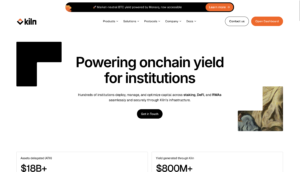
Overview: Kiln has become one of the most institutional‑grade operators in the proof‑of‑stake ecosystem. Founded by Laszlo Szabo, Kiln today counts 200 enterprise customers across three continents, including exchanges, custodians, asset managers, and fintechs. It holds approximately 27% of Ethereum’s staking‑as‑a‑service market share, managing roughly $4 billion in staked ETH.
Key Features:
| Feature | Detail |
|---|---|
| Market share (ETH) | ~27% |
| Enterprise customers | 200 across 3 continents |
| Staked ETH managed | ~$4B |
| White‑label staking | Exchanges, custodians, wallets |
| Recent innovation | Railnet (DeFi+RWA yield protocol) |
| Partnership | Lido V3 stVaults integration |
Recent Developments: Kiln launched Railnet (a new decentralized yielding protocol for institutional curators) and integrated with Lido V3 to expand institutional Ethereum staking through stVaults.
Why Institutions Choose Kiln: Kiln’s differentiation is its enterprise‑first focus. As Laszlo Szabo explained: “It’s not the same thing to deploy a validator for a crypto degen with a Ledger as it is to serve an exchange or asset manager demanding daily reporting, high performance, and serious security standards.”
P2P.org: Zero‑Slashing Track Record
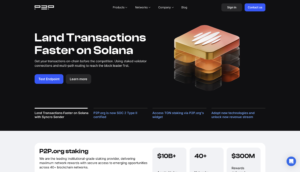
Overview: P2P.org is a leading non‑custodial staking platform founded in 2018, serving wallets, exchanges, DeFi platforms, and custodians worldwide. It manages over $10 billion in staked assets across 40+ blockchain networks.
Key Features:
| Feature | Detail |
|---|---|
| Staked assets | $10B+ |
| Networks supported | 40+ |
| Slashing track record | Zero slashing incidents over 8 years |
| Uptime | 99% |
| Security | Independently audited infrastructure |
| Notable partners | Northstate Staking Vault Manager |
Why Institutions Choose P2P.org: P2P.org’s combination of scale ($10B+ assets), operational excellence (zero slashing in 8 years), and production‑ready tooling (UI + enterprise‑grade APIs) makes it attractive for institutions seeking reliable staking infrastructure.
Everstake: Global Non‑Custodial Leader
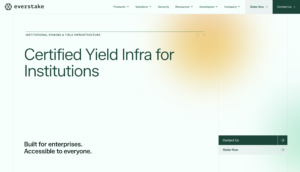
Overview: Everstake is the largest global non‑custodial staking and yield infrastructure provider, trusted by over 1.6 million users across 130+ Proof‑of‑Stake networks.
Key Features:
| Feature | Detail |
|---|---|
| Users | 1.6M+ |
| Networks | 130+ |
| Model | Non‑custodial |
| Recent partnership | Cometh (MiCA‑compliant fiat‑to‑staking) |
Recent Developments: Everstake partnered with Cometh to give EU institutional clients a simple, compliant way to turn fiat deposits into crypto staking rewards (and back into fiat) fully compliant with MiCA regulations.
Why Institutions Choose Everstake: The partnership enables clients to complete KYC/KYB, receive a dedicated IBAN for fiat deposits, stake assets securely, and convert rewards back into fiat, creating a seamless bridge between Web2 banking and Web3 yield.
Bitmine MAVAN: The New Institutional Giant
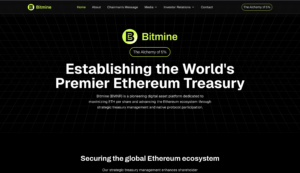
Overview: In March 2026, Bitmine Immersion Technologies launched MAVAN (Made in America Validator Network), its proprietary institutional‑grade Ethereum staking platform. MAVAN is designed to serve as the premier Ethereum staking destination for institutions.
Key Features:
| Feature | Detail |
|---|---|
| Staked ETH | 3,142,643 ETH (as of March 2026) |
| Staked value | $6.8 billion at $2,148 per ETH |
| Projected annual rewards | ~$300 million |
| Backers | ARK’s Cathie Wood, Founders Fund, Pantera, Kraken, Galaxy Digital |
Bitmine has staked more ETH than any other entity in the world. When its ETH is fully staked by MAVAN, the platform will become the largest Ethereum staking service provider globally.
Fees and Economics: What You Actually Pay
Typical Fee Structures
SaaS providers charge a commission on validator rewards, typically ranging from 5% to 15% of gross staking income. The exact percentage varies by provider, volume, and service level.
Real‑World Fee Examples
| Provider | Fee Structure | Context |
|---|---|---|
| BlackRock ETHB ETF | 18% of gross staking rewards + 0.12‑0.25% sponsor fee | Institutional ETF structure |
| Typical SaaS range | 5‑15% of rewards | Industry standard |
How Fees Are Calculated
Most SaaS providers use a commission model. For example:
- Your validator earns 4% APY on 32 ETH = approximately 1.28 ETH annually.
- Provider charges 10% commission.
- You receive ~1.152 ETH, provider receives 0.128 ETH.
What to Watch For
| Cost Factor | What to Check |
|---|---|
| Commission percentage | What % of rewards does the provider take? |
| Minimum commission | Is there a floor on fees regardless of rewards? |
| Volume discounts | Do fees decrease with multiple validators? |
| MEV sharing | Does the provider share MEV rewards? |
| Hidden costs | Any setup, exit, or maintenance fees? |
The BlackRock ETHB ETF provides a useful benchmark: the trust pays an aggregate 18% of gross staking consideration as a “Staking Fee,” with shareholders receiving approximately 82% of staking rewards, plus a 0.12‑0.25% annual sponsor fee.
Security: Slashing, NORS Certification, and Risk Management
What Is Slashing?
Slashing is a penalty mechanism where a validator loses a portion of their staked ETH for misbehavior (extended downtime, double‑signing, or other protocol violations). For solo stakers, slashing penalties fall entirely on the individual. For SaaS users, professional infrastructure and risk management significantly reduce the risk.
How SaaS Providers Mitigate Slashing
| Mitigation Strategy | How It Works |
|---|---|
| Redundant infrastructure | Multiple nodes, backup systems, geographic distribution |
| Proactive monitoring | 24/7 alerting, automated failover |
| MEV‑Boost with safety | Sanctions‑screened relays, risk controls |
| Validator diversity | Distributed client software reduces correlated failures |
| Slashing insurance | Some providers offer protection funds |
NORS Certification: The Institutional Standard
The Node Operator Risk Standard (NORS) is the first certification framework built specifically for Ethereum node operator risk management. It establishes enterprise‑grade criteria across:
| NORS Category | What It Evaluates |
|---|---|
| Slashing prevention | Controls to avoid slashing events |
| Validator diversity | Distributed infrastructure |
| Key management practices | Secure key generation and storage |
| Operational security and resilience | Disaster recovery, incident response |
NORS requires operators to demonstrate real operating procedures through audited documentation, technical evidence, and validated controls, unlike self‑attested best practices.
Figment became the first entity in North America and Europe to achieve Full NORS Certification for Ethereum.
Layered Assurance
Beyond NORS, top SaaS providers maintain multiple certifications:
- SOC 1 Type I – Rewards reporting accuracy
- SOC 2 Type II – Infrastructure and services security
- ISO 27001 – Global information security standard
- OFAC‑Compliant MEV Relays – Sanctions‑screened block building
Regulatory Landscape: MiCA, SEC, and Compliance
Regulatory evolutions have opened the door to institutional participation in staking. In Europe, MiCA provides clear operational and compliance requirements. In the United States, the SEC’s August 2025 decision not to classify liquid staking as a security removed one of the main legal obstacles for large allocators.
MiCA: Europe’s Framework for Crypto Services
MiCA (Markets in Crypto‑Assets Regulation) sets the regulatory foundation for crypto services across the EU. More than 150 crypto firms now hold MiCA licenses, reflecting traditional finance’s increasing entry into digital assets.
Key MiCA compliance features:
- Licensed custody requirements
- KYC/KYB verification
- Dedicated IBAN for fiat deposits
- GDPR‑compliant data handling
- Regulated fiat on/off‑ramps
The US Landscape
- The US Treasury has now explicitly cleared the way for trust structures to participate in staking without triggering tax problems. New IRS guidance allows crypto ETPs to generate yield while maintaining favorable tax treatment.
- BlackRock’s iShares Staked Ethereum Trust ETF (ETHB) (which began trading on Nasdaq on March 12, 2026) stakes 70‑90% of its Ethereum holdings to earn yield while keeping the remainder liquid to handle redemptions.
- Grayscale became the first U.S. issuer to distribute staking rewards directly to shareholders in cash, paying over $9 million in January 2026.
What This Means for Institutions
| Jurisdiction | Key Development | Implication |
|---|---|---|
| EU | MiCA framework | Clear compliance path for SaaS |
| US | SEC: staking not a security | Legal clarity for allocators |
| US | Treasury guidance | Favorable tax treatment for ETPs |
How to Choose a Staking‑as‑a‑Service Provider
Decision Framework
| If you are… | Recommended Provider | Why |
|---|---|---|
| Institutional asset manager | Figment or Kiln | NORS certification, SOC reports, enterprise track record |
| Exchange or custodian needing white‑label | Kiln | White‑label staking infrastructure |
| DeFi protocol or wallet | P2P.org or Everstake | API‑first approach, multi‑network support |
| EU institution needing fiat compliance | Everstake (with Cometh) | MiCA‑compliant fiat on/off‑ramp |
| Large ETH holder seeking maximum security | Figment | Largest market share, BlackRock validator |
| New entrant with 32+ ETH | Any major provider | All provide similar core service; compare fees |
Key Selection Criteria
| Criteria | What to Evaluate |
|---|---|
| Security and certifications | NORS, SOC, ISO, slashing track record |
| Fee structure | Commission percentage, MEV sharing, hidden costs |
| Network support | Which PoS chains are supported? |
| White‑label capabilities | Can they power your own staking product? |
| Reporting and compliance | Tax reporting, regulatory documentation |
| Slashing history | Zero‑slashing track record preferred |
| Uptime and performance | 99%+ uptime targets |
| Withdrawal control | Non‑custodial (you hold withdrawal keys) |
The “Test First” Strategy
Before committing large amounts, test the provider with a single validator (32 ETH) or participate in their testnet to evaluate:
- Setup experience (how easy is key generation?)
- Dashboard quality (monitoring, reporting)
- Support responsiveness
- Fee transparency
Step‑by‑Step: How to Stake with SaaS
Prerequisites
- 32 ETH per validator (you can run multiple validators)
- Basic familiarity with Ethereum wallets and keys
- A secure method to store your withdrawal keys
Step 1: Choose a Provider
Research the providers above. Consider your priorities: fee structure, network support, compliance requirements, and slashing track record.
Step 2: Generate Validator Keys
Most providers offer tooling to generate your validator keys securely. You’ll create two key types:
- Withdrawal key – stays with you (never share with provider)
- Signing key – shared with provider for validator operations
Step 3: Deposit 32 ETH
Using your withdrawal credentials, deposit exactly 32 ETH into the Ethereum deposit contract. This activates your validator in the queue.
Step 4: Upload Signing Keys
Securely transmit your signing keys to your chosen SaaS provider. The provider cannot access your withdrawal keys or move your funds.
Step 5: Wait for Activation
Your validator enters the activation queue. Depending on network activity, this can take hours to weeks. Your ETH is not earning rewards until activation completes.
Step 6: Monitor Performance
Use your provider’s dashboard to monitor:
- Attestation effectiveness
- Rewards earned
- Uptime and any missed attestations
- Slashing warnings (rare with professional providers)
Step 7: Exit the Validator (When Ready)
When you want to unstake, submit an exit request through the provider or using your withdrawal key. Your validator enters the exit queue. Once exited, you can withdraw your original 32 ETH plus accrued rewards.
Tax Implications of Staking‑as‑a‑Service
Staking rewards are generally treated as ordinary income in most jurisdictions at the time of receipt, valued at the fair market price of the asset when received. However, 2026 brought significant reforms:
The 2026 Crypto Tax Reforms (US)
- Five‑year deferral for staking rewards – addressing the “phantom income” problem where holders had to pay tax on rewards before they could sell them.
- Clarification that staking rewards from non‑custodial arrangements (like SaaS) are treated as income, but the new deferral rules allow taxpayers to postpone recognition until the tax year following the year the reward is sold or disposed of.
- Safe harbor for retail stakers who use third‑party services.
What You Need to Track
- Date and time of each reward payment
- Fair market value at time of receipt (in your fiat currency)
- Type and amount of reward token
- Transaction IDs for all staking activities
This information is educational, not tax advice. The complexity of staking taxation, especially with the 2026 reforms, makes professional consultation essential for anyone with significant staking income.
Our Verdict: Is SaaS Right for You?
Summary Assessment
Staking‑as‑a‑service is not for everyone, but for the right user, it’s the optimal solution. If you have 32+ ETH, want non‑custodial security, and lack the technical expertise or time for solo staking, SaaS offers the perfect balance of control and convenience.
The Winners by Category
| Category | Winner | Why |
|---|---|---|
| Largest institutional provider | Figment | 34% market share, NORS certified, BlackRock validator |
| Best white‑label infrastructure | Kiln | 200 enterprise customers, Lido V3 integration |
| Best slashing track record | P2P.org | Zero slashing incidents over 8 years |
| Best EU compliance | Everstake | MiCA fiat‑to‑staking with Cometh |
| Newest institutional giant | Bitmine MAVAN | 3.14M ETH staked, $6.8B value |
The Bottom Line
Staking‑as‑a‑service transforms Ethereum staking from a technical burden into an institutional‑grade service. You keep the keys. You earn the rewards. A professional operator handles the rest. For the 32+ ETH holder who wants security without complexity, SaaS is the answer.
Who should choose SaaS:
- ETH holders with 32+ ETH and no technical expertise
- Institutions needing regulated, compliant staking infrastructure
- Exchanges and custodians wanting white‑label staking
- Long‑term holders who don’t need liquidity
Who should choose alternatives:
- Users with less than 32 ETH → liquid staking or pools
- Technical users comfortable running nodes → solo staking
- DeFi power users needing liquidity → liquid staking
- Absolute beginners → exchange staking first
This guide was last updated for the 2026 edition. Staking‑as‑a‑service offerings, fees, and regulatory requirements change frequently. Always verify current information on official provider websites and consult a qualified tax professional.
Frequently Asked Questions
How does staking as a service work?
You generate validator keys (withdrawal and signing), deposit 32 ETH into the deposit contract, upload your signing keys to the provider, and the provider operates the validator on your behalf. Withdrawal keys remain with you, ensuring non‑custodial security. Rewards are credited to your validator’s balance and can be withdrawn using your keys.
Which staking as a service provider is best?
The best provider depends on your needs. Figment leads with ~34% market share and NORS certification, serving over 1,000 institutional clients including BlackRock. Kiln offers white‑label infrastructure and enterprise‑grade APIs with ~27% market share. P2P.org has a zero‑slashing track record over eight years. Everstake specializes in MiCA‑compliant fiat‑to‑staking solutions for EU institutions.
Is staking as a service safe?
Yes, when using reputable providers. Top providers maintain NORS certification, SOC reports, ISO 27001, and audited infrastructure. The two‑key system (you hold withdrawal keys, provider holds signing keys) ensures non‑custodial security (even if the provider is compromised, your funds cannot be withdrawn). However, staking still carries slashing risk, though providers mitigate this with professional‑grade infrastructure.
How much does staking as a service cost?
SaaS providers typically charge a commission of 5‑15% of validator rewards. For example, the BlackRock ETHB ETF pays an aggregate 18% of gross staking rewards to its staking service provider. Always compare net APY after fees.
What is the difference between staking as a service and liquid staking?
Staking‑as‑a‑service is non‑custodial (you hold withdrawal keys), your ETH remains locked in a validator, and you receive no tradable token. Liquid staking (Lido, Rocket Pool) pools your ETH with others and gives you an LST (stETH, rETH) that is fully liquid and DeFi‑composable. SaaS is for long‑term holders who don’t need liquidity; liquid staking is for DeFi users.
What is the NORS certification for staking?
NORS (Node Operator Risk Standard) is the first certification framework built specifically for Ethereum node operator risk management. It evaluates providers across slashing prevention, validator diversity, key management, and operational security. Figment became the first entity in North America and Europe to achieve Full NORS Certification.
Can institutions stake Ethereum?
Yes. Institutional staking participation surged to 44% in 2025, up from 31% in 2024. Major players include BlackRock (via ETHB ETF), Grayscale, Ripple Custody (via Figment), and sovereign actors like the Kingdom of Bhutan. MiCA in Europe and recent SEC guidance in the US have created clear regulatory paths for institutional participation.
What happens if my staking as a service provider gets slashed?
Top SaaS providers use professional‑grade infrastructure (redundant nodes, 24/7 monitoring, diverse clients) to minimize slashing risk. Some providers offer slashing protection or insurance. P2P.org, for example, has maintained a zero‑slashing track record for eight years. Always review provider slashing history before committing.
How do I choose a staking as a service provider?
Evaluate: security certifications (NORS, SOC, ISO), fee structure, slashing track record, network support, white‑label capabilities, and reporting/compliance features. Test with a single validator before committing large amounts.
Is staking as a service taxable?
In most jurisdictions, staking rewards are taxable as ordinary income when received. However, the 2026 crypto tax reforms introduced a five‑year deferral for staking rewards, addressing the “phantom income” problem. Consult a tax professional for your specific situation.
Can I stake with less than 32 ETH using SaaS?
No. Traditional staking‑as‑a‑service requires exactly 32 ETH per validator because it’s built on solo staking infrastructure. For amounts less than 32 ETH, consider staking pools or liquid staking.
What is white‑label staking as a service?
White‑label SaaS allows exchanges, wallets, and custodians to offer staking services under their own brand using the provider’s backend infrastructure. Kiln specializes in white‑label staking, enabling partners to build Ethereum staking functionality into their offerings without building it themselves.
What is the future of staking as a service?
The institutional staking services market is projected to grow from USD 5.8 billion in 2024 to USD 33.31 billion by 2033. Key trends include: NORS certification becoming standard, integration of staking with RWAs (Real‑World Assets), expansion of white‑label services, and deeper institutional ETF products.
How do I exit a staking as a service validator?
Submit an exit request to your validator. Your validator enters the exit queue (timing varies with network activity). Once exited, you can withdraw your ETH (original 32 ETH plus rewards) using your withdrawal keys. You maintain non‑custodial control throughout.
About the Author