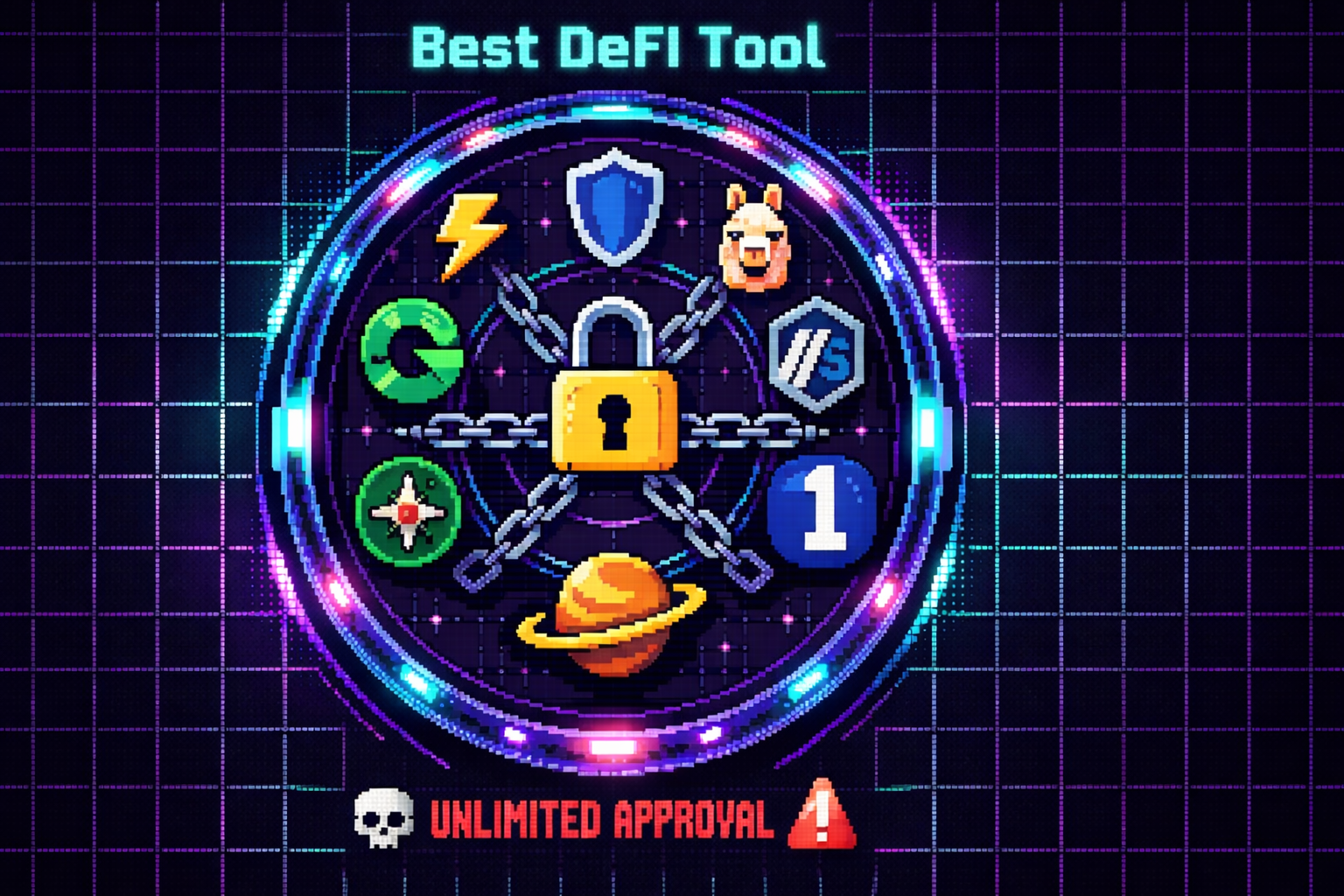
Your DeFi portfolio is scattered across Ethereum, Arbitrum, Base, and Solana. You’ve supplied liquidity on Uniswap, lent on Aave, staked via Lido, and minted NFTs on OpenSea. Your total value locked? No idea. Your token approvals? Probably dozens, most of them forgotten. And the worst part? Each of those forgotten approvals is an open door (over 70% of wallet drains happen through permissions you approved months ago and never revoked).
This guide exists because DeFi in 2026 is too complex to navigate without the right DeFi tools. You need dashboards that unify your positions across chains. You need analytics that show where smart money is flowing. You need security scanners that surface dangerous approvals before attackers exploit them. And you need tax software that turns thousands of on‑chain events into something the IRS can read.
We’ve curated the essential toolkit for DeFi in 2026: portfolio trackers, analytics dashboards, DEX aggregators, yield optimizers, security scanners, and tax software. Each entry includes exactly what the tool does, who it’s for, and how to use it. No fluff, no hype. Just the tools you need to navigate DeFi with confidence.
Why You Need a DeFi Toolkit
The Complexity Problem
In 2026, DeFi spans over 200 blockchains and thousands of protocols. The average active DeFi user holds positions across 5‑10 protocols and 3‑5 chains. Without aggregation tools, tracking your real net worth requires logging into each protocol separately (a process that takes hours and inevitably misses positions).
The Information Asymmetry
Professional traders and institutions have always had access to better data. Nansen’s wallet labeling reveals where smart money is moving. Dune Analytics lets power users write custom SQL queries. Token Terminal applies traditional finance valuation metrics to DeFi protocols. Retail users without these tools trade at a fundamental disadvantage.
The Security Gap
Every DeFi interaction creates a token approval (permission for a smart contract to move your tokens). Approvals never expire. Unused approvals are the vector for over 70% of wallet drains, costing over $1.05 billion in losses in 2024 alone. Without tools like Revoke.cash, users have no visibility into which permissions are still active.
The Tax Nightmare
DeFi creates hundreds or thousands of taxable events annually: swaps create capital gains, liquidity provision generates income, staking rewards are ordinary income, airdrops are taxable at receipt, and NFT trades add complexity. New IRS broker reporting rules and the global CARF (Crypto‑Asset Reporting Framework) mean errors can trigger audits and penalties. Manual tax tracking is no longer feasible.
Portfolio Trackers: See Everything in One Place
Zapper: The All‑in‑One DeFi Dashboard
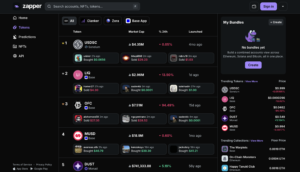
Overview: Zapper is one of the most popular and user‑friendly DeFi aggregators, now marking its 5‑year milestone in 2026. Its strength lies in a clean, intuitive dashboard that gives you a complete overview of your entire DeFi portfolio across multiple chains and wallets. You simply connect your wallet,and everything loads.
Key Features
| Feature | What It Does |
|---|---|
| Multi‑chain support | Ethereum, BNB Chain, Polygon, Arbitrum, Avalanche, Fantom, Base, and more |
| Portfolio bundling | Track multiple wallet addresses together – ideal for users with several wallets |
| DeFi position tracking | Lending positions, liquidity pools, staking rewards, yield farming |
| NFT support | NFT gallery and valuations via Zapper V2 |
| DAO treasury tracking | Monitor DAO treasuries and collective holdings |
| Explore feature | Discover new protocols and trending positions |
Who It’s For: Zapper is ideal for users with multiple wallets who want a unified view of all DeFi positions. Its bundling feature lets you track investments across hot wallets, hardware wallets, and exchange accounts in one place.
Pricing: Zapper is currently free, with premium features in development.
Zerion: Smart Wallet with Multi‑Chain Portfolio

Overview: Zerion is a non‑custodial smart wallet and data platform that unifies multi‑chain portfolios, real‑time transactions, and DeFi positions into a single, accessible interface. It has evolved beyond a simple tracker into a full‑featured wallet with perpetuals trading functionality added in early 2026.
Key Features
| Feature | What It Does |
|---|---|
| 50+ networks | Ethereum, Solana, Polygon, Arbitrum, Optimism, Base, and more |
| Wallet functionality | Non‑custodial wallet with built‑in DeFi access |
| Portfolio & P&L tracking | Real‑time profit/loss across all positions |
| Transaction history | Complete on‑chain activity log |
| Perpetuals trading | Leverage trading added in 2026 |
| Enterprise API | Wallet data for developers |
Who It’s For: Zerion is ideal for users who want a single app that combines wallet functionality with portfolio tracking. If you prefer managing your DeFi positions and holding assets in one non‑custodial interface rather than connecting separate wallets to dashboards, Zerion fits.
Pricing: Free with optional premium features.
CoinStats: Advanced Portfolio Management
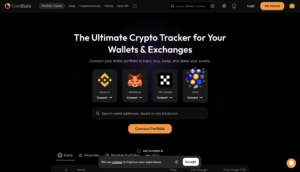
Overview: CoinStats has grown into one of the most trusted independent portfolio trackers in 2026, supporting over 300 exchanges and wallets plus more than 1,000 DeFi protocols across 120+ blockchains. It won Best Crypto Portfolio Tracker of 2026, offering features that range from basic price tracking to AI‑powered market predictions.
Key Features:
| Feature | What It Does |
|---|---|
| 1,000+ DeFi protocols | Live tracking of thousands of DeFi positions |
| 300+ exchanges | Integrates with major CEXs and DEXs |
| NFT valuations | NFT collection tracking |
| AI assistant | Personalized research and market insights |
| Token risk scanner | Security analysis for tokens |
Pricing
- Free – basic tracking
- Premium (~$13.99/mo) – up to 1,000,000 transactions, advanced analytics
- Degen (~$62.91/mo) – constant data refreshes, VIP support, AI predictions
Who It’s For: CoinStats is ideal for power users (“degens” who participate in every airdrop and staking opportunity) who need advanced analytics and rapid syncing.
DeBank: Clean, Functional DeFi Dashboard
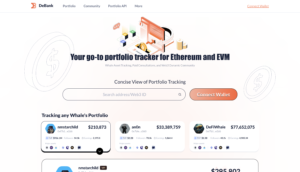
Overview: DeBank offers a beautiful and functional DeFi dashboard supporting Ethereum, BNB Chain, Polygon, Arbitrum, Avalanche, and other major networks. It’s known for its clean interface and reliable DeFi position tracking.
Key Features
| Feature | What It Does |
|---|---|
| Multi‑chain support | EVM chains, BNB Chain, Polygon, Avalanche, Arbitrum |
| DeFi position tracking | Lending, liquidity, staking |
| Gas tracker | Monitor network fees |
| Protocol analytics | View protocol TVL and user counts |
Who It’s For: DeBank is ideal for users who want a no‑frills, functional dashboard focused on accurate DeFi position tracking without extra features.
Analytics and Data Platforms: Understand the Market
DeFiLlama: The TVL Gold Standard
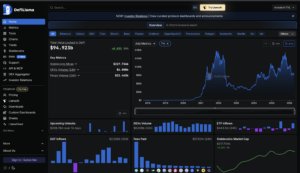
Overview: DeFiLlama has become the go‑to platform for tracking Total Value Locked (TVL) in DeFi. It aggregates data from thousands of protocols across over 200 blockchains, providing a comprehensive view of capital movement in decentralized finance. In 2026, DeFiLlama has expanded beyond its core DeFi focus to include NFT markets, cross‑chain bridges, oracle networks, and governance proposals.
Key Features
| Feature | What It Does |
|---|---|
| TVL rankings | See which protocols hold the most value across all chains |
| Chain comparison | Compare TVL, volume, and fees across blockchains |
| Yield dashboard | Track highest‑yielding opportunities across protocols |
| Fee and revenue tracking | Protocol revenue and fee generation |
| Stablecoin supply | Monitor stablecoin distribution across chains |
| Raises and hacks | Track fundraising and security incidents |
How to Use DeFiLlama
| Use Case | How DeFiLlama Helps |
|---|---|
| Spot emerging trends | Analyze TVL fluctuations in specific protocols |
| Monitor liquidity migrations | Track capital moving between chains |
| Assess protocol health | Compare TVL to all‑time highs |
| Find yield opportunities | Sort protocols by APY |
Pro Tip: DeFiLlama’s Yield dashboard has become an institutional favorite, especially for large liquidity providers seeking stable returns on mainstream L2s and emerging L3 solutions.
Pricing: Free – community maintained.
Dune Analytics: Custom On‑Chain Queries

Overview: Dune Analytics is an indispensable tool for users who require deep, tailored blockchain data analysis. It lets you craft custom SQL queries to extract specific insights from smart contracts, transactions, and user activity across numerous networks.
Key Features
| Feature | What It Does |
|---|---|
| SQL query builder | Write custom queries to extract any blockchain data |
| Community dashboards | Explore 100,000+ user‑created dashboards |
| 100+ supported chains | Ethereum, Polygon, Arbitrum, Base, Cardano, and more |
| DeFi Positions API | Unified multi‑chain position tracking for EVM wallets |
| Enterprise analytics | Partnered with 0x for institutional‑grade data visibility |
Who It’s For: Dune is ideal for power users and developers who need specific metrics not available in standard dashboards. If you can’t find a metric you need, you can build it yourself.
Example Use Cases
- Track any DEX’s trading volume with a custom query
- Follow institutional wallets
- Build real‑time monitoring dashboards for your positions
Learning Curve: Dune requires SQL knowledge. For non‑technical users, exploring community dashboards is more accessible than writing custom queries.
Pricing: Free tier available. Premium for advanced features.
Nansen: Smart Money Wallet Tracking
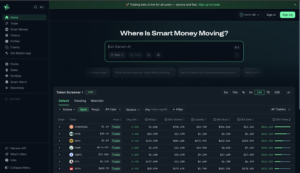
Overview: Nansen has transformed on‑chain analytics by deploying a sophisticated wallet‑tagging system that identifies and tracks the activities of institutional investors, venture capital funds, and professional traders. This “smart money” tracking delivers valuable market insights before those moves are reflected in prices.
Key Features
| Feature | What It Does |
|---|---|
| Wallet labeling | Tags 500M+ addresses (VCs, funds, whales, exchanges) |
| Smart money tracking | Monitor what sophisticated investors are doing |
| Customizable alerts | Notifications when specific wallets transact |
| Token God Mode | Deep token analytics |
| NFT analytics | Track NFT minting and trading patterns |
Who It’s For: Nansen is ideal for serious traders and investors who want to know what smart money is doing before it affects prices.
Pricing: Paid subscription with multiple tiers; some limited free features.
Token Terminal: Fundamental Protocol Analysis

Overview: Token Terminal brings traditional financial analysis to the crypto world, providing metrics like protocol revenue, price‑to‑sales (P/S) ratios, and profitability assessments. It’s invaluable for traders seeking investments backed by strong fundamentals rather than speculation.
Key Features
| Feature | What It Does |
|---|---|
| Protocol revenue | Track fee generation across DeFi protocols |
| P/S ratio | Compare protocol valuation to revenue |
| Profitability metrics | Understand which protocols are actually profitable |
| Standardized comparisons | Compare across protocols using consistent metrics |
Who It’s For: Token Terminal is ideal for investors who want to evaluate DeFi protocols using traditional finance valuation frameworks.
Pricing: Free tier available; premium for advanced metrics.
DexScreener: Real‑Time DEX Monitoring
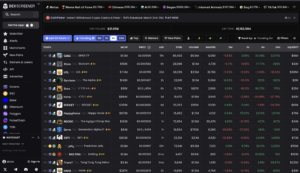
Overview: DexScreener specializes in real‑time analytics for decentralized exchange activity across multiple blockchains. In 2026, its “Pair Explorer” tool has become essential for instantly monitoring new liquidity pairs across more than 100 blockchains.
Key Features
| Feature | What It Does |
|---|---|
| Real‑time pair monitoring | Track new liquidity pairs across 100+ blockchains |
| Liquidity lock checking | Verify if a project’s liquidity is safely locked |
| Rug pull detection | Identify risks before committing capital |
| Price charts | Real‑time DEX price data |
Who It’s For: DexScreener is essential for traders monitoring new token launches and checking liquidity safety before buying.
Pricing: Free.
Trading and Aggregation Tools: Find the Best Price
DEX Aggregators Explained
What They Do: DEX aggregators solve liquidity fragmentation by scanning multiple decentralized exchanges simultaneously to find the best price for your swap. Instead of checking Uniswap, Curve, and Balancer separately, you use one interface, and the aggregator routes your trade through the most efficient path.
Why You Need One: Without aggregators, you might pay significantly higher prices for the same trade. Aggregators also protect against failed transactions by automatically splitting large orders across multiple pools.
1inch: Multi‑Chain Swap Aggregation
Overview: 1inch is the leading DEX aggregator, scanning hundreds of liquidity sources across multiple chains to find the best swap rates.
Supported Chains: Ethereum, BNB Chain, Polygon, Arbitrum, Optimism, Base, Avalanche, and many more.
Jupiter: Solana’s Dominant Aggregator
Overview: Jupiter Exchange handles approximately 95% of all aggregator market share on Solana and over 50% of total Solana DEX trading volume. It’s the essential tool for anyone trading on Solana.
Key Features: Limit orders, DCA (dollar‑cost averaging), perpetuals trading.
Security Tools: Protect Your Assets
Revoke.cash: The Approval Management Essential
Overview: Revoke.cash is the most widely used tool for managing token approvals (permissions you’ve granted to smart contracts to move your tokens). It’s a free, open‑source platform supporting over 100 EVM networks. Revoking unused approvals should be a monthly habit for anyone using DeFi.
Why Approvals Are Dangerous: Token approvals do not expire. If you approved a DEX six months ago and that contract gets hacked, the attacker inherits your approval and can drain your wallet, even if you never visit the site again. Phishing attacks exploiting malicious approvals cost over $1.05 billion in 2024 alone, with at least three individual incidents exceeding $100 million each.
How to Use Revoke.cash
| Step | Action |
|---|---|
| 1 | Go to revoke.cash |
| 2 | Connect your wallet |
| 3 | Review all active approvals (spender address, token, amount) |
| 4 | Click “Revoke” for any approval you don’t recognize or no longer use |
| 5 | Confirm transaction in wallet (small gas fee applies) |
Unlimited Approvals – The Silent Risk: Many DeFi protocols request “unlimited” approvals to save you gas on future transactions. This means the contract can move any quantity of that token from your wallet at any time, without asking again. Revoking unused unlimited approvals is critical for safety.
Pro Tip: Make Revoke.cash part of your monthly security routine. Unused approvals are the vector for over 70% of wallet drains.
Etherscan Token Approval Checker
Overview: Etherscan includes a built‑in token approval checker. Go to Etherscan, connect your wallet, and navigate to “More” → “Token Approvals” to see and revoke permissions. Unlike Revoke.cash, it’s Ethereum‑only.
Wallet Guard and Fire: Real‑Time Protection
Overview: Wallet Guard is a browser extension that simulates transactions before you sign, detecting malicious approvals and phishing attempts. Fire similarly warns about dangerous dApps and contract interactions.
Who It’s For: Active DeFi users who frequently connect to new protocols.
Yield and DeFi Discovery Tools: Find Opportunities
DeFiLlama Yield Dashboard
Overview: DeFiLlama’s Yield dashboard lets you sort through hundreds of yield opportunities across protocols, chains, and asset types. Filter by chain, protocol, asset, and risk level to find the best APYs for your capital.
Zapper Explore: Discover New Protocols
Overview: Zapper’s Explore feature helps users discover new protocols and trending positions across DeFi. See what others are doing and find opportunities you might have missed.
Yearn Finance: Automated Yield Vaults
Overview: Yearn Finance automates yield optimization through vaults that automatically move funds between protocols to capture the highest yields. Users deposit funds, and the vault strategy does the rest – compounding returns and rebalancing across lending protocols, liquidity pools, and yield farms.
Tax Software: Stay Compliant
Why You Need Dedicated Crypto Tax Software
The Complexity Problem: DeFi creates hundreds or thousands of taxable events annually: swaps create capital gains, liquidity provision generates income, staking rewards are ordinary income, airdrops are taxable at receipt, and NFT trades add complexity. New IRS broker reporting rules and enhanced DeFi monitoring requirements mean errors can trigger audits and penalties.
What Tax Software Does: Automates importing transactions from exchanges and blockchains, reconciles cost basis across thousands of trades, and generates IRS‑compliant tax reports including Form 8949 and Schedule D.
Global Compliance: CARF (Crypto‑Asset Reporting Framework) is now in effect globally, requiring crypto platforms to report user activity to tax authorities. Manual tracking is no longer feasible.
Koinly: Best for Fast Global Reporting
Overview: Koinly is the premier crypto tax software for rapid deployment across 20+ countries. It supports 700+ exchanges, wallets, and blockchains, generating country‑specific tax reports in minutes.
Supported Jurisdictions: US (Form 8949, Schedule D), UK (HMRC), Canada (CRA), Australia (ATO), Germany, France, and 15+ other countries.
CoinTracker: Strong Exchange Integrations
Overview: CoinTracker is widely used for its robust exchange integrations and clean interface. It syncs with major exchanges and wallets, automatically tracking your cost basis and generating tax reports.
Awaken Tax: Simplifies DeFi Complexity
Overview: Awaken Tax automates complex DeFi reporting, handling staking, liquidity pools, and cross‑chain transactions that other software often misses.
Tool Stack by User Type
Decision Matrix
| If you are… | Recommended Tool Stack |
|---|---|
| Casual DeFi user (under $10k portfolio) | Zapper or Zerion + Revoke.cash (monthly) |
| Active DeFi user (multiple protocols) | Zapper/Zerion + DeFiLlama + Revoke.cash (weekly) + Koinly |
| Power user (DeFi + trading) | All above + Dune Analytics + DexScreener + Nansen |
| Yield optimizer | DeFiLlama Yield + Yearn + Zapper Explore + Revoke.cash |
| Tax‑focused | Koinly or CoinTracker + Revoke.cash |
The Essential Minimum
| Tool | Purpose | Frequency |
|---|---|---|
| Portfolio tracker (Zapper/Zerion) | See all positions | Weekly |
| Revoke.cash | Revoke unused approvals | Monthly |
| DeFiLlama | Find yield, check protocol health | Weekly |
| Tax software | Stay compliant | Annual |
Our Verdict: Build Your Toolkit
Summary Assessment
DeFi in 2026 is a fragmented, multi‑chain ecosystem. Navigating it without the right tools is like sailing without a compass, you’ll eventually drift off course or hit hidden rocks. The tools in this guide transform complexity into clarity.
The Non‑Negotiable Minimum
| Tool | Why You Need It |
|---|---|
| Portfolio tracker | See all your positions in one place |
| Revoke.cash | Close the open doors attackers love |
| DeFiLlama | Know where capital is flowing |
| Tax software | Stay compliant and avoid penalties |
The Bottom Line
Start with the essential minimum. Add analytics (Dune, Nansen) as your sophistication grows. Use aggregators (1inch, Jupiter) for every trade. And never skip your monthly Revoke.cash routine. That single habit could save your portfolio.
Disclaimer: This guide is for educational purposes only and does not constitute financial or tax advice. Always verify tool compatibility with your jurisdiction and consult a tax professional for your specific situation.
This guide was last updated for the 2026 edition. DeFi tools evolve rapidly – new features, chains, and pricing models emerge constantly. Always verify current information on official websites.
Frequently Asked Questions
How to revoke token approvals on MetaMask?
Connect your wallet to Revoke.cash, review all active approvals, and click “Revoke” for any approval you don’t recognize or no longer use. Confirm the transaction in MetaMask. Make this a monthly habit.
What is DeFiLlama and how to use it?
DeFiLlama is the leading TVL aggregator, tracking thousands of protocols across 200+ blockchains. Use it to spot emerging trends, monitor liquidity migrations, assess protocol health, and find yield opportunities.
How to track DeFi positions across multiple chains?
Use a portfolio tracker like Zapper or Zerion. Connect your wallet once, and the dashboard automatically aggregates all positions across supported chains. No need to check each protocol separately.
What is the best crypto tax software for DeFi?
Koinly is best for fast global reporting across 20+ countries with 700+ integrations. CoinTracker is strong for exchange integrations. Awaken Tax specializes in DeFi complexity.
How to monitor whale wallets in DeFi?
Use Nansen’s wallet labeling to track smart money movements. Follow specific addresses to see what institutional investors and VCs are doing before market moves.
What is the safest way to use DEX aggregators?
Use established aggregators like 1inch (EVM) or Jupiter (Solana). Always revoke approvals after significant trading activity. Start with small test amounts.
How to find high‑yield DeFi opportunities?
Use DeFiLlama’s Yield dashboard to sort protocols by APY. Use Zapper Explore to see what others are doing. But higher yield always means higher risk. Never chase APY without understanding the protocol.
What are the best free DeFi analytics tools?
DeFiLlama is completely free. Dune Analytics has a generous free tier. Etherscan is free. DexScreener is free. Revoke.cash is free and open‑source.
How to revoke unlimited token approvals?
Unlimited approvals are dangerous because they allow contracts to move any amount of tokens indefinitely. Use Revoke.cash to revoke them. Consider approving only the exact amount needed for each transaction.
Is Zapper safe to use?
Zapper is non‑custodial, you never give up control of your keys. It simply reads your wallet addresses to display positions. It cannot move your funds.
What is the difference between Zapper and Zerion?
Zapper is a pure portfolio dashboard focused on aggregating positions. Zerion combines portfolio tracking with a non‑custodial wallet, letting you manage assets and interact with DeFi directly within the app.
Do I need to pay for DeFi tools?
Many core tools (Zapper, Zerion, DeFiLlama, Revoke.cash) are free. Advanced features in Nansen, Token Terminal, and premium portfolio trackers require subscriptions. Start with free tools, upgrade as your needs grow.
How often should I revoke token approvals?
At least monthly. Users who interact with DeFi frequently should revoke weekly. Unused approvals are the vector for over 70% of wallet drains.
What happens if I don’t revoke approvals?
If a protocol you approved gets hacked, the attacker can drain your wallet without any further action from you. The approval you forgot about is the open door.
About the Author